PART TWO
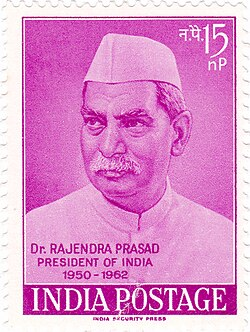
What is wrong in singing Vande Mataram if Vande Mataram Garu were living? They do not occupy the same constitutional category. Official Status Declaration (Jan 24, 1950) is explained. Constituent Assembly President Dr. Rajendra Prasad stated that Jana Gana Mana is the National Anthem of India, while Vande Mataram is the National Song. He added that the National Song “shall be honoured equally with Jana Gana Mana and shall have equal status with it”.
Article 51A(a) of the Fundamental Duties explicitly lists the duty to “abide by the Constitution and respect its ideals and institutions, the National Flag and the National Anthem”; it omitted a textual reference to the National Song.
Protocols: While Jana Gana Mana is sung at designated formal state, military, and constitutional ceremonies following a strict 52-second cadence, Vande Mataram is routinely sung at national functions and parliamentary sessions (often marking the conclusion of sittings).
According to law, Constitutional rule, Rules of Law under the Prevention of Insults to National Honour (Amendment) Act, 2026, the people are free to sing or not to sing, but you cannot disrespect, insult, or disturb others when they are singing. Then what is the problem? The law talks about loving and singing Vande Mataram; despite the 2026 amendment, there is no change at all, except that others who want to sing the full or first part of the National Song.
The controversy surrounding Vande Mataram, its constitutional status alongside Jana Gana Mana, and the statutory framework under the Prevention of Insults to National Honour (Amendment) Act, 2026 centers on distinct historical, religious, and legal considerations.
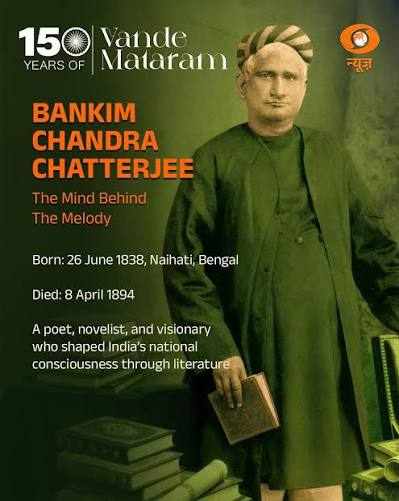
While Bankim Chandra Chatterjee‘s first two stanzas venerate the motherland as a bountiful, nourishing entity (Sujalam, Suphalam), the later stanzas explicitly identify the land with Hindu deities, Durga, Lakshmi, and Vani (Saraswati). For monotheistic faiths like Islam and certain Christian denominations, deifying and bowing (vande) to an entity other than God conflicts with fundamental religious tenets.
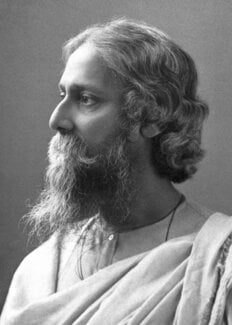
A 1937 Congress Compromise? To preserve communal harmony, the Congress Working Committee in October 1937, guided by Rabindranath Tagore, Mahatma Gandhi, and Jawaharlal Nehru, resolved that only the first two, non-sectarian stanzas would be adopted for public and official gatherings, leaving aside the deity-specific verses.
The Prevention of Insults to National Honour (Amendment) Act, 2026 amended Section 3 of the 1971 Act to bring the National Song (Vande Mataram) under the exact same statutory protections as the National Anthem (Jana Gana Mana).
The original 1971 Act protects only the National Anthem (Jana Gana Mana). It protects both the National Anthem and the National Song (Vande Mataram). Intentionally preventing the singing or causing disturbance to an assembly singing it is an offence. Punishment remains the same, up to 3 years’ imprisonment, fine, or both (mandatory 1 year minimum for repeat offenders under Section 3A). Under the new law also, intentionally preventing the singing or causing disturbance to an assembly singing either composition.
The statute punishes active obstruction (stopping others from singing or disrupting an event). It does not make singing compulsory, nor does it criminalize respectful silence.
There are Constitutional Protections & Precedent.
In the landmark Supreme Court ruling Bijoe Emmanuel v. State of Kerala (1986), the Court held that standing respectfully in silence without singing does not constitute an insult or an offence under Section 3, and is protected under Article 19(1)(a) (freedom of speech, which includes the right to remain silent) and Article 25 (freedom of conscience). Legal disputes emerge not from the central statute itself, but when executive orders or local bodies attempt to mandate active recital in schools or public spaces, or when non-singing (even if silent and respectful) is conflated by authorities or public groups with intentional disrespect.
Bijoe Emmanuel is the locus classicus on the balance between national symbols, statutory penal provisions, and fundamental freedoms under Articles 19(1)(a) and 25 of the Constitution. Three siblings, Bijoe, Binu Mol, and Bindu Emmanuel, were students at NSS High School, Kidangoor, in Kottayam district, Kerala. They belonged to the Jehovah’s Witnesses, a Christian denomination. Every morning during the school assembly, when the National Anthem (Jana Gana Mana) was played, the children stood up respectfully, but did not sing along. Their religious faith teaches that their allegiance belongs exclusively to Jehovah (God), and singing praise to any temporal or national entity is contrary to their religious tenets. For years, this went unnoticed without causing any disruption. In July 1985, an MLA noticed the children not singing during a visit and raised the issue in the Kerala Legislative Assembly. Following an inquiry by the Education Department, the Headmistress expelled all three children on July 26, 1985, acting under departmental instructions.
The father filed a writ petition under Article 226 before the Kerala High Court. Both the Single Judge and subsequently a Division Bench dismissed the petition, holding that: Singing the National Anthem was a fundamental duty under Article 51A and no words in the anthem offend religious sentiments, and departmental circulars requiring participation were valid.
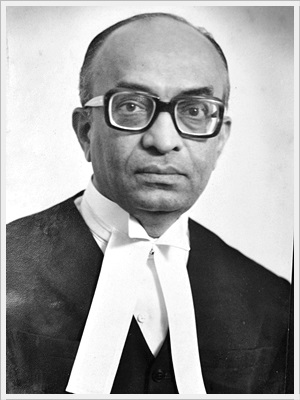
The Judgement, authored by O .Chinnappa Reddy (bench with Justice M.M. Dutt), established that patriotic reverence cannot be compelled through executive coercion at the expense of genuine religious conscience and the right to silence. The Supreme Court set aside the High Court’s ruling, quashed the expulsion orders, and directed the school to readmit the students. The Court’s analysis rested on three core pillars:
A. Right to Free Speech Includes the Right to Remain Silent [Article 19(1)(a)]
- The freedom of speech and expression guaranteed under Article 19(1)(a) includes the negative right—the freedom not to speak and to remain silent.
Fundamental rights under Article 19(1) can only be curtailed by a valid statute enacted by the legislature satisfying the reasonable restriction criteria under Article 19(2). Executive instructions or departmental circulars (such as the Kerala Education Code or departmental notes) do not constitute “law” for the purpose of curtailing Article 19 rights.
Article 25 protects beliefs and practices that are sincerely and genuinely held, provided they do not disrupt public order, morality, or health, and do not contravene Part III of the Constitution. The Court emphasized that it is not for the State or the judiciary to examine the rationality or correctness of a religious tenet, provided it is held in good faith and does not violate public order.
The Court scrutinized Section 3 of the Prevention of Insults to National Honour Act, 1971, which penalizes anyone who intentionally prevents the singing of the National Anthem, or causes disturbance to any assembly engaged in such singing. The Court ruled that standing up respectfully in silence neither prevents others from singing nor causes any disturbance. Respectful standing demonstrates reverence; compelling actual vocalization goes beyond the statutory mandate of Section 3.
Justice Chinnappa Reddy concluded the verdict with words that remain foundational to Indian constitutional jurisprudence:
“Our tradition teaches tolerance; our philosophy preaches tolerance; our Constitution practises tolerance; let us not dilute it.”
The judgment cemented the legal principle that true constitutional patriotism accommodates quiet, conscientious dissent and diversity, distinguishing genuine respect from forced ritualism.
Citizens and institutions can and do sing both, but under constitutional jurisprudence, no citizen can be coerced to verbally participate against their genuine religious convictions or personal conscience, provided they do not obstruct or disrespect the assembly.

Law professor and eminent columnist
Madabhushi Sridhar Acharyulu, author of 63 books (in Telugu and English), Formerly Central Information Commissioner, Professor of NALSAR University, Bennett University (near Delhi), presently Professor and Advisor, Mahindra University, Hyderabad. Studied in Masoom Ali High School, AVV Junior College, CKM College, and Kakatiya University in Warangal. Madabhushi did LL.M., MCJ., and the highest law degree, LL.D. He won 4 Gold Medals at Kakatiya University and Osmania University.
Email: cicsridhar@gmail.com
Mobile: 8447651505