The High-Stakes Battle Over India’s Digital Payments
Strategic Outlook
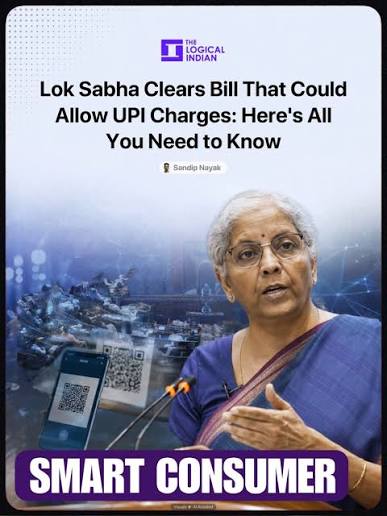
The Unified Payments Interface (UPI) has fundamentally transformed India’s economic landscape, evolving into the bedrock of the nation’s digital economy. Processing billions of transactions monthly, UPI has driven unprecedented financial inclusion, spanning from urban conglomerates to local street vendors. However, the recent introduction of the Taxation and Other Laws (Amendment) Bill, 2026 which enables a framework to reintroduce a Merchant Discount Rate (MDR) on select high-value merchant transactions has sparked an intense national debate regarding its economic impact.
To Charge or Not to Charge? -The Future of UPI
Navigating Merchant Fees, Consumer Impact, and Cash Relapse
Balancing Sustainability with Digital Inclusion
Understanding the Proposed MDR Framework
Under the proposed guidelines, a nominal MDR (estimated between 0.25% and 0.4%) is being considered primarily for merchant payments exceeding Rs 2,000, with Person-to-Person (P2P) transfers and small kirana store transactions remaining strictly exempt. While the policy aims to target higher-value commercial exchanges, it raises critical questions about whether the burden will indirectly shift to middle and lower-middle-class consumers and if it risks pushing users back toward cash.
The Pros: Financial Sustainability and Infrastructure Robustness
Proponents of reintroducing MDR highlight several key economic and technical arguments: Running the world’s largest real-time payment network requires massive investments in servers, cloud infrastructure, and software. Continuous government subsidies alone cannot sustain this rapid expansion indefinitely. Enhanced Cybersecurity and Fraud Prevention: As transaction volumes soar, payment processors and banks need dedicated revenue streams to fortify cybersecurity protocols and minimize digital fraud. Incentivizing Banks and Fintechs: Zero-MDR policies severely pinched the profitability of banks and payment service providers (PSPs). Allowing a structured MDR encourages ongoing innovation and expansion into underserved rural and semi-urban markets.
The Cons: Risk of Cash Relapse and Consumer Impact

Conversely, critics and consumer advocates warn that the long-term unintended consequences could outweigh the immediate revenue benefits. Indirect Burden on Middle-Class Household Budgets: Although the government and Finance Ministry have clarified that MDR applies directly to merchants, businesses often offset operational fees by raising prices or imposing indirect surcharges on transactions above Rs 2,000. For middle-class households managing routine expenses—such as monthly bulk groceries, consumer durables, or bill payments—this could erode purchasing power.
The Threat of Cash Reversion: India’s digital payment boom was largely driven by zero transaction friction. If merchants start discouraging UPI for payments above Rs 2,000 to avoid fees, consumers may revert to cash transactions to avoid price markups, reversing years of progress toward a cashless economy. A perceived cost barrier could deter lower-middle-class users who are just acclimating to digital banking, feeding into pre-existing skepticism around digital safety and hidden fees.
The Path Forward: Designing a Reasonable Framework
To preserve the momentum of India’s digital economy without penalizing everyday consumers, policymakers and the National Payments Corporation of India (NPCI) must craft a finely calibrated framework. Strict regulations must prohibit merchants from passing MDR fees directly to consumers via transaction surcharges. MDR should be structured on a sliding scale, with low absolute caps for transactions just over ₹2,000 to minimize friction for mid-sized merchants. Essential services, health-related expenses, and basic utilities should remain under a zero-MDR umbrella regardless of transaction amount.
Strategic Outlook
The evolution of UPI stands at a crucial juncture. While creating a self-sustaining financial model for banks and fintech firms is essential for long-term growth, it must not come at the expense of consumer trust or digital adoption. By maintaining a transparent, capped, and consumer-protective framework, India can ensure its digital payment engine remains both economically viable and broadly inclusive.

Editor, Prime Post
Ravindra Seshu Amaravadi, is a senior journalist with 38 years of experience in Telugu, English news papers and electronic media. He worked in Udayam as a sub-editor and reporter. Later, he was associated with Andhra Pradesh Times, Gemini news, Deccan Chronicle, HMTV and The Hans India. Earlier, he was involved in the research work of All India Kisan Sabha on suicides of cotton farmers. In Deccan Chronicle, he exposed the problems of subabul and chilli farmers and malpractices that took place in various government departments.
Email: ravindraseshu7@gmail.com
Mobile: 9063718675