A Classical Editorial Analysis
The Generation in Suspended Animation
India’s demographic dividend has long been projected as the nation’s greatest strategic asset. With one of the world’s youngest populations, the country possesses an unprecedented opportunity to transform human capital into economic growth, institutional excellence, and global competitiveness. Yet this promise is being steadily undermined by a profound failure within one of the Republic’s most critical institutions—the public recruitment system. What ought to be a transparent gateway to merit-based public service has instead evolved into a labyrinth of delayed notifications, cancelled examinations, paper leaks, repeated re-examinations, prolonged litigation, and interminable appointments. For millions of educated young Indians, the pursuit of a government job has ceased to be a pathway to opportunity and has become an exhausting test of endurance.
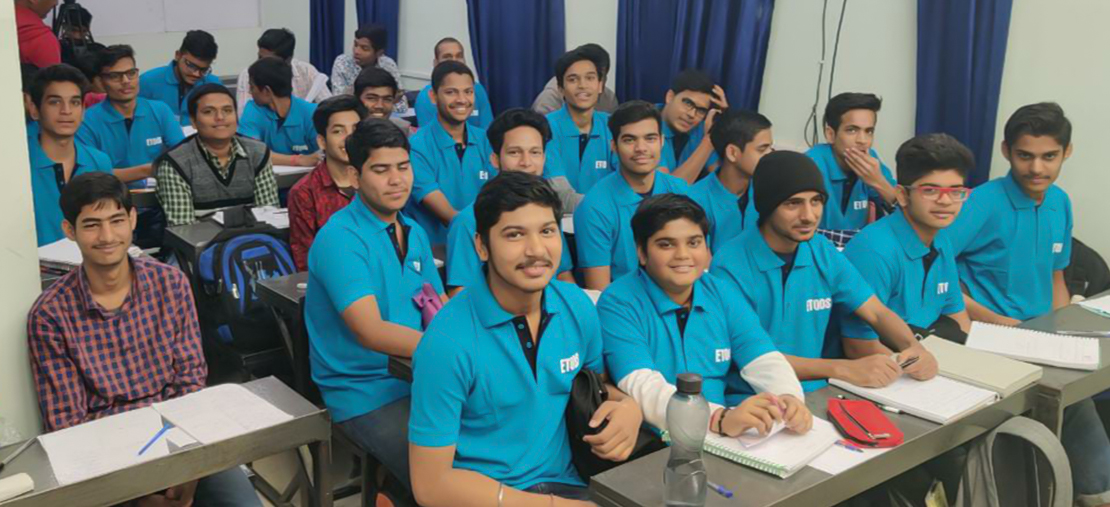
Across the country, from Prayagraj and Mukherjee Nagar in the north to Hyderabad’s Ashok Nagar and Dilsukhnagar in the south, an entire parallel economy has emerged around competitive examinations. Coaching centres flourish, rented rooms overflow with aspirants, and families invest their lifetime savings in the hope that education will secure stable employment. Yet countless candidates spend four to six of the most productive years of their lives waiting—not for success or failure, but merely for examinations to be conducted, results to be declared, or appointments to materialise. The nation is gradually creating what may aptly be described as a “generation in suspended animation.”
A Pan-India Institutional Malady: Systemic Failure Across States
The crisis is national in character and transcends political boundaries. Uttar Pradesh witnessed one of the world’s largest recruitment exercises for police constables, only to see the examination cancelled following allegations of widespread paper leaks. Bihar has repeatedly grappled with controversies surrounding recruitment examinations for teachers, civil services, and police personnel, compelling candidates to undergo multiple examinations over several years. Similar disruptions have surfaced in several other states, revealing that the problem is institutional rather than regional.
Telangana’s Group-I recruitment process illustrates both the vulnerability and the resilience of the system. The examination cycle encountered serious disruptions arising from paper leak allegations, administrative irregularities, and prolonged legal disputes that delayed recruitment for years. Although judicial intervention ultimately restored the validity of the examination process and enabled the declaration of results and appointments, the episode exposed significant weaknesses in examination security, institutional governance, and administrative preparedness. The eventual resolution provided relief to successful candidates, but it also underscored the urgent necessity of preventing such crises rather than merely resolving them after years of uncertainty.
The Credibility Gap in Governance

A more fundamental concern lies in the governance of recruitment institutions themselves. Public Service Commissions and several recruitment agencies are constitutionally expected to function as independent custodians of merit, insulated from partisan influence. Yet, in practice, appointments to leadership positions have at times attracted criticism for being influenced by political considerations or patronage rather than by demonstrable expertise in educational assessment, psychometrics, public administration, technology, or institutional management. Even where such appointments are legally valid, the perception of political proximity can erode public confidence in the neutrality of these institutions. Bodies entrusted with selecting future civil servants must themselves command unquestioned credibility, professional competence, and institutional independence. Meritocracy cannot flourish if the guardians of merit are themselves perceived as lacking transparency or professional autonomy.
The deeper malaise lies in the architecture of recruitment itself. Notifications frequently coincide with electoral cycles, generating political headlines rather than reflecting scientific manpower planning. Thereafter, administrative inertia, inadequate coordination, technological vulnerabilities, and procedural ambiguities slow the recruitment process. Errors in question papers, disputed answer keys, outsourced examination management, cybersecurity deficiencies, and opaque evaluation practices routinely culminate in litigation, often freezing recruitment for years.
Absence of Institutional Accountability
Ironically, while millions of qualified youth remain unemployed, government departments continue to function with alarming vacancies. Schools lack teachers, hospitals face shortages of medical personnel, police forces remain understaffed, and civil administration struggles with inadequate manpower. The paradox is striking: the State simultaneously suffers from unemployment and unfilled employment. This contradiction reflects not a scarcity of talent but a failure of governance.
Equally disturbing is the absence of institutional accountability. Recruitment commissions exercise enormous constitutional responsibility, yet examination failures rarely result in meaningful administrative consequences. Paper leaks, operational negligence, repeated cancellations, and avoidable delays impose enormous financial and psychological costs upon candidates, while those responsible seldom face proportionate professional or legal accountability. Public confidence consequently erodes with every failed recruitment exercise.
The economic consequences are equally severe. Every year spent in endless preparation represents lost productivity, delayed income generation, postponed entrepreneurship, and deferred family formation. The demographic dividend is valuable only when young people are absorbed into productive employment during their prime working years. A nation that compels its youth to spend half a decade moving from one examination notification to another is quietly eroding its own economic future.
Examination Security as National Critical Infrastructure
Meaningful reform requires structural transformation rather than incremental adjustment. Public Service Commissions must be professionally led by individuals possessing recognised expertise in educational assessment, technology, public administration, institutional governance, and human resource management rather than considerations of political patronage. Recruitment cycles should be completed within a statutory time frame, with legally enforceable accountability for avoidable delays. Examination security must be treated as critical national infrastructure through robust cybersecurity, encrypted question paper management, independent vendor audits, transparent digital processes, and stringent criminal liability for organised paper leak networks. Simultaneously, specialised judicial benches should ensure the expeditious resolution of recruitment disputes so that genuine candidates are not condemned to years of uncertainty.
The Economic and Moral Bottom Line
Ultimately, this is not merely an administrative issue but a constitutional one. Public recruitment embodies the promise of equality of opportunity. When examinations become unpredictable, appointments uncertain, and merit hostage to institutional inefficiency, the credibility of democratic governance itself comes into question.
India cannot aspire to become a global economic power while millions of its brightest young citizens remain imprisoned in an endless cycle of examinations and expectation. Every cancelled examination, every delayed result, every prolonged court battle, and every postponed appointment silently steals the most valuable resource a nation possesses—the prime years of its youth. Restoring integrity, efficiency, transparency, professionalism, and accountability to India’s recruitment architecture is therefore not simply an administrative reform; it is an economic imperative, a constitutional obligation, and a moral debt owed to an entire generation.

M. Shiva Prasad, IPS (Rtd.) is a dedicated law enforcement professional who served the combined Andhra Pradesh cadre before opting for the Telangana cadre. Though a native of Andhra Pradesh, he considers himself a true Hyderabadi with an abiding love for the Telugu people. Driven by sincerity, fearlessness, and a lifelong fight against inequality and injustice, his ultimate strengths remain his goodwill and deep affection for the public and the police force. Today, he continues his mission by writing snippets and articles true to his conscience.
Email: Shivareach@yahoo.com
Mobile: 98480 38774