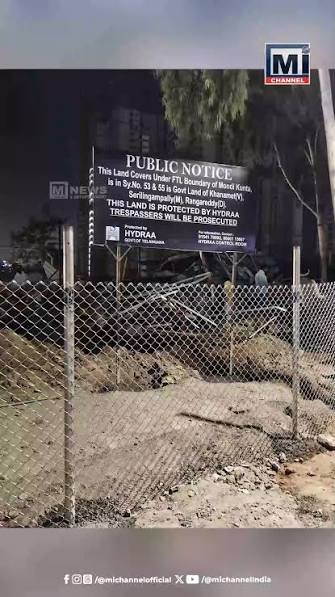
The Rape of the Demesne
The Concrete Carnage: How Hyderabad’s Land Mafia Fractured the City’s Trust
Plundering the Commons: Hyderabad’s Land Cartels and the Death of the Public Realm
The spectacular metamorphosis of Hyderabad into a glittering, hyper-globalized technopolis has been accompanied by a profound, systemic rot within its political economy. Beneath the veneer of record-breaking state auctions, where prime real estate fetches an astronomical, logic-defying 247 crores per acre, lies a predatory underworld of institutionalized plunder. Land is not a mere financial asset to be leveraged, nor a manufactured commodity to be infinitely replicated; it is a finite ecological repository, the very bedrock of civilizational continuity and generational equity. Yet, over the past two decades, a voracious syndicate has successfully financialized the city’s topography, reducing the sacred soil of the Deccan plateau into an exclusive playground for speculative capital and illicit enrichment.
Silicon Shields and Bureaucratic Caprice: The Failed Promise of Digital Land Reform
This institutional decay has been facilitated by the weaponization of the very instruments designed to ensure transparency. The introduction of the centralized Dharani and Bhu Bharati digital land administration portals—originally heralded as the technological silver bullets to slay the “revenue mafia”—has instead provided a digital cloak of infallibility to deep-seated administrative corruption. By centralizing authority and stripping away traditional grievance redressal mechanisms, the system has left vulnerable citizens entirely at the mercy of bureaucratic caprice.
Inside the Ruthless Underworld of Hyderabad’s Land Grab
A forensic examination of these portals reveals a harrowing picture of credential hijacking, where biometric security protocols were routinely bypassed by tech-savvy cartels operating in collusion with insider elements. The most egregious manifestation of this digital malfeasance has been the systematic purging of protected “assigned lands”—tracts historically earmarked for the socio-economic upliftment of the landless poor—which were silently scrubbed of their restricted legal status and seamlessly transferred into the commercial inventories of politically connected infrastructure conglomerates.
The fatal stakes of this unchecked land-grab are best illustrated by the chilling Keesara Mandal Revenue Officer (MRO) scandal. The apprehension of a revenue official red-handed by anti-corruption agencies while accepting a staggering Rs 1.10 crore cash advance—part of a larger 5 crore extortionate demand to forge land titles in Rampally Dayara—exposed the sheer volume of illicit capital lubricating the administrative machinery. The subsequent, tragic custodial suicide of the prime accused official,in jail premises and a co-accused, real estate broker’s suicide underscored the ruthless, high-pressure underworld that governs these transactions. This was no ordinary, white-collar administrative aberration; it was a stark revelation that the state’s land regulatory apparatus has transcended petty briberies to become a full-fledged criminal syndicate, trading in human lives and stolen inheritances.
How Land Sharks Use the Judiciary to Build Impunity
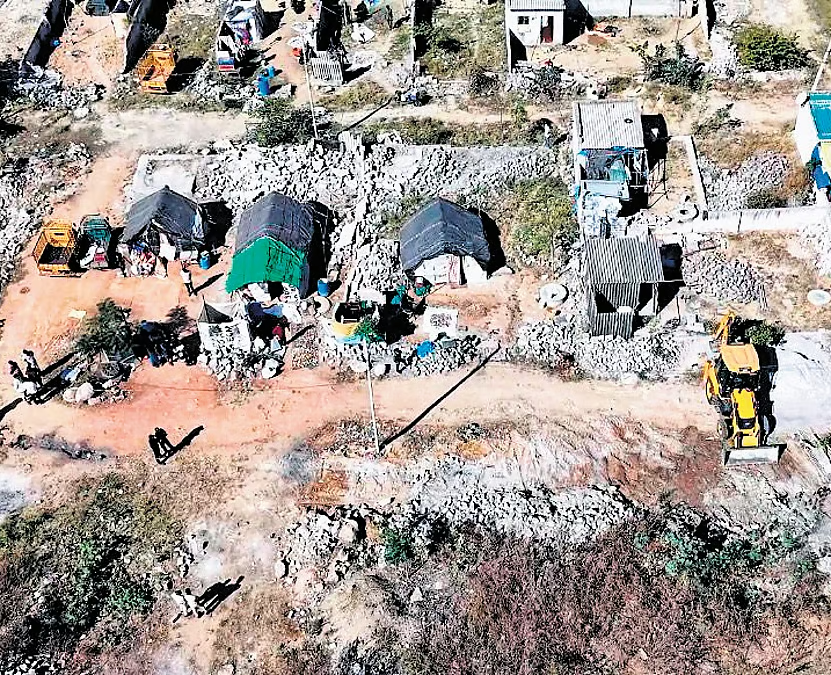
For the ordinary citizen, the pursuit of justice within this rigged ecosystem has become a Sisyphean ordeal. In coveted residential enclaves like Diamond Hills, and sprawling, contested tracts across Kukatpally, the legal process is structured to exhaust the litigant rather than adjudicate the truth. The playbook deployed by these land sharks is as sophisticated as it is malicious: they deliberately engineer overlapping claims by superimposing modern digital layouts onto the arcane, Byzantine complexities of Nizam-era Inam or Paigah land records. This intentional obfuscation guarantees that disputes remain trapped in the labyrinth of the judiciary for generations. While honest, middle-class salaried professionals spend their life savings on protracted legal warfare, wealthy developers utilize strategically timed interim stays and injunctions to alter the ground reality, erecting unauthorized concrete monoliths and offloading them to unsuspecting third-party buyers.
Artificial Land Classification and Massive Stamp Duty Evasion
The true, unvarnished dichotomy of Hyderabad’s distorted land economics is laid bare along the margins of its infrastructure. While a single acre inside the urban core commands hundreds of crores, vast swathes of immediately adjacent property are artificially designated as “agricultural land” on official ledgers. This cynical sleight of hand creates a massive fiscal black hole, allowing premium commercial assets to be transferred under the guise of agrarian holdings, thereby evading stamp duties and facilitating the laundering of untaxed wealth. These stark, structural contradictions demand that financial intelligence units and specialized central agencies, such as the Enforcement Directorate (ED), step in to trace the ultimate beneficial ownership of the hundreds of luxury farmhouses, gated pleasure-domes, and benami estates flanking the Outer Ring Road (ORR). These properties function as physical Swiss bank accounts, hiding the disproportionate assets of an entrenched, predatory elite under the names of domestic staff, drivers, and shell corporations.
A Weapon of Exclusion: Why Hyderabad’s Land Crisis is a Fight for Social Justice
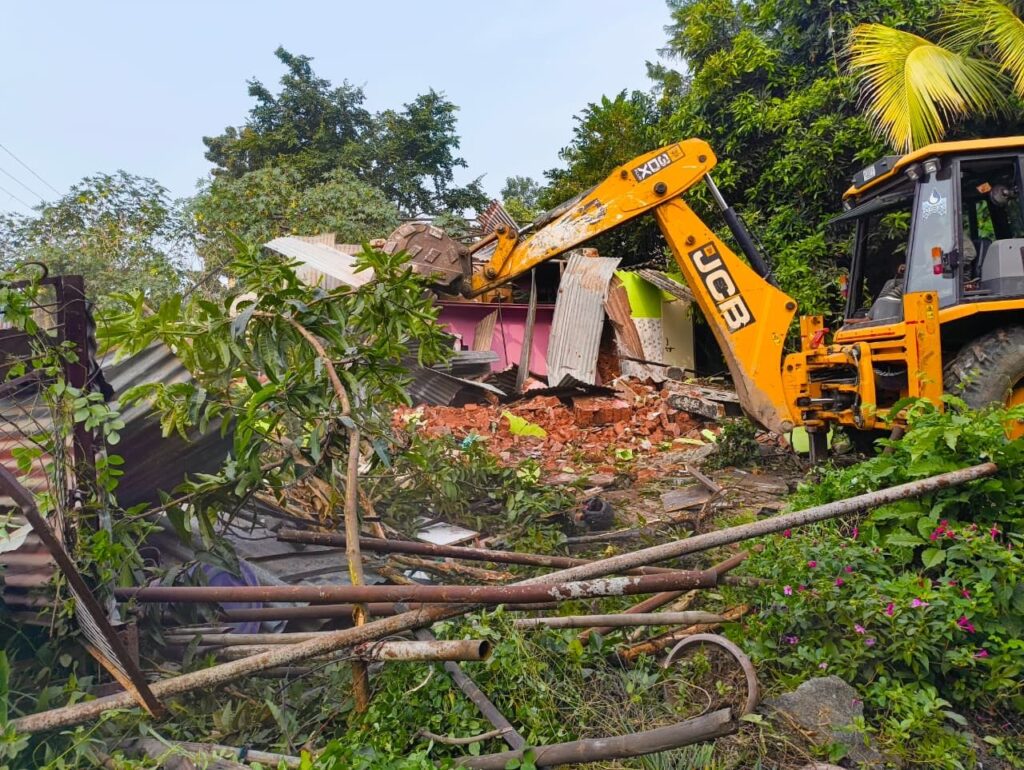
To break this paralyzing gridlock, the state’s Anti-Corruption Bureau (ACB) must elevate its strategy beyond catching mid-level bureaucrats with bags of cash. It must aggressively overhaul and develop its internal informant network and intelligence-gathering systems, mapping out the entire inter-departmental matrix of corruption. There remains an immense, urgent task ahead to completely revamp the administrative machinery, synthesizing field intelligence with data-driven forensic audits to pierce the veil of these benami empires.
The ultimate tragedy of this unabated exploitation is borne by the silent majority—the teachers, police personnel, software professionals, and small-scale entrepreneurs who have been permanently priced out of secure, dignified housing. When speculative mania drives property prices beyond the reach of honest household incomes, housing ceases to be a social necessity and becomes a weapon of economic exclusion. The fight for justice by the poor and middle-class citizens of Telangana remains entirely unanswered, drowned out by the roar of construction equipment and the clinking of elite coin.
The preservation of Greater Hyderabad’s scarce, rapidly dwindling land resources is not merely an exercise in urban planning; it is a desperate, existential battle for social justice. The true measure of Hyderabad’s greatness will never lie in the inflated valuation of its most expensive acre, but in the absolute confidence of its humblest citizen that the ground beneath their feet is governed by equity, transparency, and the rule of law.
Epilogue: The Scriptural Warning
To contextualize the inevitable moral and systemic collapse that awaits those who perpetuate such unbridled avarice, one must look to the timeless wisdom of the Bhagavad Gita:
(Bhagavad Gita – 16.21)
త్రివిధం నరకస్యేదం ద్వారం నాశనమాత్మనః ।
కామః క్రోధస్తథా లోభస్తస్మాదేతత్త్రయం త్యజేత్ ॥ (భగవద్గీత – 16.21)
The Core Tenet: Three are the gateways of this hell, leading to the ruin of the soul—lust, anger, and greed. Therefore, one must completely forsake these three. The hyper-inflation of land values in Greater Hyderabad is driven not by genuine market demands, but by an insatiable, institutionalized greed (Lobha) that devours public resources and compromises the ethical fabric of governance. Scripture warns that such pathologically driven acquisition carries the seeds of its own catastrophic undoing.
A Note to the Public, Fourth Estate, and Social-Media: This article is an uncompromising exposé intended to unmask the pervasive land mafia, lay bare the systemic vulnerabilities of our administrative platforms, and demand swift, uncompromised justice for the ordinary citizens of Telangana. It is a clarion call to the public, the press, and digital communities to pierce through the corporate PR of the real estate boom, confront this unabated exploitation, and reclaim the common heritage of Mother Earth from the clutches of an insatiable oligarchy.

M. Shiva Prasad, IPS (Rtd.) is a dedicated law enforcement professional who served the combined Andhra Pradesh cadre before opting for the Telangana cadre. Though a native of Andhra Pradesh, he considers himself a true Hyderabadi with an abiding love for the Telugu people. Driven by sincerity, fearlessness, and a lifelong fight against inequality and injustice, his ultimate strengths remain his goodwill and deep affection for the public and the police force. Today, he continues his mission by writing snippets and articles true to his conscience.
Email: Shivareach@yahoo.com
Mobile: 98480 38774