Prof Sridhar’s order as CIC contradicted by his successor
The Tug-of-War Over Transparency: Should the BCCI Be Under the RTI Act?
A Clash of Rulings at the CIC
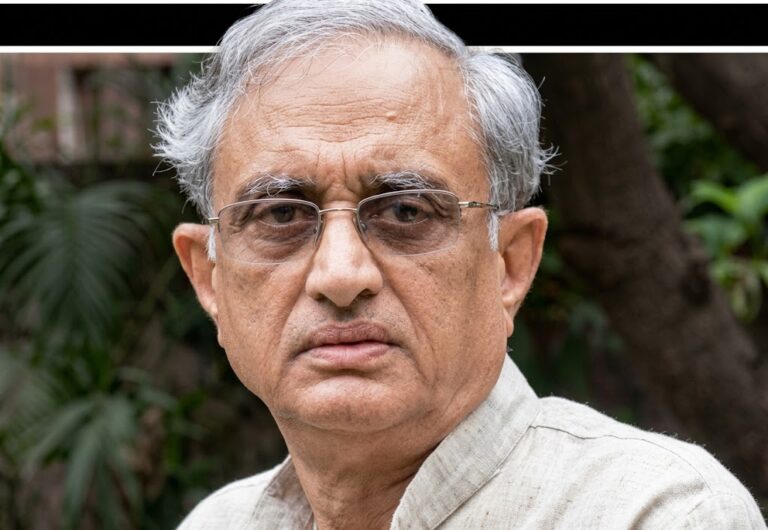
The Central Information Commission (CIC) has recently issued an order regarding the Board of Control for Cricket in India (BCCI) contradicting the order issued in 2018 by Prof Madabhushi Sridharacharyulu, the then Central Information Commissioner. Prof Sridharacharyulu asserted that the BCCI is a public authority and it should be brought under the purview of the RTI.
Justice RM Lodha, former chief justice of Supreme Court of India, maintained that BCCI performs public functions of national importance. Justice Lodha, as chairman of a committee appointed by the Supreme Court to resolve an issue pertaining to Indian Premier League (IPL), said the Board acts as public authority in substance, which necessitates transparency and accountability through frameworks like the RTI Act. The CIC and the Indian courts, in contrast, have largely determined that the BCCI is not a public authority in the strict legal sense under the RTI Act as it is registered as a private society and it does not receive any direct government funding. The courts consider the Board as a ‘state’ as far as regulatory governance duties are concerned but not for financial and legal liabilities.
The Legal Definition vs. Public Function
Information Commissioner PR Ramesh said on 18 May 2026 that the BCCI, despite performing important public functions relating to the cricket administration and India’s representation in international tournaments cannot be recognized as a public authority as it neither owned, controlled or substantially financed by Government of India. “The BCCI cannot be classified as a ‘public authority’ within the meaning of section 2(h) of the Right To Information (RTI) Act and the provisions of the Act are therefore inapplicable to it in the fact and circumstances of the present case,” said Ramesh in his order dismissing an appeal seeking information about the provisions and authority under which the BCCI represents India and select players for national and international tournaments. Ramesh, the Central Information Commissioner has issued an order on last Monday which is contradictory to his predecessor Prof Sridharacharyulu’s order issued in 2018 in his capacity as Central Information Commissioner.
The current structure and functioning of the BCCI is broadly on the line with other major cricket boards across the world, including those in England, Australia, South Africa, West Indies and Pakistan which operate as autonomous or private bodies outside direct ambit of transparency laws though many voluntarily disclose the financial and administrative information. The Central Information Commissioner Ramesh also directed the BCCI to disclose all relevant information to the RTI applicant.
The Judicial Backstory and the 2018 Overturn
However, this ruling has marked the reversal of the order given in 2018 by the then Information Commissioner Prof M. Sridharacharyulu who held the BCCI to be a public authority and directed the president, secretary and the committee of administration to designate central public information officers, assistant public information officers and the first appellant authorities under the RTI Act. The BCCI challenged the CIC order given in 2018 before the Madras High Court which in September 2025 remitted the matter back to the CIC for recommendation in the light of the apex court’s observation in BCCI Vs Cricket Association of Bihar case and said the CIC should pass fresh orders after reexamining the legal position. Revisiting the case, the CIC said that the BCCI is a private autonomous body which was registered under the Tamil Nadu Societies Registration Act. The BCCI was not established through the Constitution, Parliament, State Legislatures or through government notification.
The Argument for Accountability: Lodha and Sridharacharyulu
Justice RM Lodha had said that the Law Commission’s recommendation of bringing BCCI under the RTI Act was virtually the implementation of the 2016 Supreme Court order. In an interview in Indian Express (updated on 19 April 2018), Lodha stressed the importance of the move to bring accountability and transparency to the Indian cricket board. “This was part of our report”. The fundamental ruling that the Supreme Court has given is that the BCCI discharges public function which is of national interest. If you want to ensure the accountability and transparency in such an organisation, information should be available to public at large. The information about how they function should be in public domain. All these things would be possible if the RTI Act is made applicable. This is the recommendation of the Law Commission. On 14 July 2015, the Supreme Court Committee headed by Justice Lodha suspended the owners of Rajasthan Royals and Chennai Super Kings from Indian Premier League cricket tournament for a period of two years for alleged involvement in betting.
Prof. Sridharacharyulu, who is also a prominent teacher of law, argued the same thing in his order on the lines of Lodha. “The BCCI performs functions of great public importance such as selecting the national team and regulating the sport which are means of state action. It is the ‘approved’ national body: the BCCI holds virtually total control over the cricketing events in India. The Government provides indirect support through tax exemption, land grants, and allowing the use of national symbols (like tricolor) on uniforms. The Law Commission’s 275th report was cited to highlight how the BCCI’s powers can impact the livelihoods and rights of athletes”. Hence, the BCCI is part of the public authority and the civil society,” Prof Sridharacharyulu said in his order.
Justice Lodha championed the categorization of the BCCI as a public authority, the Law Commission had already recommended it and subsequent interpretations have created a nuanced legal reality. In various rulings the courts have separated the Board’s functions, holding it to ‘State’ or public authority standards strictly for its regulatory governing duties but not for broader financial and legal liability. There was a financial mess in Hyderabad Cricket Association recently. The people of Hyderabad are not aware of how much money was swindled and who are responsible for it. It went to the court. Had the association been under the purview of the RTI, the people of Hyderabad and the cricket lovers of Telangana would have known the facts.
Conclusion: Why Judicial Intervention is Needed
Now that the present CIC Ramesh has given an order which contradicts the order issued by his predecessor, the government has to take up the matter and file a petition in a court as soon as possible or the courts themselves have to take it up on their own on suo motu basis and examine the issue which is of great importance for the country. This is all the more necessary because the BCCI or state bodies do not voluntarily disclose the financial and administrative status as the cricket association in countries like England and Australia do. In order to inculcate the accountability in the BCCI, it has to be brought under the purview of the RTI. The judiciary has to intervene.

Prominent Journalist
Dr. K. Ramachandra Murthy is a versatile journalist with a distinguished career. Dr. Murthy began his extensive career with Andhra Prabha of The Indian Express group in Bengaluru. He was editor of Udayam, Vaartha and Andhra Jyothy. Dr. Murthy founded and edited HMTV news channel and The Hans India, an English newspaper. He was also editorial director of the Telugu newspaper, Saakshi. He was awarded Ph. D for his research work in rural reporting. Dr. Murthy’s five decades in journalism showcases his influential roles across both print and electronic media. He wrote the political biography of NTR published by Harper Collins.
Email: murthykondubhatla@gmail.com
Mobile: 9908002211