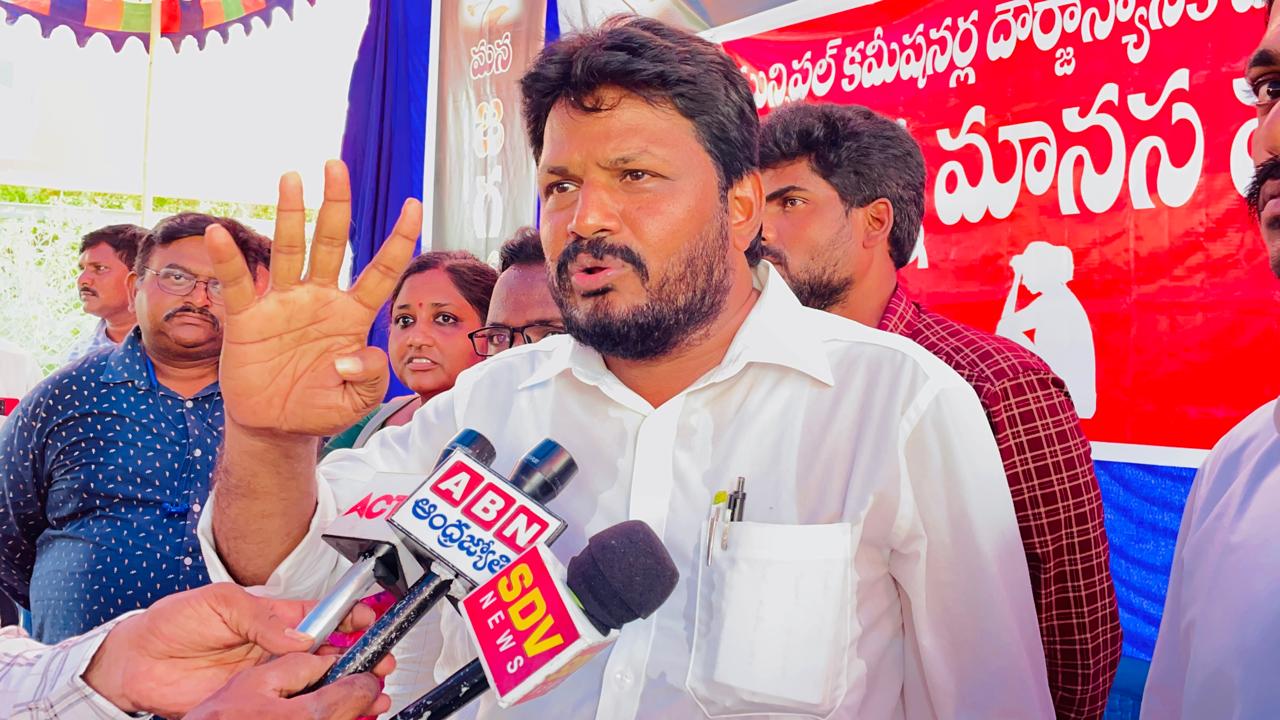
[In a searing critique, Gujjula Eswaraiah, CPI State Secretary for Andhra Pradesh, wrote an Article for Prime Post.News website exposed the systemic exploitation and institutional neglect faced by the state’s five lakh handloom weavers. He slammed successive YSRCP and TDP-led regimes for treating this historic, culturally rich industry with utter nonchalance, favoring corporate interests over artisan welfare.]
Political Silence and the Failure of Celebrity Advocacy
A Call to Action: The Path of Grassroots Resistance
For centuries, the handloom industry has been more than a livelihood; it is a repository of cultural heritage and the second-largest employer in rural India after agriculture. In Andhra Pradesh, approximately five lakh weavers depend directly or indirectly on this craft. Yet, behind the vibrant hues of Dharmavaram and Mangalagiri sarees lies a bleak reality of systemic neglect, dwindling state support, and structural exploitation.
A Mirage of Allocations: The Budgetary Deficit
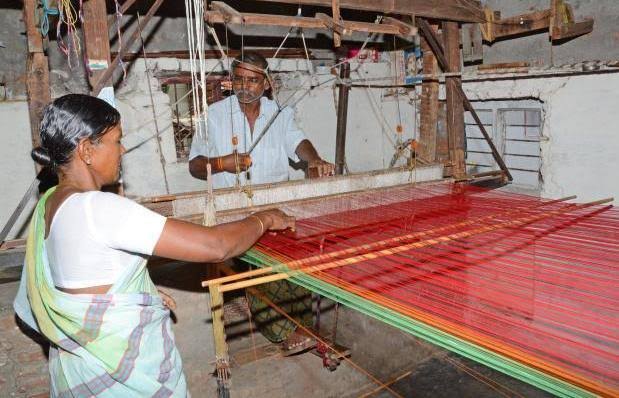
The core of the weavers’ crisis rests on institutional apathy, vividly reflected in successive state budgets. The National Democratic Alliance (NDA) coalition government’s annual budget for Rs the 2025–26 fiscal year allocated an estimated Rs138.08 crore to the Handloom and Textiles sector out of a massive total budget of Rs 3,32,205 crore. Strikingly, within this allocation, a mere Rs 5 crore was earmarked specifically for the welfare of handloom weavers.
Compounding this nominal allocation is the sluggish release of funds. By mid-January 2026, the government had released only Rs 1.67 crore of the welfare fund. This breaks down to an abysmal expenditure of roughly 136.17 per weaver family annually—an amount that fails to provide even basic subsistence, let alone revive a collapsing industry. Furthermore, the overall textile budget disproportionately favors the power-loom sector, threatening to completely cannibalize traditional handloom livelihoods.
The Mountain of Arrears
The economic distress of weavers is aggravated by the continuous accumulation of unpaid government dues across changing political regimes. The sector has endured a continuous cycle of unfulfilled promises:
The TDP Regime (2014–2019): Left behind outstanding dues worth Rs52.27 crore, spanning yarn subsidies, thrift fund schemes, marketing incentives, and pavala vaddi (low-interest loan) components.
The YSRCP Regime (2019–2024): Rather than clearing the backlog, the subsequent administration allowed arrears to balloon, leaving behind an additional Rs151.59 crore, which included massive unpaid clearings to APCO (Andhra Pradesh State Handloom Weavers Cooperative Society) and pending loan waivers.
Cumulatively, the total outstanding dues owed to the handloom sector from 2014 to early 2026 stand at a staggering Rs203.86 crore. Master weavers and cooperative societies are forced to service debts from district cooperative banks out of pocket, causing many of the state’s 979 cooperative societies to face imminent closure.
Constitutional Violations and the Way Forward
The state’s current posture runs counter to the spirit of the Indian Constitution. Article 21 guarantees the right to life with dignity, which inherently includes the right to a sustainable livelihood. Similarly, Article 43 mandates that the state strive to secure a living wage and promote cottage industries. By systematically diluting labor laws and ignoring structural exploitation by middlemen, successive governments have bypassed these obligations.
While the handloom industry generates over Rs40,000 crore in sales in the region and contributes nearly Rs2,000 crore to the exchequer via a 5% GST on handloom products, it receives less than 5% of that value back in direct state support.
To halt the tragic cycle of weaver suicides and debt traps, immediate interventions are required:
* A dedicated welfare budget of at least Rs 650 crore to ensure comprehensive coverage.
* Government credit guarantees worth Rs150 crore to revitalize cooperative societies.
* Robust implementation of the 15% yarn subsidy and a 4% interest subsidy on loans.
* Strict enforcement of the Handlooms Reservation Act to prevent power-looms from replicating and selling cheap imitations of genuine handloom designs.
The handloom sector is not a relic of the past asking for charity; it is a self-sustaining industry asking for its rightful dues. Immediate political will is vital to ensure that the rhythmic beat of the loom does not fall entirely silent.

With a journalistic long journey, we bring you https://primepost.news, a dynamic platform committed to unraveling the intricate tapestry of Indian politics, particularly delving deep into the heart of Telangana and Andhra Pradesh. Our blog is not just a source of news; it’s a reservoir of insights, analysis, and thought-provoking reviews.