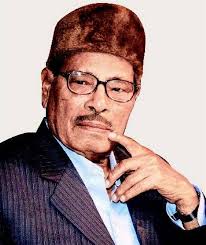
- “One-Man University” of music
Prabodh Chandra Dey, known universally as Manna Dey, remains the gold standard for technical excellence in Indian playback singing. Spanning a career of over seven decades, he was not merely a singer but a “One-Man University” of music. Below is an analysis of his legendary journey across ten distinct parameters.
The Wrestler’s Discipline (Early Life)
Born on May 1st, 1919, in North Kolkata, Dey’s initial dreams were far removed from the recording studio. A powerhouse of physical strength, his original ambitions lay in the wrestling pits and boxing rings. This “Pehelwan” (wrestler) build gave him the lung capacity and physical stamina that later fueled his rigorous four-hour Riyaz (practice) sessions, which he maintained from 4 AM daily until the age of 92.
The Pedigree of a Pandit
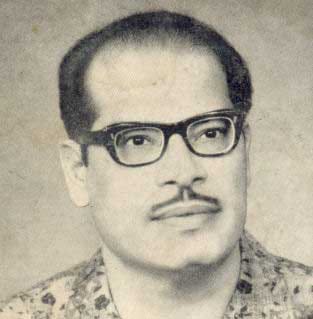
The transformation from athlete to artist was catalyzed by his uncle, the legendary blind singer-actor K.C. Dey. Under his uncle’s tutelage and that of Ustad Dabir Khan, Manna Dey mastered the intricate nuances of Dhrupad, Khayal, and Thumri. This deep academic foundation in Hindustani Classical music ensured that while others sang, Manna Dey “performed” the grammar of music.
The Struggle of the “Classical” Label (1942–1952)
Despite an early entry into Bombay assisting S.D. Burman and K.C. Dey, Manna Dey faced a unique hurdle: he was “too good.” His mastery of classical forms led producers to pigeonhole him as a singer for Bhajans, Qawwalis, or background tracks. While contemporaries like Rafi and Kishore Kumar were becoming the voices of the “Hero,” Dey was respected as a specialist rather than a mainstream superstar.
The Versatility Breakthrough
The tide turned in 1953 with Salil Chowdhury’s Do Bigha Zamin. Songs like “Dharti Kahe Pukar Ke” proved he could voice the soul of the common man. His versatility was later immortalized in the 1968 film Padosan with “Ek Chatur Naar.” In this comedic duel against Kishore Kumar, Dey’s ability to blend complex classical taans with humor showcased a range that no other singer could replicate.
The Sovereign of Bengal
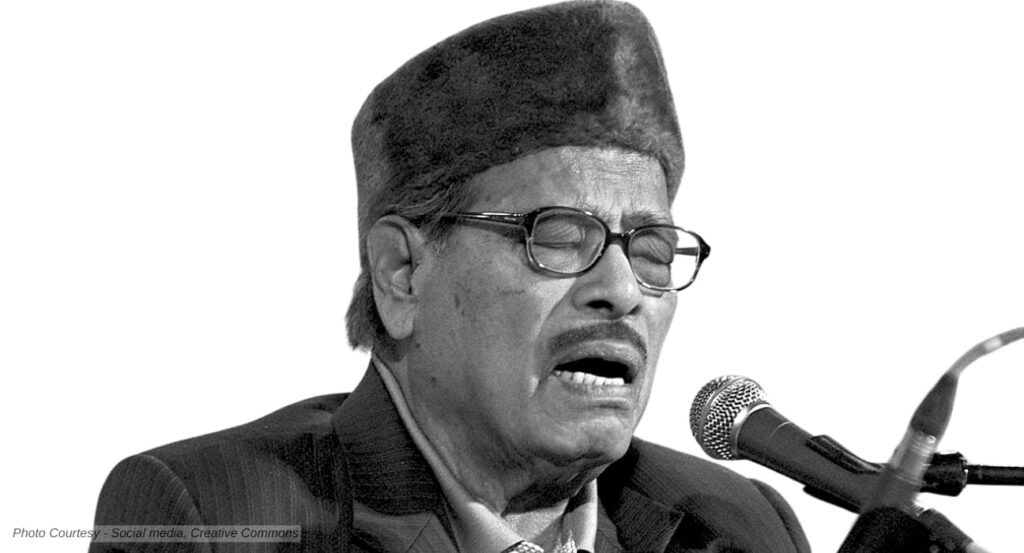
In Mumbai, he was a legend; in Kolkata, he was a God. With over 3,000 Bengali songs, he became the heartbeat of the state. His 1964 track “Coffee House’r Shei Adda Ta” is more than a song—it is the unofficial anthem of Bengali nostalgia, transcending political lines and generations.
Voice of the Character, Not the Star
Dey’s voice was perceived as “heavy” and “mature,” which meant he rarely voiced the young romantic lead. Instead, he became the soul of the “Character.” He provided the musical identity for icons like Mehmood, Pran, and Om Prakash. His voice brought dignity to the comedian and depth to the villain, proving that a song’s impact isn’t dependent on the hero’s face.
SP and Mahadevan refer to him The Diction Guru -(The South Connection)
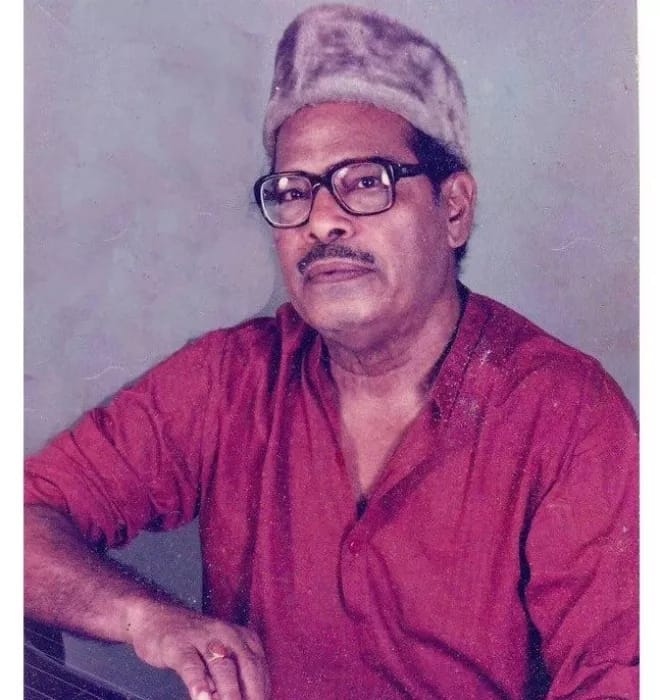
Manna Dey was a linguistic bridge. He sang in 16 languages, including all four major South Indian tongues. His Telugu, Tamil, and Kannada diction was so precise that modern legends like Sonu Nigam and Shankar Mahadevan refer to him as the “Diction Guru.” Even S.P. Balasubrahmanyam famously noted that he listened to Dey’s “Manasa Maine” a hundred times to prepare for his career-defining performance in Sankarabharanam.
Accolades and Ethics
Unlike many in the industry, Manna Dey never lobbied for awards or roles. His blunt, no-nonsense nature kept him away from film politics. Nevertheless, his brilliance was undeniable, earning him the Padma Shri (1971), Padma Bhushan (2005), and the highest cinematic honor, the Dadasaheb Phalke Award (2007).
Personal Life and the “Bangalore Dada”
In 1953, he married Sulochana Kumaran, a Malayali from Kerala, in a union that beautifully mirrored his pan-Indian appeal. In his twilight years, he moved to Bangalore, becoming the city’s beloved “Dada.” He continued to record until age 89, proving his vocal cords remained as resilient as his wrestler’s spirit.
The Eternal Training Tree (Legacy)
Manna Dey’s influence is woven into the DNA of modern Indian music. From A.R. Rahman using his compositions as textbooks to mentoring singers like Kavita Krishnamurthy and K.J. Yesudas, his legacy is pedagogical. As the saying goes: If Rafi was the voice of the heart and Kishore the voice of masti, Manna Dey was the voice of music itself.

Principal Correspondent, Prime Post
Vidya Sagar Chaturvedula is a passionate film enthusiast whose four-decade career spans multiple sectors, including media and industry. Fluent in Telugu, Hindi, and English, he has a deep appreciation for cinema, particularly films in those three languages. His passion goes beyond simple viewing; he enjoys analyzing directional skill, the emotional depth of actors’ performances, and the profound meaning embedded in dialogue. Mr. Sagar is known for his ability to clearly articulate and narrate his insightful film analyses after watching a movie.
Email: sagar.chaturvedula@gmail.com
Mobile: 9030702917
Excellent…
Good Narration. Very nicely described about the legendary singer. thankyou
‘Mannade’ the name enough for his voice recognition thats so special about him. I do enjoy his songs; a few to mention are ‘Yeh awara raatein, Zindagi kaisi hai paheli’ and many. He is a legend singer👍. Thanks for reminding him once again.
Very well written about legendary singer Manna Dey. Great review.
మన్నాడే..ఇతడు మంచి గ్రేటెష్ట్ సింగర్. చాలా మంచి పాటలు పాడాడు అన్ని రకాల పాటలు పాడి గొప్ప గాయకుడు అయ్యాడు. ఇప్పటికి అందరూ ఇష్టపడతారు. చాలా హైపిచ్ సంగీతం భక్తి పాటలు బాగా పాడాడు.
Nice review.
Manna Dey was one of the most versatile and classically trained voices in Indian music. His songs blended deep emotion with flawless technique, ranging from soulful melodies to complex classical compositions. Even today, his timeless voice continues to inspire music lovers across generations. Great review.
The review and comments help me to know his greatness
Sir Review on Manad is highly
Noted
All his songs like in movie
Bisal bad superb
His songs. In all languages are
Classic and beautiful
Especially. Kawali s worth hearing
His songs are melody
His songs are. High pitched ones are marvelous.
Good review
Great singer
Good review sir
No attention seeking or tantrums but the songs always created a desire for more.
The likes of
Pyaar hua ikraar hua … or laagaa chunari pe daag …
The audience hardly remember when the song ended.