After the 131st Amendment: A Constitutional Warning
The dramatic defeat of the Constitution (131st Amendment) Bill, 2026, in Parliament marks not merely a legislative setback for the Union government, but a profound constitutional moment. What was projected as a transformative package, combining delimitation, expansion of the Lok Sabha, and the operationalisation of women’s reservation, has now exposed deep anxieties about federal balance, democratic representation, and constitutional morality.
At the centre of this debate lies a complex and troubling linkage: the tying of women’s reservation to delimitation, and delimitation to a politically timed Census. With the Bill now defeated after intense opposition unity, the questions raised during the debate have not disappeared; instead, they have sharpened.
A Political Warning
The failure of the 131st Amendment Bill reveals that Parliament, at least for now, has resisted a structural overhaul perceived as rushed and insufficiently deliberated. The proposal to expand the Lok Sabha from 543 to 850 seats, combined with a reallocation of seats based on population, triggered alarm across opposition benches, particularly from Southern and some Eastern States.
Leaders like Mallikarjun Kharge forcefully argued that while women’s reservation enjoys unanimous moral support, its linkage with delimitation transforms a social justice measure into a vehicle for political recalibration. This critique resonated widely and contributed to the Bill’s defeat.
The episode underscores a fundamental principle: constitutional amendments that alter the architecture of representation cannot be treated as routine legislative exercises. They demand time, consensus, and above all, trust.
The Core Constitutional Concern: Representation vs Federalism
The proposed delimitation framework raised a difficult constitutional dilemma—how to reconcile the democratic ideal of “one person, one vote” with the federal principle that protects States from being penalised for successful governance. The earlier constitutional scheme, particularly through the 42nd and 84th Amendments, had “frozen” seat allocation based on the 1971 Census. This was not accidental. It was a deliberate constitutional compromise: States that implemented population control policies should not lose political representation. The now-defeated Bill sought to undo this balance by:
- Allowing Parliament to redefine “population” through ordinary law
- Removing the constitutional safeguard that preserved inter-State seat proportions
- Opening the door to delimitation based on newer Census data—potentially 2011 or future counts
This shift effectively moved a core federal safeguard from the Constitution into the domain of the parliamentary majority. That transition, from constitutional guarantee to legislative discretion—was at the heart of the opposition’s unease.
Women’s Reservation: A Noble Idea, A Problematic Linkage
The Nari Shakti Vandan Adhiniyam was celebrated as a historic step toward gender justice. However, its implementation clause—linking reservation to the completion of delimitation after a Census—has now become the most contested feature.
This raises a troubling paradox:
- A law intended to empower women is rendered inoperative until a politically contingent exercise (Census + delimitation) is completed.
- The delay in conducting the Census—initially justified by COVID-19—has extended far beyond necessity, creating suspicion about political timing.
Critics argued in Parliament that this linkage effectively converts women’s reservation into a “deferred promise,” contingent on executive discretion. As Kharge noted, the concern is not about the principle of reservation, but about its instrumentalization.
The Arithmetic of Power: Fear of Regional Imbalance
The most politically charged aspect of the debate was the projected redistribution of seats:
- High-population Hindi belt States stood to gain disproportionately
- Southern States, despite population stabilisation and better social indicators, faced a relative decline in parliamentary share
This is not merely a numerical issue; it strikes at the heart of India’s cooperative federalism.
If representation becomes strictly population-driven without safeguards, States that invested in education, healthcare, and women’s empowerment may find themselves politically marginalised. Conversely, States with higher population growth would gain greater influence.
Such an outcome risks inverting the logic of governance incentives—a concern repeatedly voiced during the debate.
Is there a Political Mask?
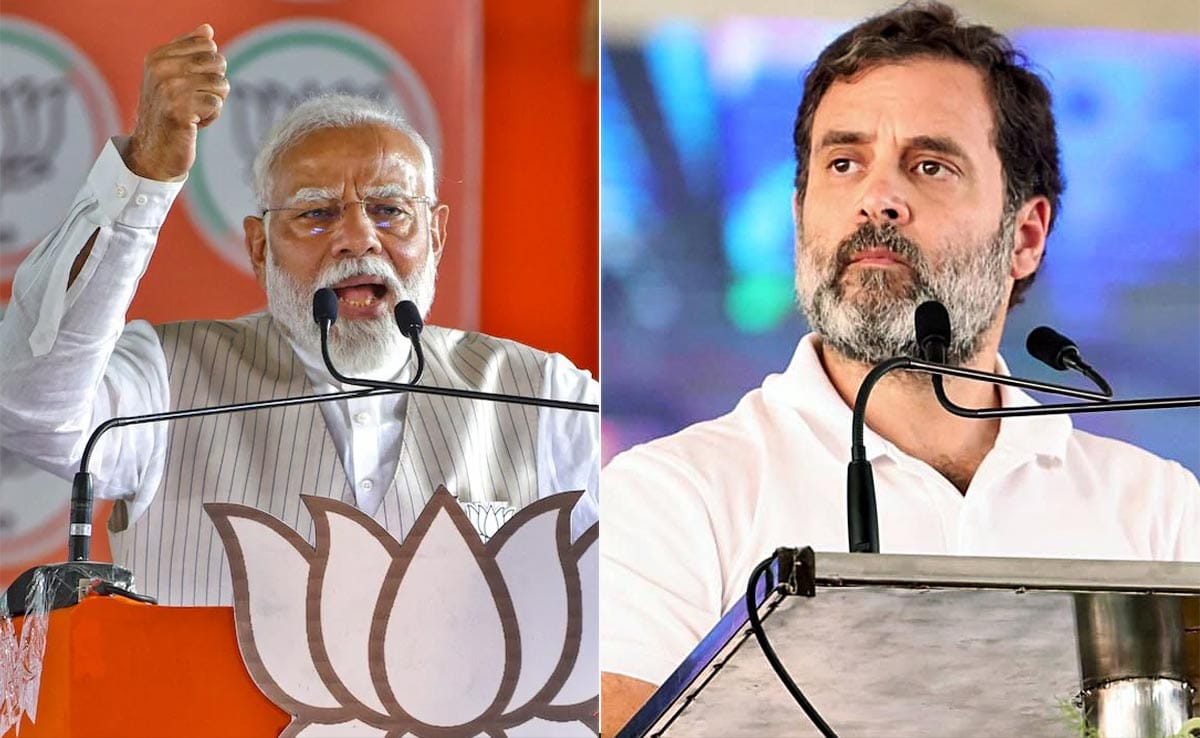
It appears that women’s reservation is being used as a political mask for a massive reallocation of Lok Sabha seats. This restructuring could benefit the BJP in its strongholds and reshape the federal structure to the detriment of States where it is historically weak.
- Excuse One: Why was the decennial Census delayed for over five years without reason? Can we discern the political logic behind this?
- Excuse Two: The 2021 Census was initially postponed citing COVID-19, but no explanation was offered for subsequent deferrals.
- The Third Element: It was quietly announced that the Census would finally take place in 2026-27.
- The Story of the “Freeze”: According to the Constitution, the freeze on seat allocation based on the 1971 Census expires only after the first Census conducted after the year 2026 is published.
- A Favorable Moment for the Government: In the normal course, delimitation should have been based on the 2031 Census. By shifting the timeline to 2026-27, the government initiated the process at a time favorable to itself.
- The Mystery: Why start the delimitation process now without waiting until 2031?
Can Women’s Reservation Be Implemented Without Delimitation?
One of the most significant outcomes of this debate is the revival of an alternative approach: implementing women’s reservation within the existing 543 seats through rotational reservation. This model, previously suggested during discussions on the 106th Amendment, avoids the need for immediate delimitation and decouples gender justice from federal restructuring. It also restores immediacy to women’s political empowerment—removing the uncertainty tied to Census timelines.
The Question of Timing and Trust
Perhaps the most damaging aspect of the proposed reform was not its content alone, but the manner of its introduction:
- Bills were circulated with minimal time for scrutiny
- Debate windows were compressed
- The linkage between multiple structural changes was insufficiently explained
In constitutional democracies, process is substance. The perceived haste created an impression that the reforms were designed to precede electoral cycles rather than follow deliberative consensus. The opposition’s unity in defeating the Bill reflects a deeper crisis of trust between the Union government and the States.
Are Wholesale Amendments Necessary?
The 131st Amendment Bill has been fast-tracked to amend Articles 55, 81, 82, 170, 330, 332, and 334A. There are four key elements:
- Key 1: 850 Lok Sabha Seats. The ceiling for members from States is raised from 530 to 815, and for Union Territories from 20 to 35, totaling 850 seats.
- Key 2: A Vague Definition of “Population.” The current constitutional definition (using 1971 for allocation and 2001 for boundaries) is being replaced with “as Parliament may by law determine.”
- Key 3: Simple Majority Over Constitutional Safeguard. This means the choice of which Census to use will no longer be a constitutional matter but will depend on ordinary legislation changeable by a simple majority.
- Key 4: The Removal of the Safeguard. The Bill deletes the third proviso to Articles 82 and 170. The “freeze” established by the 42nd Amendment (1976) and 84th Amendment (2001) ensured that States that controlled their population would not lose seats. That protective shield is now vanishing.
When constitutional guarantees are traded for mere ministerial assurances, the power to determine the number of seats shifts to the central government via simple legislation. How can we trust a mere “assurance” over a constitutional “guarantee”?
The Larger Constitutional Lesson
This episode reinforces several enduring constitutional truths:
- Federalism is not a technical arrangement; it is a political trust.
- Representation must balance population with fairness across States.
- Constitutional safeguards cannot be replaced by executive assurances.
- Social justice reforms must not be subordinated to political strategy.
The attempt to combine delimitation, seat expansion, and women’s reservation into a single legislative package may have appeared efficient, but it proved constitutionally combustible.
The Road Ahead
The defeat of the 131st Amendment Bill does not end the debate—it merely resets it.
The Union government now faces critical choices:
- Will it delink women’s reservation from delimitation and implement it immediately?
- Will it initiate a broader federal consultation before revisiting delimitation?
- Will it restore constitutional safeguards to ensure that no State is penalised for demographic success?
The answers to these questions will shape not just electoral politics, but the future of India’s constitutional democracy.
Democracy Beyond Numbers
The controversy has revealed that democracy is not merely about numbers; it is about fairness, trust, and constitutional integrity. The proposed expansion to 850 seats was not just an administrative adjustment; it was a reconfiguration of political power. Its defeat signals that such transformations cannot bypass the foundational principles of the Constitution.
Women’s reservation remains a historic necessity. But its legitimacy depends on how it is implemented—whether as an instrument of justice or as a tool of political arithmetic. In the end, the Constitution demands not only that power be exercised, but that it be justified.
Law professor and eminent columnist
Madabhushi Sridhar Acharyulu, author of 63 books (in Telugu and English), Formerly Central Information Commissioner, Professor of NALSAR University, Bennett University (near Delhi), presently Professor and Advisor, Mahindra University, Hyderabad. Studied in Masoom Ali High School, AVV Junior College, CKM College, and Kakatiya University in Warangal. Madabhushi did LL.M., MCJ., and the highest law degree, LL.D. He won 4 Gold Medals at Kakatiya University and Osmania University.
Email: cicsridhar@gmail.com
Mobile: 8447651505