Of all the States in the country Andhra Pradesh stands alone as a spineless wonder. It has not followed the other South Indian States in opposing the NDA government’s Constitution Amendment Bill in the name of reservation for women, a disguise to manipulate delimitation process. The entire opposition in the country stood united in opposing the Bill but all the three non-Congress and non-BJP parties in Andhra Pradesh have chosen to mortgage the self-respect of Andhras at the feet of Narendra Modi. JDU also is a non-BJP party in Bihar which is part of NDA coalition, like the TDP, but it has gone far away by offering the post of chief minister to the BJP and Nitish Kumar moving to Delhi as Rajya Sabha Member.
Political Posturing vs. Policy Reality: Naidu and Jagan’s Stance

One can understand the attitude of the TDP, Jana Sena and YSRCP to support the NDA. TDP and Jana Sena are alliance partners of the BJP and YSRCP is opposed to the Congress and so supports the BJP. We are deliberately avoiding talking about the criminal cases pending in the courts against the leaders. But both Chandrababu Naidu and Jagan Mohan Reddy had the audacity to criticize the opposition for voting against the Bill.
Naidu said the opposition parties have betrayed the country by voting against the Bill. He said women in the country could have empowered themselves had the Bill been passed saying crores of women were denied a great opportunity that was missed because of the stand taken by the opposition. Jagan copiously quoted numbers in his X account and questions the opposition parties as to what they gained through stalling the Women Reservation Bill. He asks the opposition parties to indulge in soul-searching. Both Naidu and Jagan are playing to the gallery. These statements were meant to assure Modi of their continued support. Both the leaders conveniently forget that the women reservation bill was already passed by the Parliament unanimously in 2023 and the President had signed it. It was the NDA government which did not implement it.
The Women’s Reservation Bill: A Mask for Delimitation?
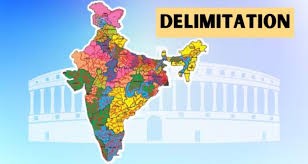
During the debate in the special parliament session both the prime minister and home minister stated that the seats would be increased by fifty percent in Lok Sabha and Assemblies in all the States across the country and the percentage of the seats for each State after the enhancement would remain the same. But the same thing was not mentioned in the Bill. Even before putting the Bill for voting on Friday evening the enhancement of the seats was not incorporated in it. What was defeated on the floor of the House was 131 Constitution Amendment Bill and not Women Reservation Bill. The Bill along with the other two Bills is intended to increase the number of seats in Lok Sabha to 850 from the present 543. Out of new total 850, 815 will be elected from States and 35 will be elected from union territories. The freeze brought on the delimitation exercise by Indira Gandhi in 1975 and Vajpayee in 2001 through amendment of the constitution, which will be in effect till 2026, will be done away with. The procedure of delimitation after every census will not be there. It will be decided by Parliament when the delimitation exercise should be taken up and how to go about it.
A “Test by Fire” for Federalism
To give effect to the above measures, Article 81 of the constitution is sought to be amended. Clause 2 sub-clause (a) of Article 81 pertains to the distribution of Lok Sabha seats among the states, and says, “There shall be allotted to each State a number of seats in the House of the People in such manner that the ratio between the number and the population of the State is, so far as practicable, the same for all States.” This was frozen by Indira Gandhi at 1971 census levels.
Sub-clause (b) of Clause 2 of Article 81 pertains to delimitation of seats within states, and says, “Each State shall be divided into territorial constituencies in such manner that the ratio between the population of each constituency and the number of seats allotted to it is, so far as practicable, the same throughout the State. This was frozen at 2001 levels by Vajpayee.
The Census Gap: Why the Delay Matters for Delimitation
Thus, the constitution principle enshrined in this article is one person, one vote and one value. This ratio has drastically changed from 1971 onwards. Family planning was implemented in South India where as it was neglected in the North. There was better planning, education, health and development in the South compared to the North. The share in the census, say in 2026, will drastically change to the detriment of the States like Kerala and Tamil Nadu and to merriment of States like Uttar Pradesh, Bihar, Rajasthan, Gujarat and Maharashtra. There was population control in the South and a lot of population growth in the North.
According to a Cabinet decision taken on 12 December 2025, the census in India will be conducted in two phases. It means the figures of the census will be available in late 2027. By that time the freeze brought in by Vajpayee in 2001 will be lapsed. The Private Bill introduced by DMK in Rajya Sabha on Saturday asks for the implementation of reservation for women in the existing Lok Sabha without waiting for delimitation or census. The opposition parties have to make the government to extend the freeze on delimitation since it will not be possible to do anything till late 2027 when the figures are likely to be available. It will be a test by fire for Southern States.
Prominent Journalist
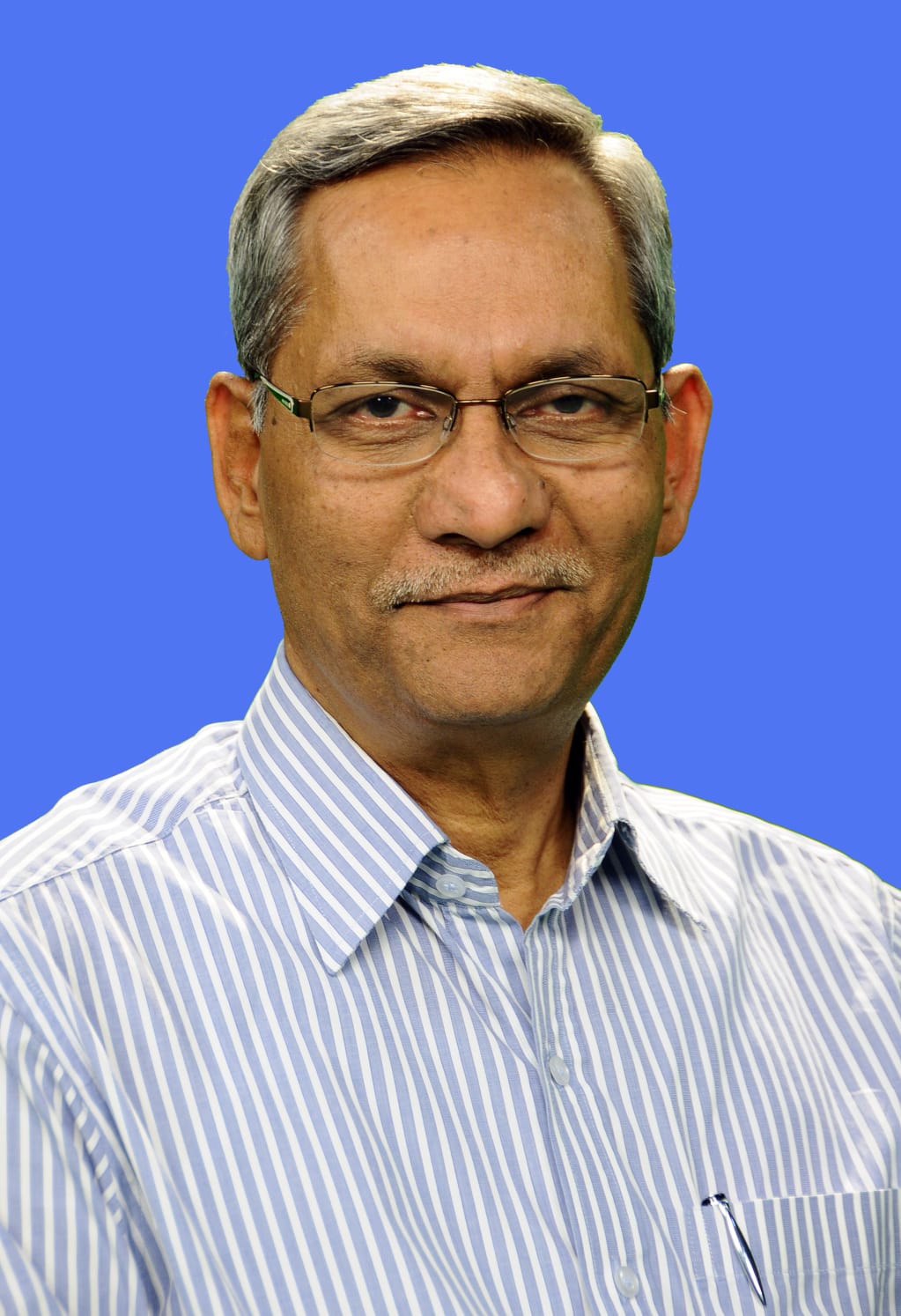
Dr. K. Ramachandra Murthy is a versatile journalist with a distinguished career. Dr. Murthy began his extensive career with Andhra Prabha of The Indian Express group in Bengaluru. He was editor of Udayam, Vaartha and Andhra Jyothy. Dr. Murthy founded and edited HMTV news channel and The Hans India, an English newspaper. He was also editorial director of the Telugu newspaper, Saakshi. He was awarded Ph. D for his research work in rural reporting. Dr. Murthy’s five decades in journalism showcases his influential roles across both print and electronic media. He wrote the political biography of NTR published by Harper Collins.
Email: murthykondubhatla@gmail.com
Mobile: 9908002211