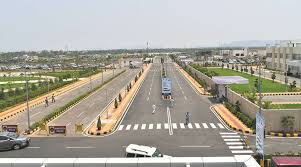
- Why a Parliamentary Act instead of a simple GO?
The Union Government constituted the Sivaramakrishnan Committee under the Andhra Pradesh Reorganisation Act, 2014, to suggest options for the new State’s capital after bifurcation.
- Against a single, mega “greenfield” capital built on large, contiguous farmland.
- For a distributed governance model—spreading institutions across regions.
- Use existing urban centres (e.g., Visakhapatnam, Vijayawada–Guntur belt, Tirupati, Kurnool) instead of creating an entirely new city from scratch.
- Minimise land acquisition, protect fertile tracts (especially in the Krishna–Guntur delta).
- Phased, fiscally prudent development aligned with the State’s limited post-bifurcation finances.
These points are not created by any author (or this author), politician, journalist, or columnist. It is based on a well-surveyed report. An important point is: Minimise land acquisition, protect fertile tracts (especially in the Krishna–Guntur delta). We need visionary Sivaramakrishnan-like personalities, not real estate developers or dealers.
The federal dynamics
A capital city cannot be created by declaration alone. Not by a Government Order, not by an Assembly resolution, not even by an Act of Parliament. Governance is not a notification; institutions are not real estate. The idea that a State can “declare” a capital into existence reflects a deeper confusion between law and reality. We need leaders, not dealers. Not mutha mesthri or but become builders of the nation.
Whether the Andhra Pradesh Reorganisation (Amendment) Bill, 2026, passed by Parliament recently, as consented to by the President, legally strengthens Amaravati as the capital? It totally” depends on how the law is used, implementation against the federal dynamics, and political conflicts between the ruling and opposition parties in Andhra Pradesh.
From 2 June 2024, A permanent Capital
Will AP celebrate the establishment of Amaravati, the capital? It is believed that the Parliament has amended the 2014 Act to declare Amaravati as the sole and permanent capital of Andhra Pradesh. It is expected to give it statutory backing under a central law, will apply it retrospectively from 2 June 2024 (end of Hyderabad as common capital), and amend Section 5 of the AP Reorganisation Act, 2014, to explicitly name Amaravati. Will AP celebrate the establishment of Amaravati, the capital?
Earlier, in simple terms, “AP shall have a new capital” (undefined), and now “AP shall have a capital at Amaravati”. It is also expected to end the ambiguity created after the 2014 bifurcation and, most importantly, the confusion caused by the 2020 three-capitals proposal. It will prevent future state governments from easily shifting capital. In fact, the State political choice (in case it is Andhra Pradesh under the leadership of Chief Minister Chandrababu Naidu). The capital decision now depends upon ‘parliamentary statute’, and is expected, as claimed, to bring Amaravati legal stability.
Why Sivaramakrishnan is often overlooked!
Even if it was not adopted, several of the Committee’s ideas remain structurally sound and relevant to today’s debates:
- Fiscal realism – Warned against the high upfront costs of a greenfield capital (land, trunk infrastructure, institutions). Favoured phased spending using existing cities, reducing debt stress.
- Balanced regional development: A distributed model could de-risk regional inequality, benefiting Coastal Andhra, North Coastal AP, and Rayalaseema more evenly.
- Lower social disruption: By avoiding massive land consolidation in fertile zones, it reduced displacement risks and long-term disputes over land value, compensation, and livelihood transitions.
- Environmental prudence: Flagged concerns about building on riverine, flood-prone, or fertile delta lands; advocated site sensitivity.
- Use of existing capacity: Leveraging existing urban infrastructure (ports, universities, hospitals) could accelerate functionality without waiting for a new city to mature.
- Resilience through dispersion: Distributing key institutions can enhance administrative resilience (natural disasters, congestion, urban risks).
- Flexibility: A non-monolithic model allows course correction over time, rather than locking the State into a single, high-cost urban bet.
The Committee’s model might have been slower to showcase, but steadier fiscally and less contentious socially. The real lesson is not that one model is “right” and the other “wrong,” but that capital policy must align with fiscal capacity, political continuity, and federal constraints.
As driven by a desire for speed, visibility, and centralized coordination, they did not like the visionary capital city. A visionary cannot ignore the merits of the report: prudence, balance, and sustainability. The underlying point is: “The Committee cautioned against building a capital that the State may struggle to sustain; the State chose instead to build a vision it struggled to fund continuously.” What was on the mind of the Chief Minister why reject it in 2014?
The people of Andhra Pradesh have waited over a decade. Farmers have contributed land, governments have announced plans, and successive regimes have altered priorities. Yet, the capital remains incomplete. A declaration may offer symbolic closure. But governance demands more than symbolism.
Part II
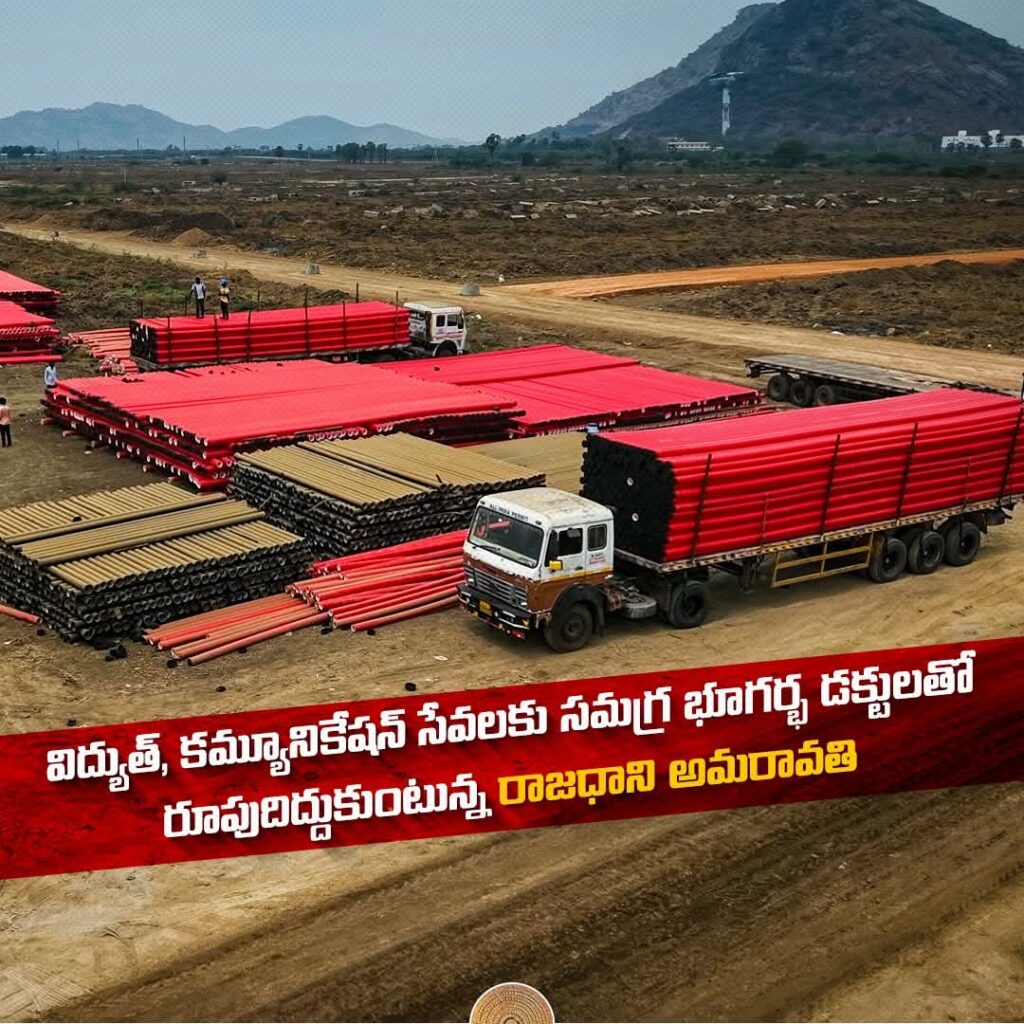
Statecraft or Stagecraft? Illusion or Capital
When Andhra Pradesh was bifurcated in 2014, it faced an unprecedented challenge: building a capital from scratch. The response was bold, ambitious—and perhaps overly optimistic. Under N. Chandrababu Naidu, the State chose to construct a world-class capital at Amaravati, inspired by global urban models such as Singapore. The vision promised speed, scale, and international visibility. But governance is not cinema. A capital is not a set that can be erected for display. Twelve years later, the question remains: where is the functioning capital? The present Government chose to conduct a feasibility study on land pooling, etc.
The answer lies partly in the divergence from the Sivaramakrishnan Committee’s recommendations. Expert, Sivaramakrishnan Committee constituted under the Andhra Pradesh Reorganisation Act, 2014, is visionary. It is a sad story of 12 years of difficulties of the people for their own Rajadhani, named Amaravati. The Committee’s advice was set aside for a mix of strategic, economic, and political considerations:
Preference for a “world-class” capital vision: The leadership sought a Singapore-style, planned capital to signal a fresh start. A single, visible capital was seen as a branding tool to attract global investment quickly.
- Central location logic: The Vijayawada–Guntur (Amaravati) region was considered geographically central within the residuary State, improving administrative accessibility.
- Speed and administrative cohesion: A unified capital was argued to be easier to coordinate than a dispersed model, especially for a new State needing quick institutional consolidation.
- Land pooling feasibility: The government designed a land pooling scheme (instead of classic acquisition) and secured large contiguous parcels relatively fast, something the Committee had cautioned against, but which enabled rapid project initiation.
- Political economy and optics: A grand capital offered immediate political visibility and a narrative of decisive leadership, compared to the incremental, less visible distributed model.
- Perception that dispersal dilutes growth: The Committee’s approach was seen by decision-makers as potentially diluting economic agglomeration benefits that a single capital city could generate.
They preferred Singapore-style and speed. Then what happened, even after 12 years, we have yet to start. The present Government chose to conduct a feasibility study on land pooling, etc. The Committee discouraged large-scale acquisition of fertile, multi-crop private land It encouraged the use of existing government land where feasible. It suggested:
- Minimising fresh land acquisition
- Using dispersed locations and existing cities
- The report implied the availability of government land in different pockets, not necessarily:
- contiguous
- urban-ready
- infrastructure-ready
One should understand the philosophy of the Committee’s Land Philosophy: We should avoid fertile delta lands and multi-crop agricultural zones. And the Committee prefers non-cultivable or low-productivity land, government-owned land, and incremental expansion instead of one massive block. The important idea is: “Capital formation should not come at the cost of prime agricultural ecosystems.”
N. Chandrababu Naidu has committed to Land pooling for about 33,000–38,000 acres assembled, through the Land Pooling Scheme (LPS). The problem is the contemplated a nature of the land: A largely highly fertile, multi-crop land (2–3 crops per year) and the Krishna river basin.
“Golden land” vs “barren land” argument
| Sivaramakrishnan View | Amaravati Implementation |
| Avoid fertile land | Used fertile delta land |
| Use govt / low-value land | Used high-value agricultural land |
| Dispersed model | Single mega capital |
| Low-cost approach | High capital-intensive approach |
This contrast is valid and strong for critique.
Even though land was “pooled”, the government still incurred Compensation (annuity payments), Returnable developed plots and infrastructure costs (very high).
“The capital project has often been expanded in vision, implying further land and financial requirements beyond the initial 33,000 acres.”
The Sivaramakrishnan Committee clearly advised the State to avoid the acquisition of fertile, multi-crop agricultural lands and instead explore government-owned or low-productivity land for establishing administrative infrastructure in a distributed manner. While it did not quantify a ready 70,000-acre contiguous land bank, it emphasized that sufficient government land existed across regions to reduce the need for large-scale private land acquisition.
In contrast, the government led by N. Chandrababu Naidu chose to assemble over 33,000 acres of highly fertile, multi-crop land in the Krishna river basin under the Amaravati project. This represented a conscious departure from the Committee’s caution, prioritizing a centralized “world-class capital” vision over a dispersed, low-cost, and land-sensitive model. While land pooling reduced immediate acquisition costs, it did not eliminate long-term financial obligations or the massive infrastructure burden required to build a capital city from scratch.
Part III
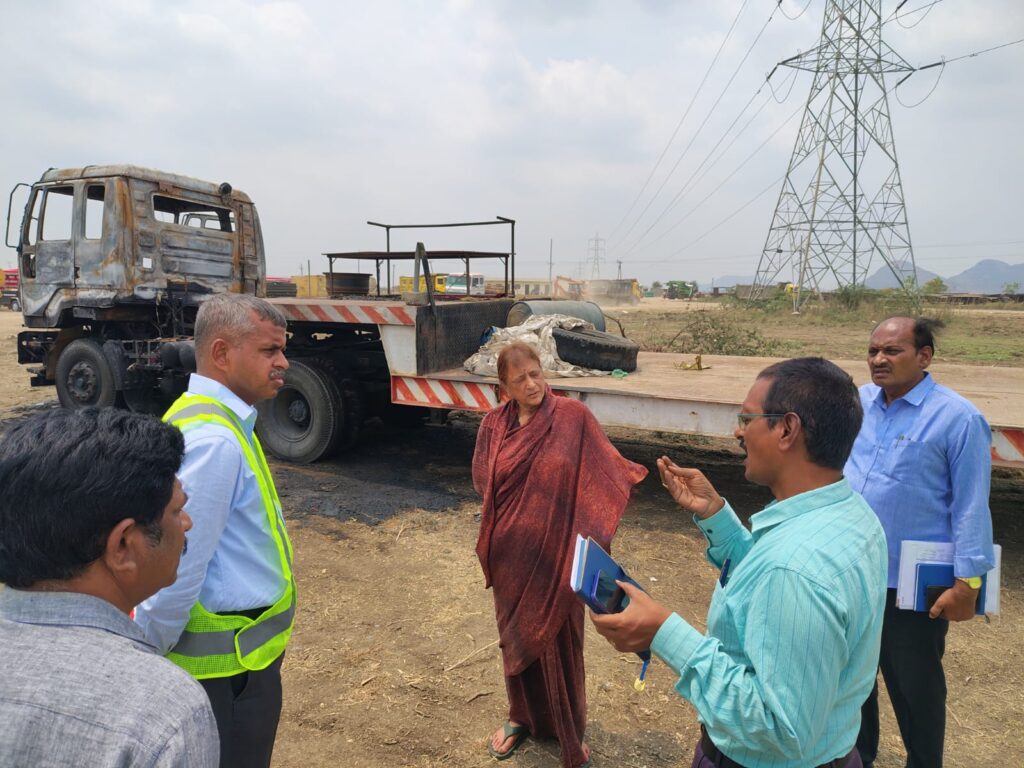
AP: Constitutional Silence, Political Experiment
In the constitutional scheme of India, States are created by law, but their capitals are not ordained by the Constitution. This distinction, though subtle, lies at the heart of the ongoing controversy surrounding Amaravati in Andhra Pradesh.
The Constitution of India is conspicuously silent on the question of State capitals. Articles 2 and 3 empower Parliament to form and reorganize States, but they do not mandate the declaration of a capital. A capital, therefore, is not a constitutional necessity; it is an administrative and political choice.
This principle was clearly reflected in the Andhra Pradesh Reorganisation Act, 2014, which bifurcated the erstwhile State and created Telangana and the residuary Andhra Pradesh. The Act declared Hyderabad as a common capital for a limited period but deliberately refrained from fixing a permanent capital for Andhra Pradesh. This legislative silence was not accidental—it was a conscious deferral of a political decision to the State.
The Political Creation of Amaravati
Into this constitutional vacuum stepped the executive. Under the leadership of then Chief Minister N. Chandrababu Naidu, the State chose to build a greenfield capital at Amaravati. This decision was subsequently backed by legislation, notably the AP Capital Region Development Authority Act, 2014. Amaravati was not a historical administrative capital. It was a policy construct, a city imagined, legislated, and initiated through land pooling arrangements involving thousands of farmers. Thus, Amaravati represents not constitutional inevitability, but executive vision coupled with legislative endorsement.
The Vision
The fragility of such a model became evident when a change in government brought a vision change. The subsequent administration led by Y. S. Jagan Mohan Reddy proposed a decentralised model with multiple capitals, challenging the very premise of Amaravati as the sole capital. This policy reversal triggered a constitutional crisis of sorts. Farmers who had parted with their lands approached the courts, invoking doctrines such as legitimate expectation, promissory estoppel, and the protection of property under Article 300A. The Andhra Pradesh High Court, in a significant judgment, directed the State to continue development of Amaravati, raising profound questions about the limits of judicial intervention in matters of policy.
But the Andhra Pradesh Reorganisation (Amendment) Bill 2026 was voted on by the Parliament. This act presumed that it overrides the ‘three capitals’ concept, whether somebody liked or opposed. The effect is that the amendment effectively nullifies the earlier model of Visakhapatnam (Executive), Amaravati (Legislative), and Kurnool (Judicial), which never happened in the last 12 years, unfortunately. There is political stability, though the 5-year Government was changed from the TDP-Janasena-BJP rule to the YSR Party Rule, and again the same coalition of three parties. The question is whether this Central law now recognizes only one capital, settling a long constitutional controversy? The Parliamentary law on the capital city is an ordinary Act, which can be reverted to the same or some other position depending upon the regime change. Andhra Pradesh needs a strong, stable, continuous capital city, whether you call it Amaravati or name it differently.
Guarantee?
Is there a debate on “guarantee” Amaravati’s success? This is either a doubt or fully guarantee of the success of this Capital. Not entirely. One should examine the critical constitutional reality. It may raise a federal question under the Constitution of India, Parliament vs State Power. The capital location is not explicitly in the Union List. It is generally treated as a State subject (executive domain). Can Parliament permanently bind a state’s capital choice? Is this legislative overreach? This could become a future constitutional challenge, as the capital of Andhra Pradesh, as if some rishi has cursed the one or the other Chief Minister, depending on the political dispensation.
Why did the AP not discuss comprehensively?
Why did the people of Andhra Pradesh not consult on Amaravati as the capital? Why seminars, conferences, and meetings in each district, old or new? All of a sudden, without a comprehensive discussion before the Assembly or Council of Andhra Pradesh, seeking it almost secret until the Parliamentary Amaravati Act was introduced all of a sudden. It may even open another chapter of litigation by conflicting legal specialists.
₹50,000+ crore development!
People are dreaming of the “Swarna Andhra”. The Official reports claim that the ₹50,000+ crore development pipeline and expected increase in private investment confidence. The media stated the bill was passed by voice vote with all political parties except YSR Congress members, who staged a walkout. If YSRCP staged a walkout, technically, it is not unanimous—it is “passed without opposition voting”. This indicates the instability or future doubts. Rajya Sabha Chairman C P Radhakrishnan said,
“On behalf of the entire House and the entire country, we wish the people of Andhra Pradesh to have their new well-built capital, Amaravati. Nara Lokesh was present in the visitors’ gallery throughout the debate on the bill. From the visitor’s gallery, the most important minister of Andhra Pradesh, Nara Lokesh, son of the Chief Minister, was witnessing the ‘historic movement’ in India, if not Andhra Pradesh, as if a great visionary was waiting to decide the destiny of the State”.
Part IV
Defining Moment or Defining Mistake?
The passage of the 2026 amendment has been described as a historic moment for Andhra Pradesh. Leaders have hailed it as a decisive step toward resolving a long-standing issue. But history is not written by declarations. It is written by outcomes. The Chief Minister N Chandrababu Naidu said, “This is a historic and defining moment for Andhra Pradesh. With the Andhra Pradesh Reorganisation (Amendment) Bill, 2026 being passed unanimously in both Houses of Parliament, the collective will and aspirations of our people have found a resounding voice at the national level.”
His son, a Minister in his father’s cabinet, Nara Lokesh, in a post, said,
“The eclipse that had befallen Amaravati has passed… Legitimacy has come to the people’s capital, Amaravati. The ruling parties from the coalition of the three parties of the NDA are celebrating.
Tried the fourth time to build capital!
Mr Nara Lokesh claimed that this was ‘the fourth time ‘ trying to build a capital; it is homecoming, this will definitely put Amaravati on the fast track, while adding that the state suffered ‘grave injustice’ upon the bifurcation from Telangana in 2014 and was left without a capital, secretariat, or high court.
The Civil Aviation Minister, K Rammohan Naidu, said about the atrocities faced by farmers, who ‘voluntarily’ donated land for the capital.
Who is responsible for this kind of ‘inaction’, wrong actions, and governance, good or bad, or non-governance? A term by Chandrababu, followed by Jagan Mohan Reddy, and elected Chief Minister Chandrababu, consumed 12 valuable years. Forget about the Capital, they could not build a secretariat. One blames the other. The same Government wanted Special Category Status (SCS). In its second term, it chose “Special Assistance Measure” (Special Package) in 2016 and then decided to be silent. TDP slammed the previous YSRCP government for ‘wasting’ under the latter’s regime.
All after 12 years!
Nara Lokesh said that, on the pace of development, works worth close to Rs 50,000 crore had been tendered and the Central Government had released nearly Rs 18,000 crore to stake since 2024. He hoped that the Secretariat, Assembly, High Court, and all major roads would be completed in two years.
Recognizing farmers’ land pooling sacrifices around 33,000 plus acres is basically a moral expectation, without a guarantee of completion within a reasonable time. It is a political validation, great! Is it enough to restore confidence among stakeholders? Only symbolic, coupled with political legitimacy. When will it be realized?
What is the status of the Status?
Now, what is this kind of amendment that cannot give people of Andhra anything except a ‘status’, which can be amended whenever the Government is changed? This amendment is unusual and important because Parliament has directly intervened in a State capital issue! But it raises federal questions under Article 246 (legislative competence) and, most importantly, Basic Structure (federalism). Without discussing, putting it before the public meetings, without sufficient debate in Parliament, and without collecting the opinions of the public, it will be a test case in Indian Constitutional Law. The 2026 amendment legally secures Amaravati as the capital, but its real success depends on political will, financial capacity, and constitutional sustainability. Is that enough?
Don’t believe verbal promise, not even the law!
One should remember that Special Category Status (SCS) was a verbal promise to Andhra Pradesh, which was not included in the AP Reorganization Act, 2014. It lacked legal enforcement, leaving it entirely to the political will of the ruling Central Government.
Let it also be what the package is. The Central Government cited the 14th Finance Commission, stating that the concept of “Special Category” was abolished for all states (except the Northeast and Himalayan states). There was fighting in Andhra and Delhi for SCS, stating that instead of fighting to the end, Chandrababu Naidu’s government initially agreed to a “Special Assistance Measure” (Special Package) in 2016, which promised the monetary equivalent of SCS. When public anger erupted over this compromise, TDP made a U-turn and exited the NDA in 2018.
It was a major blunder of Chandrababu Naidu after leaving the NDA. From 2018 to 2019, he launched the “Dharma Porata Deeksha” and clashed heavily with Delhi. However, because the BJP had an absolute majority in the Lok Sabha, they did not need TDP’s support, rendering the protests ineffective.
Y.S. Jagan Mohan Reddy won the 2019 election, heavily campaigning on achieving SCS. However, once in power, he stated that because the BJP won a massive 303 seats at the Center, AP could only “request and pray” for SCS, not “demand” it. The situation will be the same for Chandrababu Naidu, Nara Lokesh, and the Deputy Chief Minister Pawan Kalyan.
When both parties are interested in the development of Andhra, why do both Chandrababu and Jagan Mohan Reddy fight together to achieve the SCS or the package? Without these, even the most ambitious project will falter. The people of Andhra Pradesh deserve more than symbolic victories. They deserve a functioning capital that reflects their aspirations and supports their future. Amaravati today stands at a crossroads. It can either become a model of long-term planning and political consensus or remain a cautionary tale of ambition without continuity. The choice is not between Amaravati and alternatives. It is between governance and uncertainty.

Law professor and eminent columnist
Madabhushi Sridhar Acharyulu, author of 63 books (in Telugu and English), Formerly Central Information Commissioner, Professor of NALSAR University, Bennett University (near Delhi), presently Professor and Advisor, Mahindra University, Hyderabad. Studied in Masoom Ali High School, AVV Junior College, CKM College, and Kakatiya University in Warangal. Madabhushi did LL.M., MCJ., and the highest law degree, LL.D. He won 4 Gold Medals at Kakatiya University and Osmania University.
Email: cicsridhar@gmail.com
Mobile: 8447651505