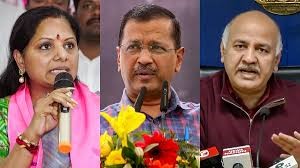
- Arvind Kejriwal, Manish Sisodia, Kavitha: Victims of Political Conspiracy
Based 6n the recent Rouse Avenue court judgment discharging Arvind Kejriwal, Manish Sisodia, Kavitha, and others in the Delhi excise policy case on February 27, 2026, as well as the broader constitutional context pinpoints the Government. It establishes the misuse of the power of the CBI and the ruling party. It is a straight violation of constitutional principles.
According to the excerpts court judgment’s official observations, the district court heavily criticized the investigative approach of the Central Bureau of Investigation (CBI), as opposition appears to be justified in alleging misuse of power for political adversaries. The District Court in Delhi observed that the prosecution failed to establish any prima facie evidence of a criminal conspiracy, quid pro quo, or misuse of official position. The case relied heavily on “inadmissible hearsay” from approvers rather than concrete proof.
The Court said: “What is particularly disturbing is the disregard shown by the investigating officer to the fact that public servants, who were discharging their official duties on a day-to-day basis for the effective implementation of a governmental policy, have been subjected to criminal prosecution solely on the basis of inadmissible hearsay attributed to an approver, despite the investigation yielding no material against them.”
Choreographed exercise-The judge termed the probe a “premeditated and choreographed exercise,” noting that roles were retrospectively assigned to fit a preconceived theory rather than letting evidence drive the investigation.
“Erring investigating officer” -The court directed a departmental inquiry against the “erring investigating officer” for framing charges against public servants without evidence, calling the prosecution a “miscarriage of justice” and an abuse of the criminal process. In the words of the court: It would instead amount to manifestly abusing the criminal process, offending the basic tenets of fairness and the rule of law.
The court formally cautioned the CBI against using regional or stigmatic descriptors like the “south group,” emphasizing that investigative agencies must use strictly neutral language that respects the nation’s constitutional framework. Strong judicial reprimands against the CBI and the government directing it are not entirely unprecedented in Indian history.
SC’s famous quote: “Caged Parrot” The Supreme Court’s Remark (2013): During the Coal Allocation scam investigation under the UPA government, the Supreme Court famously referred to the CBI as a “caged parrot speaking in its master’s voice,” criticizing the political interference in the agency’s reports. Executive pressure: The Vineet Narain Case (1997): In the Jain Hawala scandal, the Supreme Court had to intervene aggressively to shield the CBI from executive pressure, eventually laying down strict guidelines for the appointment of the CBI Director to ensure autonomy. Miserable failure: 2G Spectrum Scam Acquittals (2017): A special CBI court acquitted all accused, noting that the prosecution “miserably failed” to prove any charge and criticized the agency for a poorly investigated case built on speculation and rumors.
Agencies Weaponizing: Blame-worthy Governance
When state governments allege that central investigative agencies are being weaponized against them for political reasons, they typically utilize a mix of legal and administrative remedies: Under Section 6 of the Delhi Special Police Establishment (DSPE) Act, the CBI requires the consent of the state government to operate in its jurisdiction. Several non-BJP state governments (such as West Bengal, Tamil Nadu, and Kerala) have withdrawn this “general consent,” forcing the CBI to seek case-by-case permission or a court order to investigate in those states. State governments and accused leaders frequently approach the High Courts or the Supreme Court (under Articles 226 and 32) to quash FIRs, secure bail, or request court-monitored probes to bypass agency bias. States have increasingly invoked Article 131 of the Constitution (which deals with disputes between the Centre and States) to challenge the jurisdictional overreach of central agencies like the CBI and the Enforcement Directorate (ED).
Contextualizing the 130th Constitutional Amendment Bill (2025)
The Constitution (130th Amendment) Bill, introduced in Parliament in August 2025, proposes that a Prime Minister, Chief Minister, or Minister must automatically vacate their office if arrested and detained in custody for 30 consecutive days for a crime punishable by five years or more. Proponents argue that the bill upholds “constitutional morality,” asserting that leaders facing serious criminal charges should not be allowed to run a government from behind bars. Critics argue that this amendment shifts the threshold of disqualification from conviction to mere pre-trial detention. Because securing bail within 30 days under stringent laws like the Prevention of Money Laundering Act (PMLA) is exceptionally difficult, opposition parties claim this gives the central government the power to topple an elected state government simply by having central agencies arrest a Chief Minister and delay their bail, bypassing the democratic mandate entirely.
“The procedure becomes the punishment” for Political Leaders
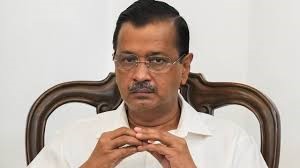
The issue of “the procedure becoming the punishment” through prolonged pre-trial incarceration has been a major topic in Indian jurisprudence. Kejriwal had spent five months in jail, while Sisodia was incarcerated for 17 months in the case. They were granted bail by the Supreme Court in September 2024, months before the Delhi Assembly election, in which the AAP lost its majority in the capital for the first time in 10 years. Similarly, Kavitha could be a victim of jailing as a political strategy. It goes without saying. The Supreme Court has increasingly ruled that prolonged incarceration without a trial violates the fundamental right to life and liberty. In the bail orders for Manish Sisodia and Arvind Kejriwal in 2024, the apex court reaffirmed the principle that “bail is the rule, jail is the exception,” even under stringent laws like the PMLA, if a speedy trial is impossible.
Challenging “Twin Conditions” for Bail: Legal teams routinely challenge the strict bail conditions of the PMLA (Section 45), arguing that holding individuals indefinitely without commencing a trial or providing material evidence is unconstitutional. Mandating that cases involving MPs and MLAs be tried in designated special courts in a strictly time-bound manner to prevent investigative agencies from delaying proceedings to keep political opponents incarcerated.
It is a strong admonition from the Court to invoke:
Martin Luther King Jr.’s words that “injustice anywhere is a threat to justice everywhere”. It also cited the Latin maxim, fiat justitia ruat caelum (let justice be done though the heavens fall).
The Court is right to remind:
“These principles serve as a constant reminder that the judicial task is neither to secure a convenient outcome nor to endorse a dominant narrative, but to uphold the rule of law. It is only by remaining anchored to these ideals that the confidence of the citizen in the administration of justice is preserved”.

Law professor and eminent columnist
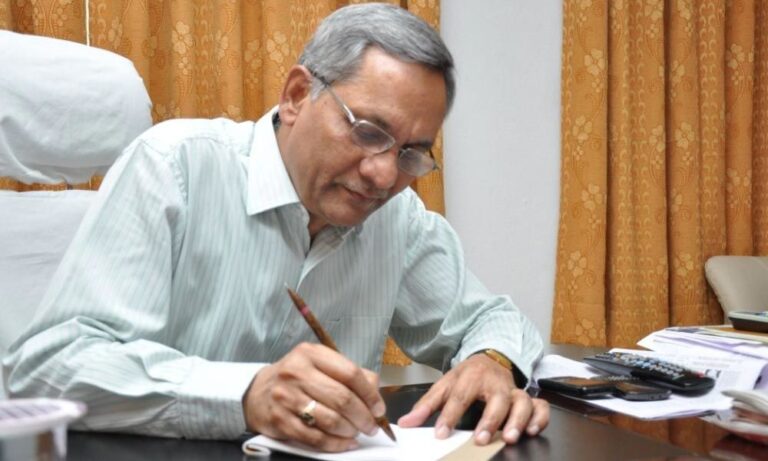
Madabhushi Sridhar Acharyulu, author of 63 books (in Telugu and English), Formerly Central Information Commissioner, Professor of NALSAR University, Bennett University (near Delhi), presently Professor and Advisor, Mahindra University, Hyderabad. Studied in Masoom Ali High School, AVV Junior College, CKM College, and Kakatiya University in Warangal. Madabhushi did LL.M., MCJ., and the highest law degree, LL.D. He won 4 Gold Medals at Kakatiya University and Osmania University.
Email: cicsridhar@gmail.com
Mobile: 8447651505