- Sad, Only 2.04% among women lawyers!
Lawyers need to address the “2.04% Reality”.The primary driver was the shocking data presented to the Court: out of 441 elected representatives across 18 State Bar Councils, only 9 were women. This 2.04% representation stood in stark contrast to the increasing number of women entering the legal profession.
We need to move from Formal to Substantive Equality.The Supreme Court invoked Article 15(3) of the Constitution, which allows the State to make “special provisions for women.” It argued that “formal equality” (letting women contest) failed because the “old boys’ club” nature of Bar politics acted as a structural barrier. This mandate enforces “substantive equality.”
What about Institutional Integrity? The Supreme Court observed that the Bar Council of India has never had a woman member since its inception in 1961. By forcing diversity at the state level, the SC is effectively diversifying the pipeline for the national body, as BCI members are elected from State Councils.
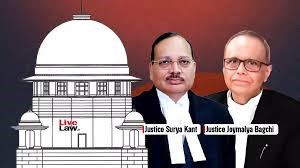
The Supreme Court, led by CJI Surya Kant and Justice Joymalya Bagchi, has issued a series of directives (culminating in January 2026) to enforce a mandatory 30% reservation for women in all State Bar Councils. In Yogamaya M.G. v. Union of India and Meena A. Jagtap v. Bar Council of India (2025), the court declared that 30% seats for women are no longer a suggestion but a constitutional imperative. It is a non-negotiable mandate! The Supreme Court clarified that the Advocates Act, 1961, and BCI Rules are “deemed to be amended” to incorporate this reservation, bypassing the need for immediate legislative action by Parliament.
Impact on Bar Governance: With more women in leadership, one can help with safety and ethics. They can expect a greater focus on POSH (Prevention of Sexual Harassment) compliance within court complexes. On the front of welfare priorities, one can expect diversified perspectives on welfare funds, childcare facilities in courts, and maternity benefits for advocates.
Hence, Lady lawyers, go forward!

Punjab & Haryana: On January 23, 2026, the SC modified its earlier order to include this Bar Council, directing that the 30% quota apply to their upcoming polls as the election process had not formally commenced.
Gujarat & Delhi: Already implementing reservation in both the Bar Council and High Court Bar Associations.
Telangana: While the election deadline is January 31, 2026, the court has urged voters to prioritize female representation even where processes were too far along for a formal seat-reservation rollout.
The Implementation Mechanism
To ensure these numbers are met even in states with low participation, the Court devised a hybrid model:
1. Direct Election (20%): Twenty percent of the total seats in the State Bar Council must be filled by women through the direct voting process.
2. Co-option (10%): If the number of women who contest or win is insufficient, the remaining 10% (to reach the 30% threshold) must be filled by co-opting women members (selection by the elected body).
3. Office-Bearer Reservation: The mandate specifically includes office-bearer posts (such as Treasurer) to ensure women are in decision-making roles, not just general members.
BCI vs. State Bar Councils and Bar Associations
| Feature | Bar Council of India (BCI) | State Bar Council (SBC) | Bar Association |
| Status | Statutory (National) | Statutory (State-level) | Private/Voluntary Society |
| Primary Role | Sets national standards for education & ethics. | Enrolls advocates; maintains the State Roll. | Welfare of members at a specific court. |
| Membership | Elected from SBC members + Ex-officio (AG/SG). | Elected by all advocates in the state. | Open to practitioners of that specific court. |
| Authority | Disciplinary appeals and university recognition. | Initial disciplinary jurisdiction over advocates. | No statutory power to suspend/disbar. |
A model suggested for the Manifesto for the Bar Council
Focus: Enrollment, Discipline, and Local Welfare
- Strict Adherence to SC Mandates: I pledge to be a watchdog for the 30% Women’s Reservation, ensuring that co-option is not used to favor political allies but to empower genuine woman leaders at the Bar.
- Young Advocates’ Stipend: I will fight for a state-mandated Minimum Stipend Policy for junior advocates during their first three years of practice to prevent the “brain drain” of talented, first-generation lawyers.
- Digital Infrastructure: My priority will be the “Paperless Bar Office,” ensuring that enrollment, verification, and certificate renewals in Telangana/Andhra Pradesh are fully digitized and free from bureaucratic delays.
- Disciplinary Transparency: I will propose that all disciplinary proceedings against advocates be tracked online and completed as soon as possible, not beyond six months.
Law professor and eminent columnist
Madabhushi Sridhar Acharyulu, author of 63 books (in Telugu and English), Formerly Central Information Commissioner, Professor of NALSAR University, Bennett University (near Delhi), presently Professor and Advisor, Mahindra University, Hyderabad. Studied in Masoom Ali High School, AVV Junior College, CKM College, and Kakatiya University in Warangal. Madabhushi did LL.M., MCJ., and the highest law degree, LL.D. He won 4 Gold Medals at Kakatiya University and Osmania University.