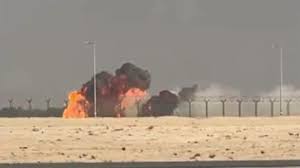
The tragic crash of the Indian Air Force’s (IAF) indigenous Light Combat Aircraft (LCA), the Tejas, at the Dubai Air Show has deeply shocked the nation and the global aviation community. The central question in everyone’s mind is: What exactly caused the accident? As of now, the Indian Air Force has not released any official findings, stating that the precise reason for the crash, which sadly resulted in the death of the pilot, is under intense investigation by a specially constituted Court of Inquiry. This inquiry will look into every single detail to find the cause, leaving no stone unturned.
The Moment of Crash: Eyewitness Accounts
Initial reports from the Al Maktoum International Airport, where the biennial air show was being held, suggest the single-engine fighter jet crashed around 2:10 PM local time. Eyewitness accounts and video footage circulating online indicate that the aircraft was executing a complex, high-G aerobatic manoeuvre when it appeared to suddenly lose control and altitude. Some reports mention the jet was performing a steep vertical roll or a negative-G turn just before it nosedived and hit the ground, exploding into a massive fireball, with thick black smoke billowing into the sky. The quick loss of control during a demanding manoeuvre suggests possible causes could range from a critical technical malfunction to an aerodynamic overload or an issue related to pilot input under extreme G-forces.
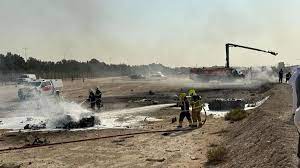
Tejas at Dubai Air Show: A Prestige Mission
The importance of the Tejas crash is significant because the aircraft was participating in a major international event to showcase India’s advancements in defence technology under the ‘Make in India’ initiative. This was a crucial platform for the aircraft to potentially secure global export orders. The fact that the jet crashed while performing its display sequence the very demonstration meant to highlight its agility and reliability will certainly raise questions. It is important to remember that this is only the second ever crash involving a Tejas in its long operational history, with the first non-fatal crash happening in Jaisalmer earlier this year, which was reportedly caused by an engine oil pump malfunction. The investigating team will undoubtedly focus on whether the engine, a crucial imported component, or the complex flight control system played any role in this tragic Dubai incident.
Court of Inquiry Ordered: What Happens Next?
A thorough, transparent investigation is now crucial for the reputation of the Tejas programme, which is the backbone of the IAF’s future fighter fleet. Investigators will be examining the jet’s ‘Black Box’ (the Flight Data Recorder and Cockpit Voice Recorder) to get minute-by-minute information about the aircraft’s performance, engine parameters, and the final commands given by the brave pilot. The final report from the Court of Inquiry will provide the definitive answer, either pointing to a system failure, a design issue, or an unexpected operational challenge during the dynamic air show routine.

Deputy Editor, Prime Post
Anand Gantela is a seasoned media professional with nearly three decades of experience across the spectrum of Indian journalism. Having worked extensively in both print and broadcast media, he has held key positions at renowned outlets such as Prajashakthi, Andhra Bhoomi, Mudra, Media India, Siti Cable, Mana Telugu, and Maa TV. From ground-level reporting to managing news bureaus and overseeing bulletin production, Anand has witnessed the evolution of news firsthand. His wealth of experience reflects a deep understanding of the dynamic and ever- evolving landscape of news reporting.