- From Chalkboards to AI
- The Structural Rebirth of Telangana’s Schools
- The Quality Crisis: Unmasking Five Critical Failures in the Current System
- Accountability or Offense? The New Performance Mandates for Educators
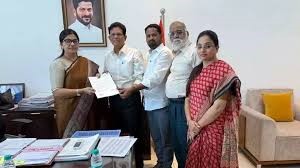
The ‘Telangana Vidya Commission’ (Telangana Education Commission), led by retired IAS officer Akunuri Murali, recently submitted its comprehensive report, ‘”Education Policy for Telangana 2026: Vision for Inclusive Excellence,” to Chief Minister A. Revanth Reddy. The report proposes a radical overhaul of the state’s education system from nursery to university levels.
Salient Features of the Commission
The Commission was established to modernize the state’s educational landscape, drawing inspiration from global best practices in countries like Vietnam and Malaysia. ‘Structural Integration:’ Recommends merging the SSC and Intermediate boards into a single entity. ‘English as Primary Medium:’ English is proposed as the medium of instruction from Nursery to University, while maintaining a three-language formula (Telugu/Urdu, English, and Hindi) from Class 1. ‘Institutional Transformation:’ Conversion of 2,000 existing schools into “Telangana Public Schools” with corporate-level infrastructure (labs, libraries, and transport). Introduction of Artificial Intelligence (AI) in the school curriculum from the 2026–27 academic year. Creation of “School Districts” for better monitoring and decentralizing university governance.
Five Serious Findings of the Commission
The report highlights deep systemic flaws that have hindered the state’s progress. Quality vs. Quantity Crisis: While the Gross Enrolment Ratio (GER) is 40% (higher than the national average), the quality of education is in “crisis” due to poor learning outcomes in foundational literacy and numeracy. ‘Severe Faculty Vacancies:’ A staggering 61% vacancy rate in regular lecturer posts in government colleges, leading to a heavy reliance on temporary guest faculty. ‘Infrastructure Decay:’ Many government institutions suffer from dilapidated buildings and lack basic amenities like clean toilets, drinking water, and functional labs. ‘Financial Disruptions:’ Significant delays in the fee reimbursement scheme have crippled the financial stability of many private and government degree colleges. ‘Unregulated Coaching Culture:’ The “corporate” coaching industry for JEE/NEET is flagged for exploiting students, neglecting mental health, and providing substandard facilities.
Recommendations “Embarrassing” to Government Teachers
While most reforms aim for improvement, certain recommendations have sparked concern and are perceived as “embarrassing” or punitive by the teaching community. ‘Abolition of Automatic Promotions:’ The Commission recommends that promotions should no longer be based on seniority alone but strictly on ‘performance-based metrics’. Teachers’ work would be evaluated every five years. If performance is unsatisfactory, they are given two years to improve; failing which, the Commission proposes ‘removal from service’. (Note: The Commission clarified this would only apply to future recruits, but it remains a point of contention).
Accountability for Learning Gaps: The report suggests that teachers are often responsible for the “satisfactory” standard of English instruction and foundational skills, placing the burden of systemic failure on individual educators. Non-Teaching Duties: The report highlights that teachers are frequently distracted by administrative tasks, which has been used as a critique of their primary output—student learning.
Transforming Telangana: The 2026 Education Roadmap
The submission of the Telangana Education Commission’s report marks a watershed moment for the state. Under the chairmanship of Akunuri Murali, the Commission has moved beyond traditional incremental changes, proposing a “Vision for Inclusive Excellence” that seeks to dismantle the divide between government and private education.
‘The Shift to Quality and Technology’
At the heart of the recommendations is the establishment of ‘Telangana Public Schools’. The state plans to launch 100 such schools immediately, equipped with facilities that rival elite private institutions. Recognizing the global shift toward technology, the Commission has mandated the integration of ‘Artificial Intelligence’ into the curriculum and the removal of outdated vocational courses in favor of AI-based training in polytechnics.
‘Radical Examination Reforms’
In a move to reduce student stress and end the “rote learning” culture, the Commission has proposed ‘abolishing the Class 10 Board Exams’ and the ‘EAPCET’ (Engineering, Agriculture, and Pharmacy Common Entrance Test). Under this new framework, Board exams would only occur in Class 12, and admissions to professional courses would be based on these marks. To ensure standards remain high, the minimum pass percentage is recommended to be raised to 45%.
‘Teacher Accountability and Professionalism’
Perhaps the most controversial aspect of the report involves the teaching workforce. The Commission identifies a “quality crisis” and proposes a strict ‘Performance-Based Promotion’ system. By suggesting a five-year review cycle and the potential removal of underperforming future recruits, the Commission aims to instill a culture of accountability. Furthermore, it recommends restructuring teacher education by splitting the B.Ed. into specific Primary and Secondary tracks and requiring 150 days of mandatory classroom internship.
Addressing the “Coaching Mafia” and Private Fees
The report takes a hard stance on the unregulated growth of coaching centers. It calls for the establishment of the ‘Telangana Educational Standards Authority (TESA)’ and a statutory Fee Regulatory Commission to categorize private schools and cap their fees. This aims to protect parents from predatory pricing while ensuring students in coaching hostels have access to mental health support and safe infrastructure.
Conclusion
The 2026 Policy is ambitious, aiming to bridge the gap between rural students and global opportunities through English-medium instruction and tech-heavy curricula. However, its success will depend on the government’s ability to fill the 61% faculty vacancy gap and navigate the resistance from teacher unions regarding the new performance-linked service rules. If implemented, these reforms could indeed make Telangana a national leader in public education.

Editor, Prime Post
Ravindra Seshu Amaravadi, is a senior journalist with 38 years of experience in Telugu, English news papers and electronic media. He worked in Udayam as a sub-editor and reporter. Later, he was associated with Andhra Pradesh Times, Gemini news, Deccan Chronicle, HMTV and The Hans India. Earlier, he was involved in the research work of All India Kisan Sabha on suicides of cotton farmers. In Deccan Chronicle, he exposed the problems of subabul and chilli farmers and malpractices that took place in various government departments.




Education has become commercial now-a-days. No student is serious about learning and improving their knowledge and communication skills. Many are just attending educational institutions for fun. Because they are afford to have private tutions to update their subjects as prescribed. And now as we see it is one and same about rural education and urban education. Only thing students should have aptitude to learn the things. I don’t see much variation about rural education and urban education. It is one and same now-a-days.
Now a days the teacher is working as clerk. Not in the teaching. Primary education is neglecting. All the Education system must be changed .The Teacher must work for their students to produce valued n good citizens