- The end of American influence in the Middle East
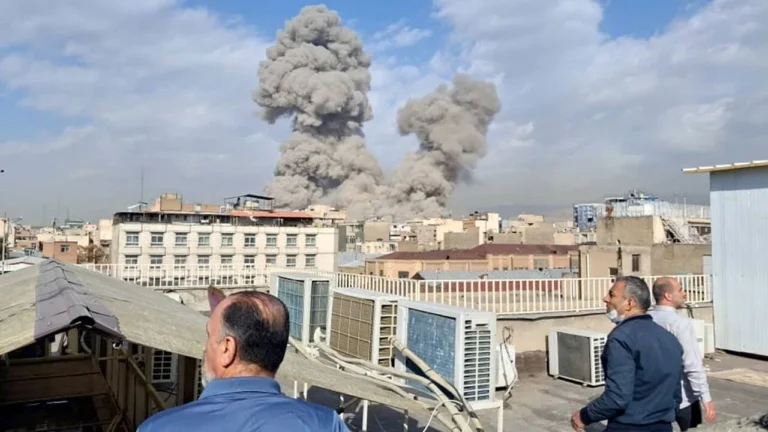
Jeffrey Sachs, a prominent economist and public policy professor at Columbia University, has been one of the most vocal critics of the military strikes launched by the United States and Israel against Iran in early 2026.
His analysis, published across platforms like ‘Common Dreams’ and detailed in interviews with ‘India Today’ and ‘NDTV’, characterizes the conflict not as a defensive necessity, but as a “premeditated” campaign for regional and global hegemony. In a recent, high-stakes interview with Rajdeep Sardesai, Consulting Editor at India Today, Professor Jeffrey Sachs provided a scathing assessment of the military conflict between the US-Israel coalition and Iran. Sachs argues that the “outcome” is not a victory for any side, but rather a catastrophic failure of global diplomacy and a dangerous miscalculation by the Trump administration

The War as a “Strategic Trap”
Sachs told Sardesai that the US and Israel have walked into a trap of their own making. He dismissed the idea that air strikes can “solve” the Iran problem, stating that Iran’s geographic size and population make it impossible to conquer or submerge into a Western-style “regime change” quickly.
A “Premeditated” Campaign
Sachs was blunt with Sardesai, calling the official justifications “a lie.” He asserted that the war was not sparked by an immediate nuclear threat but was a long-planned objective of the Trump-Netanyahu partnership. “This is a war of choice, not necessity. It is being sold to the public through narratives that have no basis in the actual intelligence that was on the table in early 2026.“
The “Premeditated” Nature of the Conflict’’
Sachs argues that the military strikes were not a response to an “imminent threat” from Tehran. Instead, he asserts that they are the culmination of a 30-year strategy—referencing the “Clean Break” doctrine—aimed at overthrowing any Middle Eastern government that opposes US and Israeli dominance. He has labeled official justifications regarding Iran’s nuclear program as a “lie,” noting that negotiations to restore the JCPOA were actually underway when the attacks began.
Desecration of International Law
In an ‘‘Open Letter to the UN Security Council’’ dated February 16, 2026, Sachs warned that the US and Israel were on the verge of “tearing up the UN Charter.” He maintains that, “The strikes violate ‘‘Article 2(4)’’ of the Charter, which prohibits the threat or use of force. There is no legitimate claim of self-defense under ‘‘Article 51’’, as Iran had not launched an initial attack. The assassination of Iranian leadership and the bombing of civilian infrastructure (including reports of a girls’ school in Minab) constitute clear war crimes.
The “Hegemony” Partnership’’
Sachs views the war as a symbiotic pursuit of control. Israel:’’ Seeks military hegemony in the Middle East to prevent the establishment of a Palestinian state. The war will not bring security; it will bring permanent mobilization and regional enmity. The United States: Seeks global hegemony by controlling the world’s energy heartland and weakening rivals like China and Russia by disrupting their oil supplies. It marks the end of American influence in the Middle East and potentially the “death of the dollar” as the world’s reserve currency due to energy disruptions.
Global Economic and Security Risks
He warns that the conflict could easily escalate into ‘‘World War III’’. Specifically: ‘‘Strait of Hormuz:’’ A prolonged conflict could see oil prices soar above ‘‘$100 per barrel’’, delivering a massive shock to energy-importing nations like India and China. ‘‘Domestic Dissent:’’ Sachs claims that roughly 75% of the American public opposes the war, suggesting a massive disconnect between the “military security state” and the citizenry.
The Proposed Alternative: A Seven-Point Peace Plan
Sachs continues to advocate for a diplomatic resolution rather than “endless war.” His proposed framework includes, ‘‘Immediate Cease-fire’’ and release of all hostages/prisoners, ‘‘UN Membership for Palestine’’ based on 1967 borders, ‘‘Israeli Withdrawal’’ from occupied territories, ‘‘Sovereignty Guarantees’’ for Lebanon and Syria, ‘‘Updated Nuclear Agreement’’ with Iran with lifted economic sanctions, ‘‘Full Diplomatic Relations’’ between Israel and all Arab/Islamic states and ‘‘International Reconstruction Fund’’ for war-torn regions. “The idea that bombing Iran will trigger an internal uprising is an utter fantasy. A few weeks of air strikes will not bring a large, mountainous country to its knees.”, ‘Jeffrey Sachs, March 2026’

Editor, Prime Post
Ravindra Seshu Amaravadi, is a senior journalist with 38 years of experience in Telugu, English news papers and electronic media. He worked in Udayam as a sub-editor and reporter. Later, he was associated with Andhra Pradesh Times, Gemini news, Deccan Chronicle, HMTV and The Hans India. Earlier, he was involved in the research work of All India Kisan Sabha on suicides of cotton farmers. In Deccan Chronicle, he exposed the problems of subabul and chilli farmers and malpractices that took place in various government departments.