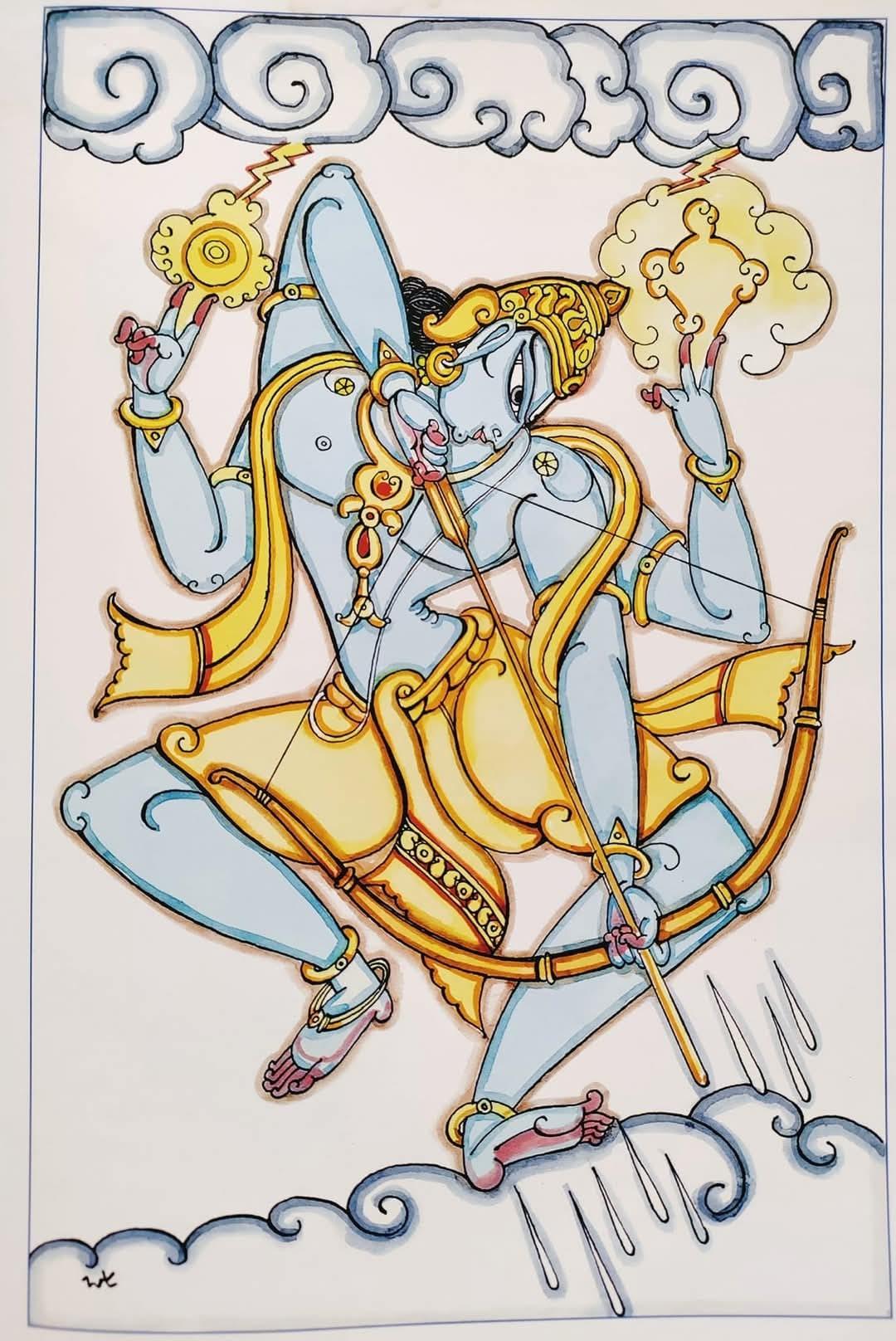
Krishmeans the infinite; ṇa means bliss
Vaiyattu vāḻvīrgāḷ nāmum nambāvaiykku
Seyyum kirisaigaḷ kēḷīrō, pārkaḍaluḷ
Paiya tuyinra paraman aḍipāḍi,
Neyyuṇṇōm pāluṇṇōm nāṭkālē nīrāḍi,
Maiyiṭṭeḻudōm malariṭṭu nāmuḍiyōm
Seyyādana seyyōm tīkkuraḷai cenrōdōm,
Aiyamum piccaiyum āndanaiyum kaikāṭṭi,
Uyyumāṟeṇṇi ugandēlō rembāvāy.
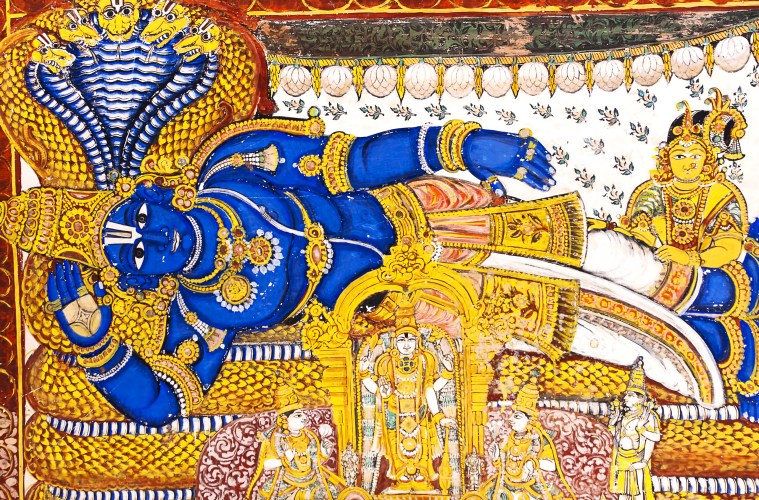
(above: Paalakadali, the Ocean of Milk)
Is this Tamil, or is it Telugu?
Many words in Tiruppāvai—recited during the Dhanurmasa (the month of Mārgaḻi)—are Tamil words that are, in fact, Telugu words. One does not usually realize this. Look at these meanings and see how beautiful they are. Goddamma (Āṇḍāḷ), the mother who awakened bliss through the very sound of the name “Krishna.”
Krish means the infinite; ṇa means bliss.
“Nīlātuṅga-stana-giri-taṭī supta-mudbōdhya Kṛṣṇam…”
This wonderful verse was composed by Parāśara Bhaṭṭar, the disciple of Rāmānuja. Its meaning is extraordinary. See how Godamma awakens the sleeping lion, Krishna. With her tulasi and flowers she binds him—Āṇḍāḷ binds him so completely that he is compelled to accept her. This “force” is not violence as commonly understood; it means that Krishna had no choice but to marry her. (These expressions are known from the Telugu Tiruppāvai tradition through Śrībhāṣyam Appalācārya Swami. I am only writing them down; they are not my original words. In truth, Godamma herself is the original author. Appalācārya Swami explained this clearly. Yet, in my view, no commentary surpasses that of Śrībhāṣyam.)
That portion of bliss is enveloped in the power of Nīlā Devī. Śrībhāṣyam explains this philosophy even more profoundly—so deeply that it is difficult even to write. Who is Nīlā Devī? How did the marriage of Śrī Krishna take place? All this is described in the Tiruppāvai pāśurams. Godamma speaks of pāmālai and pūmālai: a garland of verses and a garland of flowers. Śrī Raṅganātha, Veṅkaṭācalapati, Vaṭapatraśāyī, and Śrī Krishna are one and the same—this is the unifying philosophy explained here.
In the very first of the thirty verses, similarities between Telugu and Tamil words and their meanings can be clearly seen:
- Mārgaḻi – Mārgaśīrṣa
- Niṟainda – full (like the full moon)
- Nandagōpan – Nandagopula
- Kumaran – son (Śrī Krishna)
- Aśōdai – Yaśodā
- Śiṅgam – lion
- Mugattān – face
- Nārāyaṇanē – Nārāyaṇa himself
- Namakke – for us
How many such words exist in Telugu! By understanding these, and learning other Tamil words as well, one can grasp the meaning of Godamma’s first pāśuram.
From the second pāśuram:
- Vaiyattu – earth
- Pārkaḍaluḷ – ocean of milk
- Paraman – the Supreme Being
- Āḍi pāḍi – singing songs
- Neyyuṇṇōm – not consuming ghee
- Pāluṇṇōm – not drinking milk
- Nīrāḍi – bathing
- Seyya – to do
- Seyyōm – we will not do
These, too, are easily understood in Telugu.
Walking the Path of Charity Is the Way of Our Sacred Vow
For the bliss of the world, come, dear, join this divine mission.
To sing at the lotus feet of Vaikuntha Natha of the Milk Ocean
Forsake ghee and milk, and forget not to bathe in early hours.
Forsake flowers and eyeliner; avoid giving facial makeup.
Listen to elders, do not do the don’ts, do only the good.
No gossip, no hurtful words that wound the heart,
Walking in charity and righteousness, avoiding the forbidden;
For salvation, engage with noble thoughts, awake, let us all go.
“Vaiyattu vāḻvīrgāḷ”—those who wish to live joyfully on this earth, come.
“Nāmum nambāvaiykku”—this vow is not meant to torment you.
“Seyyum kirisaigaḷ kēḷīrō”—listen to what we should do.
“Pārkaḍaluḷ paiya tuyinra paraman aḍipāḍi”—let us hold the feet of the Lord of Vaikuṇṭha who reclines gently in the Ocean of Milk.
“Neyyuṇṇōm pāluṇṇōm”—no ghee, no milk.
“Nāṭkālē nīrāḍi”—let us bathe at dawn.
“Maiyiṭṭeḻudōm malariṭṭu nāmuḍiyōm”—no collyrium for the eyes, no flowers in the hair; let us give up indulgence.
“Seyyādana seyyōm”—we shall not do what elders have forbidden.
“Tīkkuraḷai cenrōdōm”—we shall not utter harsh words that hurt others.
“Aiyamum piccaiyum āndanaiyum kaikāṭṭi”—we shall give charity to the extent we can.
“Uyyumāṟeṇṇi ugandē”—we shall do all this joyfully.
Learn the Secret of Ramayanam in Tiruppavai
When Āṇḍāḷ invited people to observe the Nārāyaṇa vow, she wondered whether so many would respond. Then she decided to explain what should and should not be done during the vow. One who undertakes a vow must understand possible contingencies.
In the second song, Godamma also narrates the story of Rama. “Vaiyattu vāḻvīrgāḷ”—those who wish to live happily on this earth, come. The earth, it is said, imparts the quality of tamas. To cultivate sattva while living on earth is like a lotus blooming in muddy water. Even when God incarnated as Rama, he came under the influence of tamas while living on earth.
It is said that Sita spoke thus to Hanuman: while living on this earth, committing mistakes is natural. When you were asked merely to look and return, did you not burn Lanka? Was that not a mistake? Then Hanuman wondered—if I erred, did Rama also err, Mother? Indeed, when Śūrpaṇakhā came and proposed, Rama could have simply said he was devoted to one wife. Was it necessary to point her toward Lakshmana and make light of the situation? Weren’t many later events rooted in that very incident?
In truth, even if the father had granted him the kingdom, even if elder Rama had ordered him to rule, even if sages, mothers, and elders had requested him to govern, even if the guru had declared there was no fault—Bharata sought only Rama’s feet. He desired only the sandals Rama wore. In the Solar dynasty, the throne always belongs to the eldest son; the younger cannot ascend it. While the elder brother lives, the younger does not rule. This code of conduct—the path spoken and walked by the elders—Bharata followed. Considering Rama’s feet dearer than royal splendor, Bharata stands as the supreme devotee, the highest bhakta.
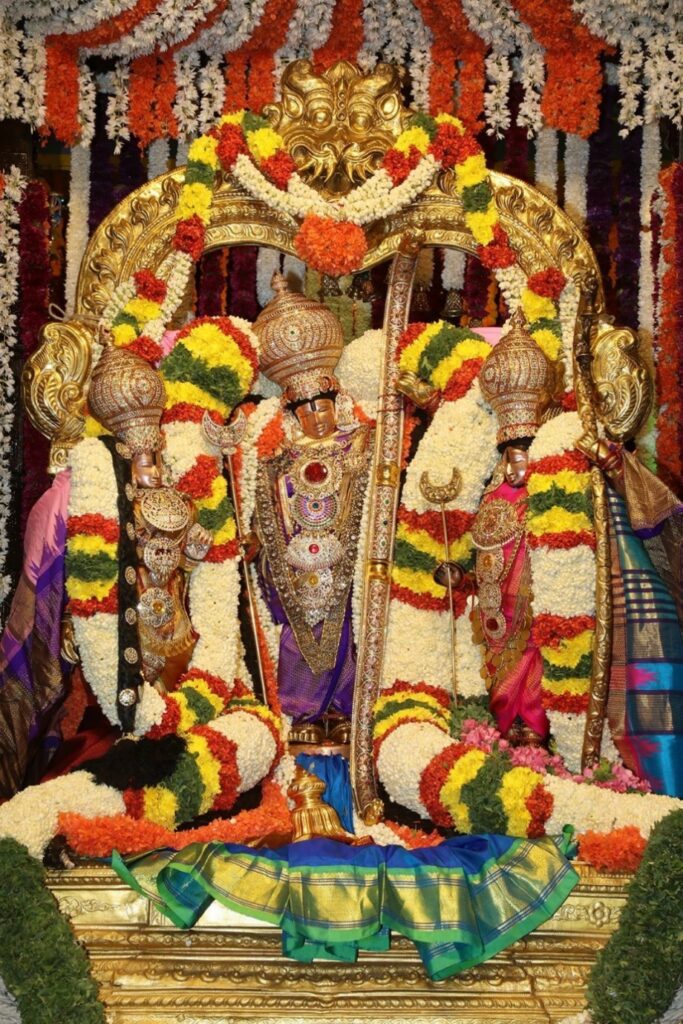
Thus, Tiruppāvai does not narrate only the stories of Krishna; the story of Rama too runs through it. When we grasp both the meanings and the inner meanings, the philosophies of Śrī Rama and Śrī Krishna, the Ramayana and the Bhāgavata, convey their messages to us through Godamma.
To refrain from speaking ill of others is a Vaishnava trait. “Vaiṣṇava jan to tene kahīye pīḍa parāyī jāṇe re”—one who understands the pain of others alone is called a Vaishnava, teaches the bhajan of Mirabai. One should not even think ill of others, for the indwelling Lord knows even the thoughts of the mind.
Vemana said:
“Committing sins within, and outwardly appearing virtuous
though others may not know, will the Lord not know?
O Viśvadābhirāma, listen.”
Such are the teachings Godamma offers us.
–Madabhūṣi Śrīdhar

Law professor and eminent columnist
Madabhushi Sridhar Acharyulu, author of 63 books (in Telugu and English), Formerly Central Information Commissioner, Professor of NALSAR University, Bennett University (near Delhi), presently Professor and Advisor, Mahindra University, Hyderabad. Studied in Masoom Ali High School, AVV Junior College, CKM College, and Kakatiya University in Warangal. Madabhushi did LL.M., MCJ., and the highest law degree, LL.D. He won 4 Gold Medals at Kakatiya University and Osmania University.