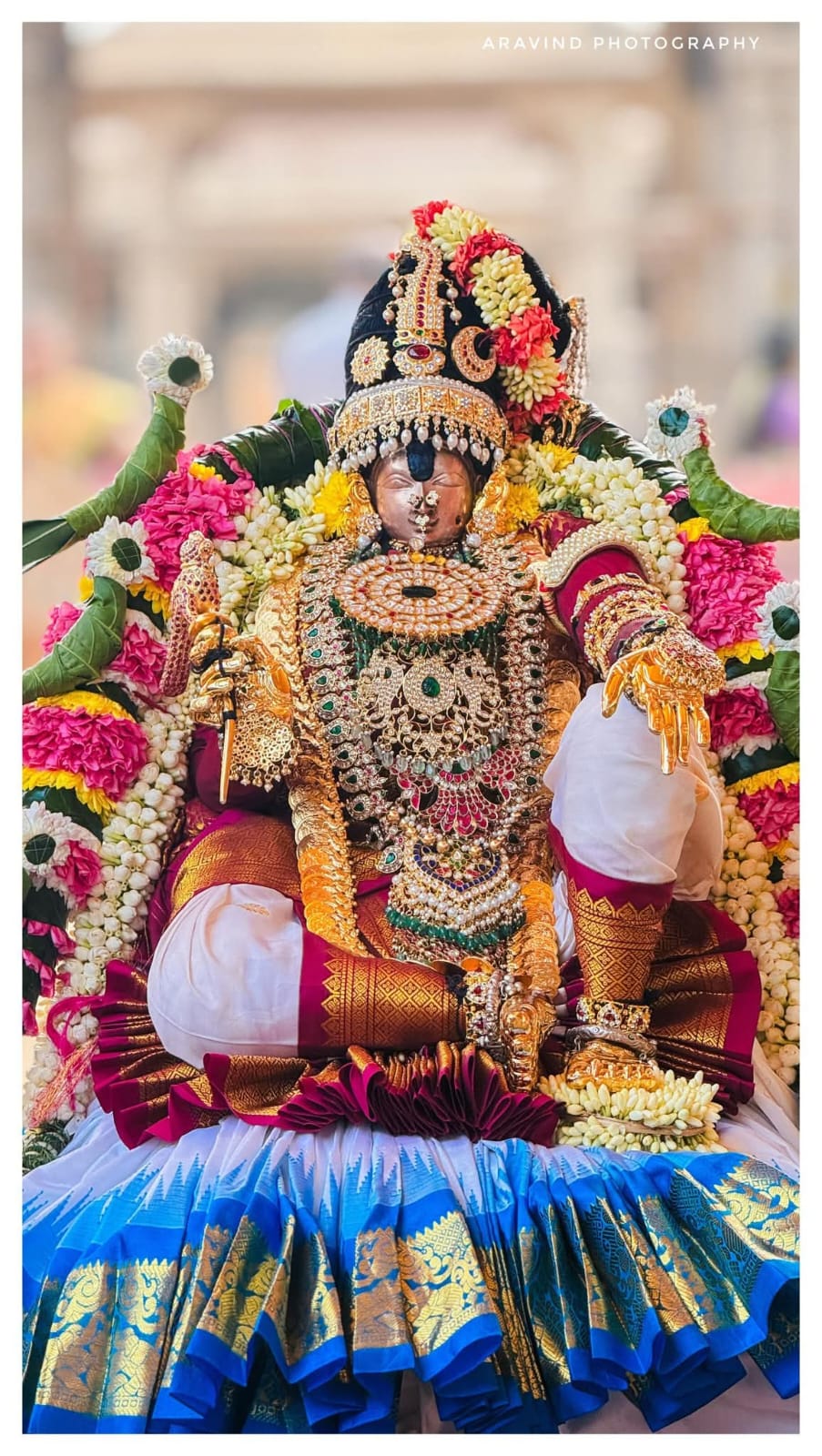
- “The Fire of Kamsa’s Hatred in the Heart”
Tiruppavai by Godadevi from Tamil
Oruththi Maganaai-Ppirandhu Oriravil
Oruththi Maganaai Oliththu Valara
Tharikkilaanaagi-Th-thaan Teengu Ninainda
Karuththai Pizhai-ppiththu kanjan Vayittril
Neruppenna Ninra Nedumaley! Unnai
Aruththuthu Vandhom Parai Tharudhi Yaagil
Thiruththakka Selvamum Sevakamum Yaampaadi
Varuththamum Theerndhu Magizhndhu-el or empaavaai
English Translation by Madabhushi Sridhar
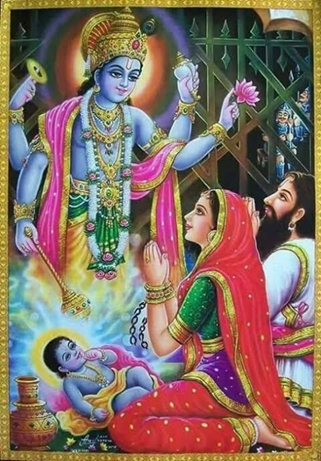
Born to a divine woman in one night.
Travelled to another mother in hiding.
Overcoming all the attacks of the demon,
who planned to harm you in many ways, You
Instilled a killing fire of fear in Kamsa’s mind,
O Supreme Self, we all wantonly came,
Seeking your unlimited grace, to serve you,
To sing your glory, O Krishna, to get relieved of all pains.
Background: The Lord Who Devotees bind Sri Krishna, though omnipotent, ascends the throne only when the gopis command Him. In the previous paasuram, they sang auspicious hymns for His protection—not because He lacks power, but because their love cannot tolerate even the imagination of danger to Him. This pāsuram deepens that mood by revealing the mystery of the incarnation itself.
The Mystery of the Incarnation: Birth in Prison, Play in Gokula
Rama fights demons only after reaching youth.
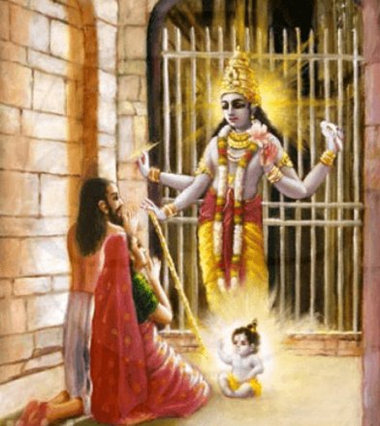
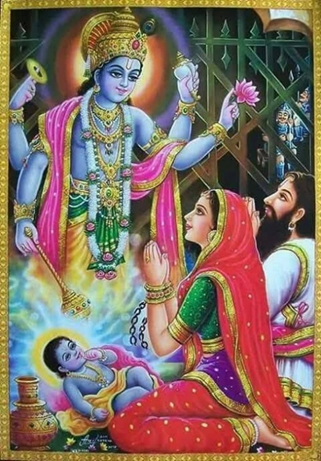
Krishna, however, begins His incarnation inside a prison, in enemy territory.
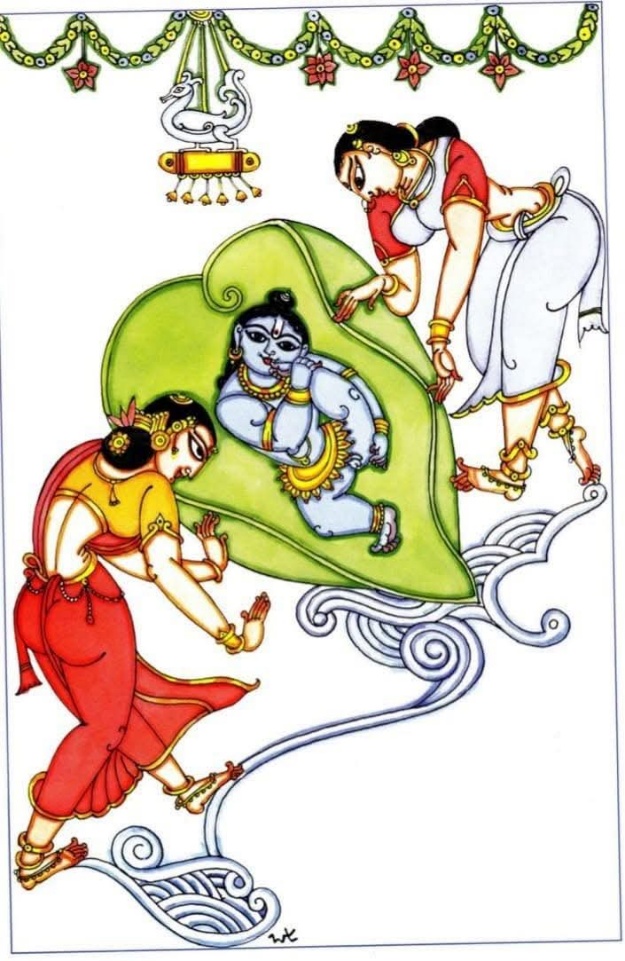
Born to Devakī in chains
Carried across the Yamunā at midnight
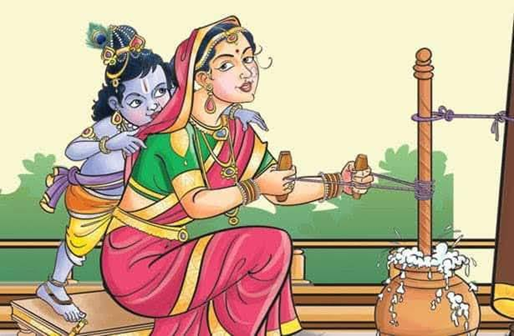
Raised secretly in Yashoda’s home
From birth itself, His life is danger, concealment, and sacrifice.
The gopis still tremble remembering that terror, even though Kamsa is long dead.
Such is bhakti born of intense love, not fear.
The Fire in Kaṁsa’s Heart: Hatred vs Love
“Kamsan vayiṟṟil neruppenna ninṟa”
“You stood like fire in Kamsa’s belly.”
This does not mean Krishna was cruel.
Rather, Kamsa’s hatred itself became fire and consumed him.
Had that same intensity turned into love, Kamsa would have been liberated.
Hatred burns the hater; love redeems even the sinner.
Kamsa represents ahanakaara, the ego that sees itself as separate from God.
Kṛishna burns that ego from within.
The Gopīs’ Supreme Bhakti
They do not even utter:
The name of Devaki
The place of birth
Kamsa’s name clearly
Not from ignorance—but from protective love, as if danger still lurks. Their final declaration is simple and absolute:
“We want You alone.”
Even asking for the parai (ritual drum) is only because He Himself offered it.
They claim no independent will.
Andal’s Vision: The Love of the Infinite
Andal reveals a profound truth:
The devotee’s love is finite—a drop
The Lord’s love is infinite—an ocean
Just as Rama declares He cannot live even a moment without Sita,
Here Krishna’s eyes reveal His deep longing for His devotees.
This paasuram marks the moment when the gopis realize:
“It is not only we who love Him—He longs for us even more.”
Acharya Commentarial Tradition (Explicit Citations)
1. Periyavaachaan Piḷḷai
On “Born to one mother, raised by another”:
This shows avataara saulabhya—the Lord’s extreme accessibility.
The concealment of names and places is not fear, but bhakta-bhīti—devotees’ anxious love.
“Tariḵkilaagi taan” refers to Kamsa’s unbearable egoistic rage, not mere political fear.
His Key insight: Those through whom the Lord suffers become instruments of His divine play.
2. Maṇavaaa Māmuni
On “Fire in Kamsa’s belly”:
The fire is Kamsa’s hatred, not Krishna’s nature.
Love of the same intensity would have liberated Kamsa.
On “Nedu Māla”:
Not physical vastness, but the vastness of longing for devotees.
The Infinite Lord’s yearning is infinitely greater than the jīva’s.
Maamuni’s axiom:
Jeeva’s love is atomic; the Lord’s love is cosmic.
Mantra-Theological Integration
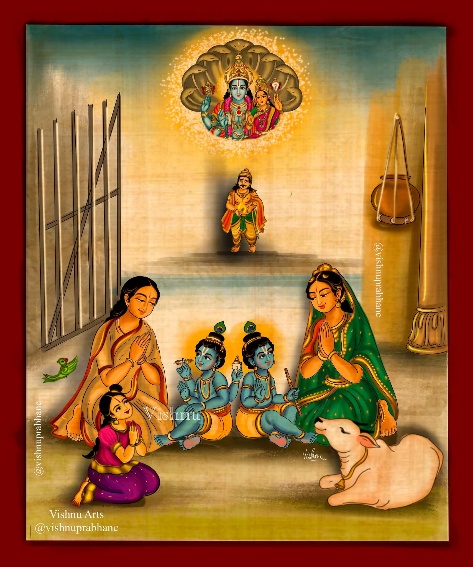
Krishna has two mothers, and tradition links this to two great mantras:
Naaraayama Aṣṭaakṣari – essence of divine refuge
Vaasudeva Dvaadasaakṣari – all-pervasiveness
According to Kandaadai Raamanuja Acharya:
Devaki corresponds to Aṣṭaakṣari (8-letter mantra)
Yashoda corresponds to Dvaadasaari (12-letter mantra)
Some also align:
Devaki with Gaayantri Mantra
Yashoda with Naaraayana Astaksari
True Pongal Is Overflowing Bhakti
Tiruppaavai is not about food or ritual.
It is about awakening sleeping humanity.
Overflowing devotion itself is the true Pongal.
This paasuram teaches:
Ego burns itself
Love redeems
God suffers willingly for devotees
Devotion alone is His greatest wealth
Andal continues, even today, to awaken hearts with this fire of love
This essay of the 25th Paasuram is with integrated analysis, the Sri Vaishnava theological framework, Aṇḍaaḷ’s bhakti vision, and the explicit commentarial insights of Periyavāccān Piḷḷai and Maṇavāḷa

Law professor and eminent columnist
Madabhushi Sridhar Acharyulu, author of 63 books (in Telugu and English), Formerly Central Information Commissioner, Professor of NALSAR University, Bennett University (near Delhi), presently Professor and Advisor, Mahindra University, Hyderabad. Studied in Masoom Ali High School, AVV Junior College, CKM College, and Kakatiya University in Warangal. Madabhushi did LL.M., MCJ., and the highest law degree, LL.D. He won 4 Gold Medals at Kakatiya University and Osmania University.