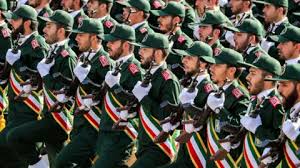
The “Mosaic Defense” Doctrine
- Independent Decision-Making in Wartime
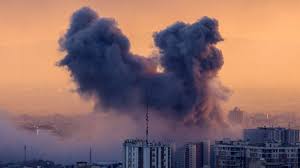
As the current conflict with the United States and Israel enters its third week in March 2026, the Islamic Revolutionary Guard Corps (IRGC)—or Sepah-e Pasdaran—has managed to sustain an intense level of operations despite the loss of its top leadership.The IRGC’s ability to “give a good fight” compared to the rapid collapse of the Iraqi army in 2003 is rooted in a unique military doctrine specifically designed for this exact scenario. The IRGC is fundamentally different from other West Asian armies because it operates on a decentralized, multi-layered model known as “Mosaic Defense.” While the regular army (Artesh) follows a traditional centralized structure, the IRGC is divided into 31 separate provincial commands.
Small Wings and Independent Power
Each province in Iran has its own IRGC headquarters. These units are not just small “wings”; they are designed as self-sufficient, “state-within-a-state” military bodies. Independent Decision-Making: This is a confirmed fact of their wartime doctrine. In the event of a “decapitation strike”—such as the airstrikes that killed Supreme Leader Ali Khamenei and IRGC Chief Mohammad Pakpour on February 28—these provincial units do not wait for orders from a central headquarters. Wartime Autonomy: Local commanders are given pre-set “general instructions” and have the authority to launch drones, move troops, and conduct guerrilla warfare independently if communications with Tehran are cut.
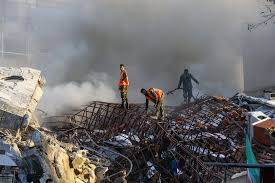
Why the IRGC Is Still Standing After 15 Days
The primary reason the IRGC has withstood 15 days of intensive “Operation Epic Fury” strikes is this redundancy.Redundant Leadership: For every commander, there are up to three designated successors ready to step in immediately. This prevents the “paralysis” seen in Iraq when Saddam Hussein’s command centers were hit.
Dispersed Assets
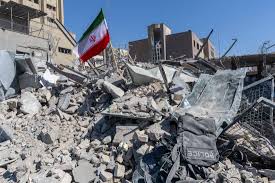
Their ballistic missiles and drones are not stored in one place. They are hidden in “missile cities” and underground bunkers across the country, making it impossible for the U.S. and Israel to destroy them in a single wave.Operation True Promise 4: Despite losing air defense radars and major naval assets, the IRGC has launched its 48th wave of retaliatory strikes as of March 14, using solid-fuel Kheibar Shekan and Qadr missiles.
Current Challenges
While the IRGC remains a potent force, it is not without cracks. Reports from mid-March indicate growing friction between the IRGC and the regular army (Artesh). Tensions have risen over resource allocation, with the IRGC accused of withholding medical supplies from regular army units to prioritize its own ideological fighters. Additionally, while decentralized units can fight, they often struggle to achieve “critical mass” for large-scale maneuvers without central coordination. In summary, the IRGC’s uniqueness lies in its planned chaos. By preparing for a war where the “head” of the military is cut off, they have ensured that the “body” continues to strike back, turning the conflict into a grinding war of attrition rather than a swift defeat.

Editor, Prime Post
Ravindra Seshu Amaravadi, is a senior journalist with 38 years of experience in Telugu, English news papers and electronic media. He worked in Udayam as a sub-editor and reporter. Later, he was associated with Andhra Pradesh Times, Gemini news, Deccan Chronicle, HMTV and The Hans India. Earlier, he was involved in the research work of All India Kisan Sabha on suicides of cotton farmers. In Deccan Chronicle, he exposed the problems of subabul and chilli farmers and malpractices that took place in various government departments.


It’s true that Iran is defending their country very well in the unprovoked war by USA and Israel who are technologically good. The reason is for this as said having independant decission in their Army. It’s working out. The world is taken a back looking at their capability in restarting USA and Israel. One should not underestimate others capacity. Samething happened here. This is unwanted war. An arrogant move by President Trump.