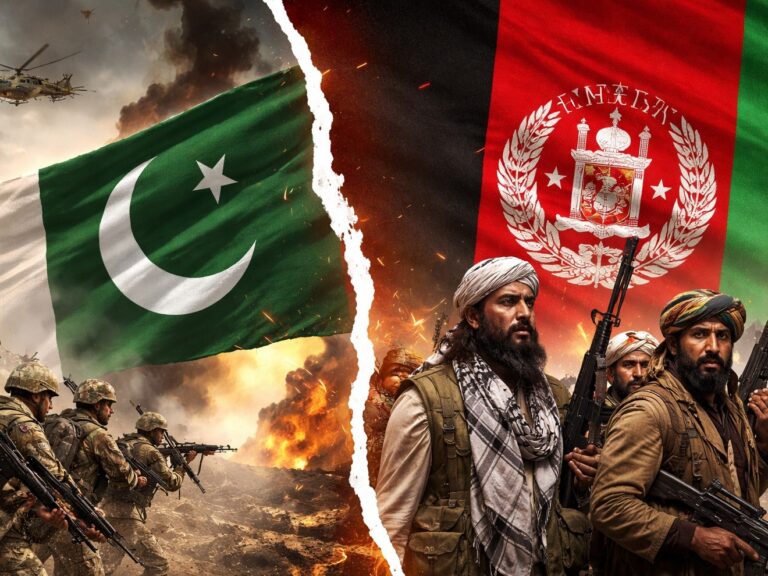
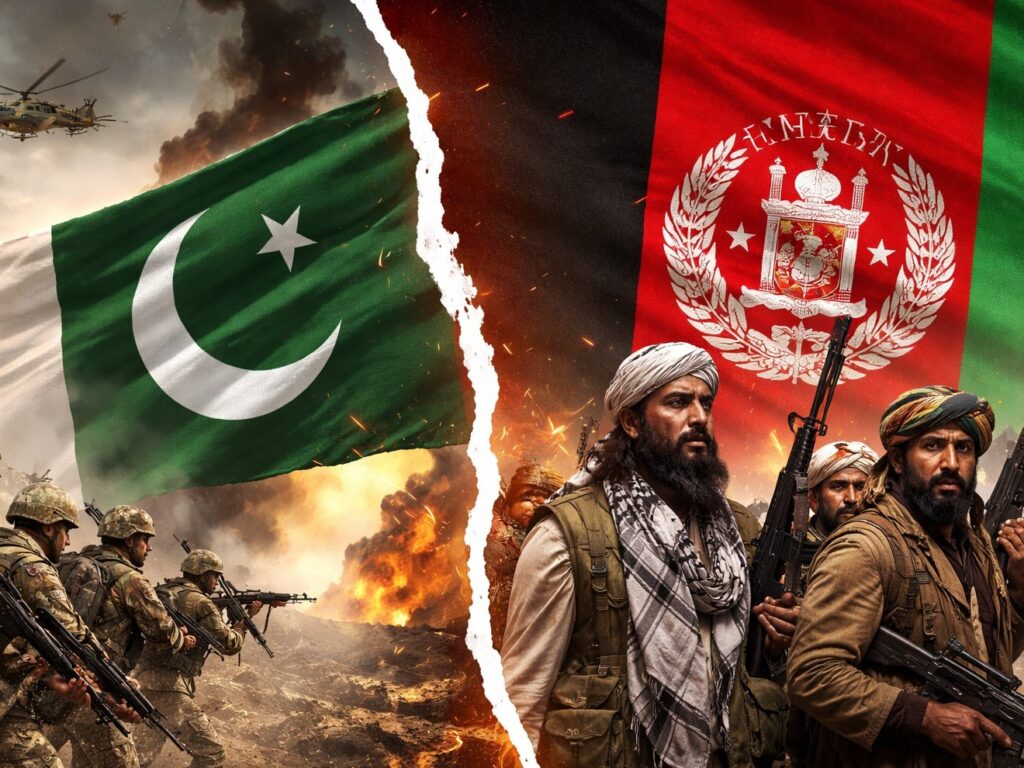
The current escalation was triggered by a series of lethal militant attacks in Pakistan—including a major suicide bombing at a mosque in Islamabad. Pakistan blamed the Tehrik-i-Taliban Pakistan (TTP), asserting they operate from Afghan soil with the Taliban’s blessing. Military Action: On February 22, 2026, Pakistan launched airstrikes in Nangarhar and Paktika provinces. Taliban Retaliation: On February 26, the Taliban launched a large-scale offensive along the Durand Line, claiming to have captured several Pakistani border posts. Pakistan responded on February 27 with airstrikes on major Afghan political hubs, including Kabul and Kandahar, marking a shift from border skirmishes to direct state-on-state conflict.
Roles of Major Powers
The U.S. under the Trump administration has adopted a transactional approach. While the U.S. has “Major Non-NATO Ally” ties with Pakistan, it is increasingly wary of the Taliban’s extremist exports. The U.S. is currently balancing its need for counter-terrorism intelligence with a desire to reduce financial aid. It views the conflict as a regional “fire” it would prefer not to get sucked into, focusing instead on containing Iranian influence.
China
Beijing is the most concerned external actor. The conflict threatens the China-Pakistan Economic Corridor (CPEC) and China’s mining interests in Afghanistan. China has moved from a passive observer to an active mediator. It is pushing for a trilateral dialogue to protect its “Belt and Road” investments, as instability in Afghanistan risks spilling into its Xinjiang region.
Russia
Russia views the Taliban as a “stabilizing” force against ISIS-K but fears total chaos. Moscow has offered mediation services, often in tandem with China. Its goal is to prevent Central Asian spillover and ensure that neither U.S. nor Islamic extremism gains a permanent foothold on its southern periphery.
Turkiye
Turkiye positions itself as the “Muslim Bridge.” Having hosted several rounds of failed peace talks in Istanbul (late 2025), Turkiye continues to offer its services as a neutral facilitator. It has strong cultural ties with both and seeks to expand its footprint as a regional power-broker.
The Indian Perspective: What is the Best Way?
India finds itself in a delicate but advantageous position. Traditionally, the Taliban was a Pakistani proxy; today, the Taliban and Pakistan are “Open War” enemies. Strategic Patience: India should avoid military involvement. Allowing Pakistan’s “strategic depth” policy to collapse under its own weight is more effective than direct intervention. Humanitarian Diplomacy: India has reopened its technical mission in Kabul and is providing food and medicine. Continuing this builds a “pro-India” sentiment among the Afghan public without needing to formally recognize the Taliban regime. Intelligence Vigilance: The primary risk for India is that a desperate Pakistan might divert TTP or Afghan-based militants toward the Line of Control (LoC) to unify its domestic front. India must keep its northern borders on high alert. India should coordinate with the UAE and Saudi Arabia to ensure that any regional settlement doesn’t favor Pakistani-sponsored radicalism.
Response from West Asian (Middle East) Countries
West Asian responses have been split between security pragmatism and economic protection. Qatar: Remains the primary diplomatic channel. It mediated a brief ceasefire in October 2025 and is currently the only actor with enough trust from both Kabul and Islamabad to facilitate a “back-channel” exit from the current war. Saudi Arabia & UAE: Both have moved closer to India in recent years. While they maintain defense pacts with Pakistan, they are increasingly unwilling to fund Islamabad’s “terror-as-policy” mistakes. They are prioritizing regional stability to protect their “Vision 2030” economic goals.
The Spiral of the Durand Line The “Open War” of 2026 marks the definitive end of the “special relationship” between Pakistan and the Taliban. Pakistan is discovering that the group it helped bring to power is now its greatest security threat. As Kabul and Islamabad trade drone strikes, the region faces a choice: managed de-escalation via Chinese and Qatari mediation, or a protracted border war that could redraw the map of South Asia. For India, the best move remains a steady hand—providing aid to the Afghan people while letting its neighbor grapple with the consequences of its own decades-long policy of using proxies.
Editor, Prime Post
Ravindra Seshu Amaravadi, is a senior journalist with 38 years of experience in Telugu, English news papers and electronic media. He worked in Udayam as a sub-editor and reporter. Later, he was associated with Andhra Pradesh Times, Gemini news, Deccan Chronicle, HMTV and The Hans India. Earlier, he was involved in the research work of All India Kisan Sabha on suicides of cotton farmers. In Deccan Chronicle, he exposed the problems of subabul and chilli farmers and malpractices that took place in various government departments.