The political landscape of Telangana has undergone a significant transformation following the 2026 Municipal and Corporation elections. While the ruling Congress party emerged as the single largest force, a unique and challenging situation has developed in the form of “hung” results across nearly 38 municipalities. In these specific areas, no single political party managed to secure the magic number required to form a local government on its own. This lack of a clear mandate has shifted the focus from the voters’ choice to the art of political negotiation, as the race to appoint Chairmen and Vice-Chairmen enters a high-stakes phase.
A Test of Alliances and Strategy
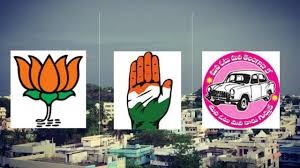
In these 37 municipalities, the power now lies in the hands of independent candidates and smaller parties like the Forward Block and MIM. Both the Congress and the main opposition, Bharat Rashtra Samithi (BRS), are working tirelessly behind the scenes to gather the support needed to tip the scales in their favor. This “hung” factor has turned local governance into a complex puzzle. In many towns, the difference between victory and opposition is just a handful of seats, leading to a situation where every single elected member—regardless of their party affiliation—has suddenly become extremely valuable.
The emergence of so many hung municipalities suggests a divided urban electorate. While the “Congress wave” was strong enough to win 64 municipalities outright, the resistance from BRS and the steady presence of the BJP in certain pockets created several three-way splits. This fragmentation means that for the next few days, the political heat will not be on the streets, but in private meeting halls and “camps” where leaders are trying to prevent their winning candidates from being poached by rivals.
The Rise of “Camp Politics”
As is common in such closely contested Indian elections, “camp politics” has made a swift return to Telangana. To ensure their members stay loyal and to lure independents, major parties have reportedly moved their winning candidates to secret locations or luxury resorts. The goal is simple: keep the group together until the day of the crucial vote. For the residents of these 37 towns, the identity of their local leader remains a mystery, as the final outcome depends entirely on which party can offer the most convincing alliance or deal to the unaligned winners.
This strategic maneuvering is not just about local pride; it is about future political control. Winning a hung municipality allows a party to claim influence over urban development funds and local administration, which is vital for building momentum toward future state-level contests. The BRS, despite winning only 13 municipalities outright, sees these hung seats as a golden opportunity to reclaim lost ground and prove that they are still a force to be reckoned with in urban Telangana.
The Road to February 16
The tension is set to reach its peak on Monday, February 16. On this day, all newly elected councillors and corporators will take their official oaths. Immediately following the ceremony, the indirect elections for the prestigious posts of Mayor, Deputy Mayor, Chairperson, and Vice-Chairperson will take place. This one-day event will finally reveal the results of the secret negotiations happening right now.
With the notification for these appointments being issued this Saturday, the state is bracing for a weekend of intense political drama. Whether the Congress can consolidate its “wave” or if the BRS and BJP can snatch victory in these 37 disputed areas remains to be seen. One thing is certain: the “hung” factor has ensured that the 2026 local elections will be remembered more for the alliances made in the shadows than the votes cast in the light.
Seat Tally and Voting Statistics
Out of the 2,582 municipal wards, results for 2,543 were declared by Friday evening:
- Congress: 1,347 wards
- BRS: 717 wards
- BJP: 261 wards
- MIM & Others: 256 wards
In the 414 corporation divisions, Congress led with 154 seats out of the 291 declared so far. The overall voter turnout on polling day (Wednesday) was over 73%, with municipalities recording 75.88% and corporations recording 66.05%.
Deputy Editor, Prime Post
Anand Gantela is a seasoned media professional with nearly three decades of experience across the spectrum of Indian journalism. Having worked extensively in both print and broadcast media, he has held key positions at renowned outlets such as Prajashakthi, Andhra Bhoomi, Mudra, Media India, Siti Cable, Mana Telugu, and Maa TV. From ground-level reporting to managing news bureaus and overseeing bulletin production, Anand has witnessed the evolution of news firsthand. His wealth of experience reflects a deep understanding of the dynamic and ever- evolving landscape of news reporting.