- Land Sharks and Silent Witnesses: The Decade of Unchecked Encroachment
- Political Fallout and the Real Estate Nexus: The Khammam Power Struggle
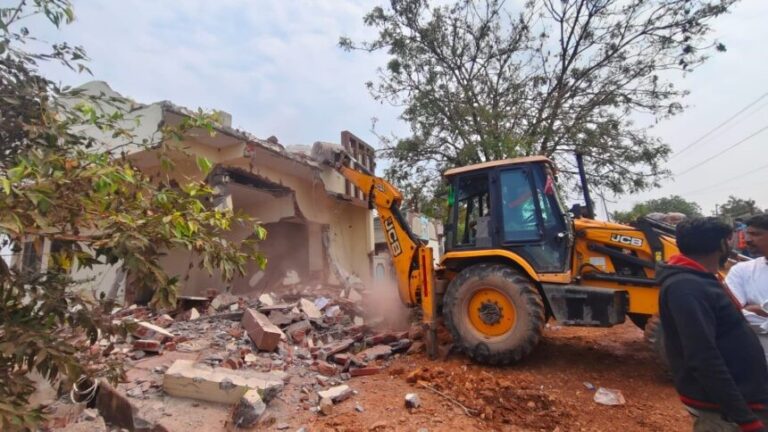
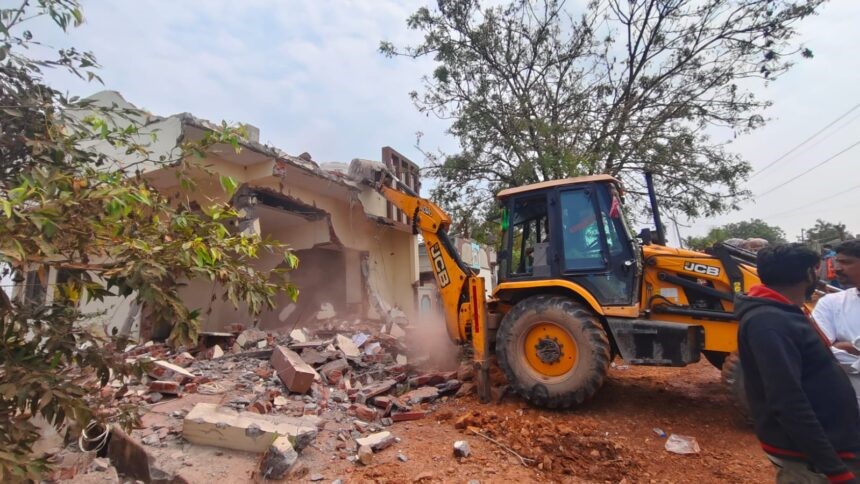
The recent demolition of nearly 600 houses in the Velugumatla Bhoodan lands (Vinoba Navodaya Colony) on February 24, 2026, has sparked a massive political and humanitarian outcry in Khammam. The incident highlights a deep-seated conflict between administrative legality, political oversight, and the survival of the urban poor.
The Administrative Crackdown
The state government’s primary failure lies in its lack of a proactive rehabilitation plan before the demolition. While officials cite a January 2026 eviction order and High Court directives, the sudden deployment of over 1,000 police personnel to raze homes—some occupied for over eight years—without providing immediate alternative housing has been labeled “inhumane” by critics.
Key Points of Conflict
The Plotting Scandal: For a decade, the government allegedly allowed “land sharks” to create illegal layouts on Bhoodan Board lands. Critics argue that authorities turned a blind eye while these private individuals profited, only taking action once the poor had invested their life savings into modest structures.
Selectivity in Action: There is a sharp contrast in how different colonies are treated. While Vinobhanagar Colony residents saw their plight considered or stayed by legal nuances, the Velugumatla residents faced a “war zone” atmosphere. This disparity suggests that political and real estate interests may have influenced which areas were targeted for “beautification” or “clearance.”
Real Estate Interests: The disputed 31 acres are located just 500 meters from the new Khammam Collectorate. As the city expands, this land has become prime real estate worth an estimated ₹250 crore. Opposition leaders allege that ministers and their associates pushed for the eviction to clear hurdles for high-end real estate ventures.
The Official Stand
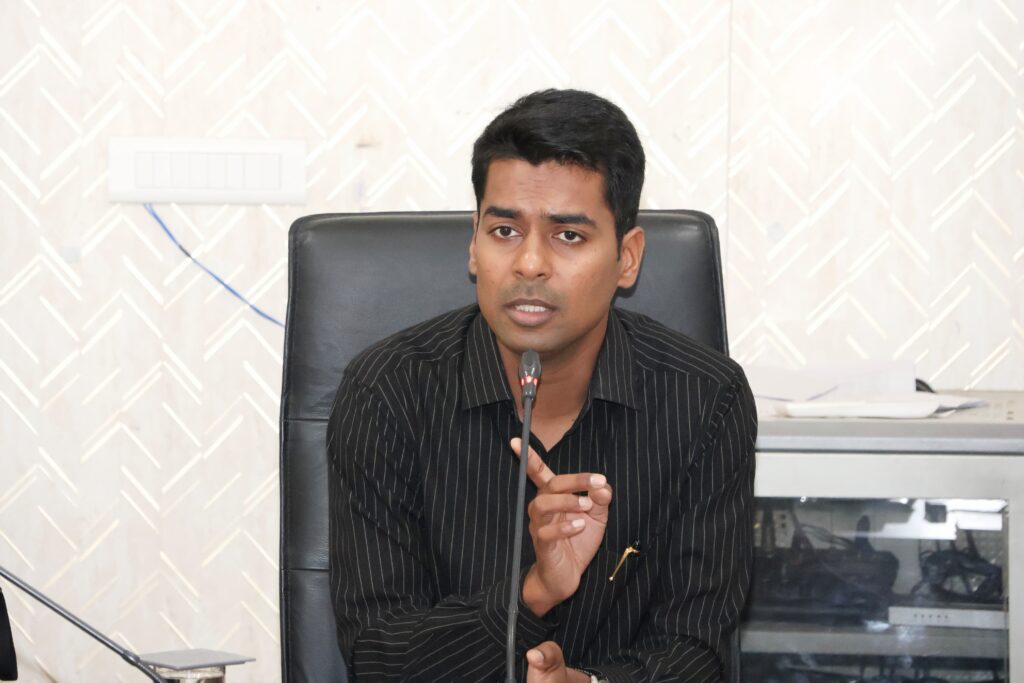
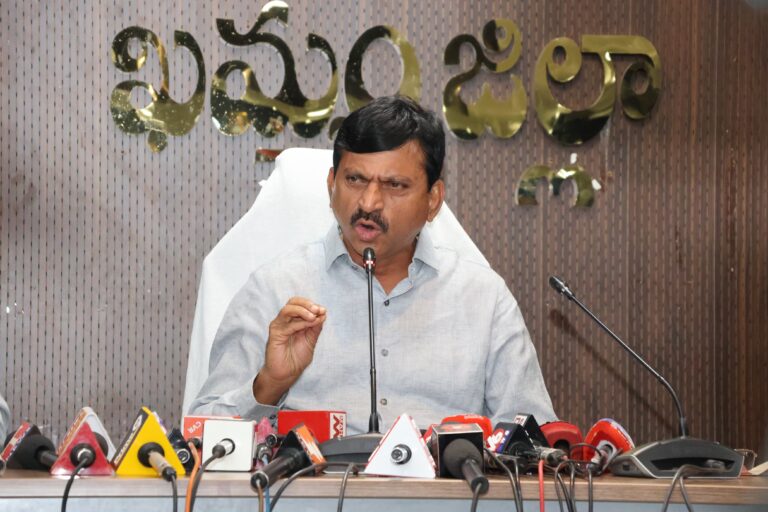
District Collector Anudeep Durishetty maintained that the operation was entirely legal. He stated that the land was protected following orders from the High Court and the CCLA, claiming that a thorough investigation revealed forged documents and illegal allocations. According to the administration, the land is intended for “future public purposes.”
Sudden Transfer: The sudden transfer of the Khammam RDO in the middle of this row has only added fuel to the fire. While the government may frame it as an administrative reshuffle, the timing suggests a move to deflect accountability for the procedural lapses and the resulting public uproar.
Why no Double-Bedroom Houses?
Despite the availability of constructed double-bedroom houses or vacant sites behind Sriram Hills, the government did not integrate these into a pre-demolition strategy. Displaced families were instead moved to temporary function halls, their belongings stored in public buildings, leaving them in a state of flux.
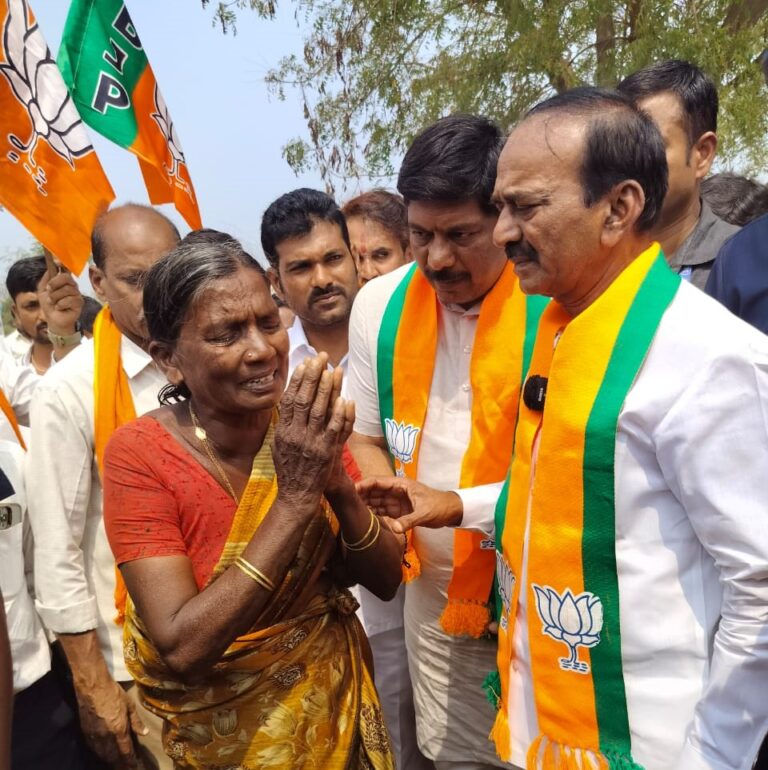
The three local ministers—Mallu Bhatti Vikramarka, Ponguleti Srinivas Reddy, and Tummala Nageswara Rao—failed to anticipate the scale of the backlash. They now face a “political storm” as the BRS and other parties vow to take the battle to the Supreme Court, demanding that the poor be settled in the same location where their homes once stood.
SC Verdict on Bhoodn lands
The legal status of the 2014 Bhoodan land pattas in Velugumatla is currently a matter of intense dispute. While residents claim they hold valid allotment proceedings for 100-square-yard plots issued in April 2014, the district administration asserts these documents are unauthorized or fabricated. Under the Telangana Bhoodan and Gramdan Act, 1965, the Board can only allot land to the “landless poor” for specific purposes. Historically, the Supreme Court (e.g., U.P. Bhoodan Yagna Samiti v. Braj Kishore) has ruled that Bhoodan land is reserved strictly for those who fit the legal definition of “landless,” and any allotment to ineligible parties—or via fraudulent process—is void ab initio.

Editor, Prime Post
Ravindra Seshu Amaravadi, is a senior journalist with 38 years of experience in Telugu, English news papers and electronic media. He worked in Udayam as a sub-editor and reporter. Later, he was associated with Andhra Pradesh Times, Gemini news, Deccan Chronicle, HMTV and The Hans India. Earlier, he was involved in the research work of All India Kisan Sabha on suicides of cotton farmers. In Deccan Chronicle, he exposed the problems of subabul and chilli farmers and malpractices that took place in various government departments.