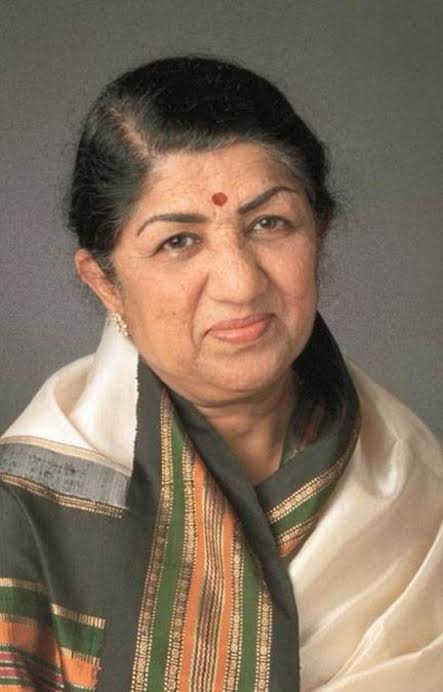
Lata Mangeshkar was not merely a playback singer, she was the definitive voice of a nation, a cultural icon whose melodies bridged generations and defined the sonic landscape of Indian cinema for eight decades. Often referred to as the “Nightingale of India” and the “Melody Queen,” her career was a testament to discipline, technical perfection, and an emotional depth that could move millions to tears. Her success in the Indian music world remains unparalleled, marking her as the gold standard for vocal excellence.
A Foundation in Classical Heritage
Lataji’s journey was rooted in a rich musical lineage. Born on September 28, 1929, in Indore, she was the eldest daughter of Pandit Deenanath Mangeshkar, a renowned classical singer and theatre personality. It was under his strict yet loving tutelage that she learned the nuances of Hindustani classical music. This early training provided her with the technical prowess—the breath control, pitch perfection, and command over ragas—that would later allow her to navigate complex compositions with deceptive ease.
The Weight of Early Responsibility
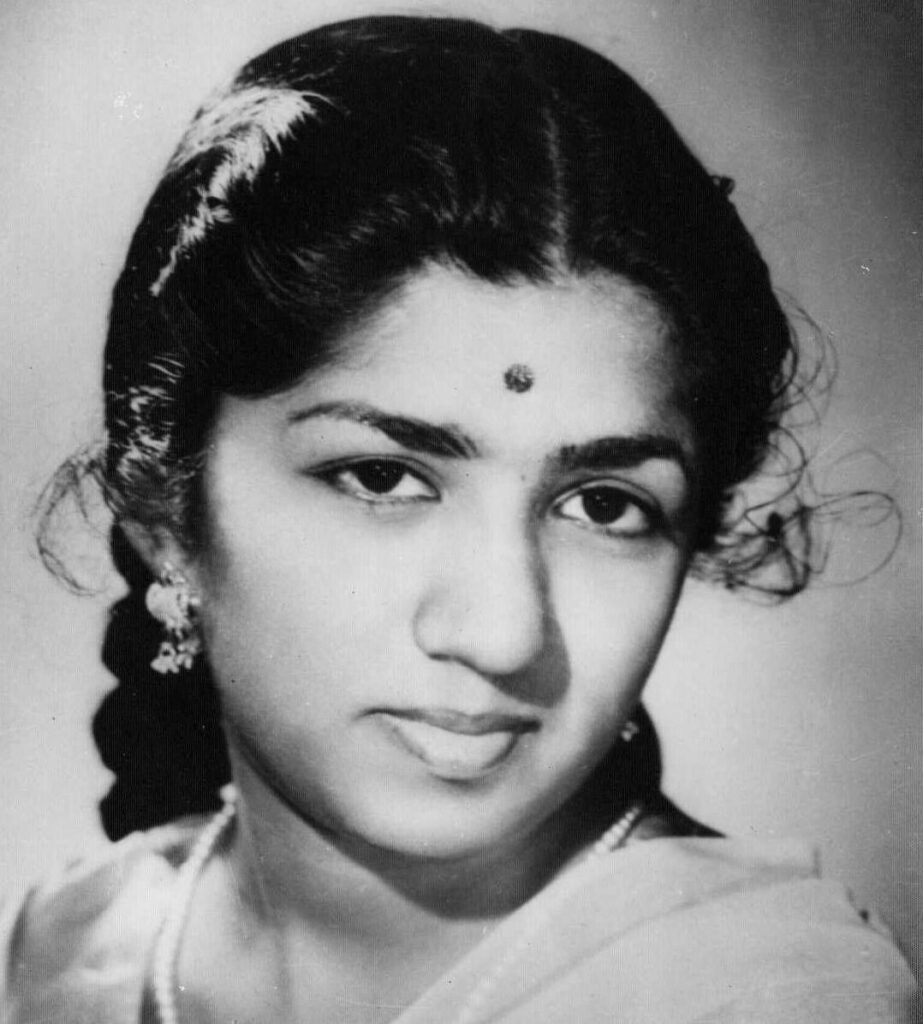
Life took a dramatic turn for the young Lata when her father passed away in 1942. At the tender age of 13, she was thrust into the role of the primary breadwinner for her mother and four younger siblings. This period of struggle forged her legendary work ethic. She began her career in the Marathi film industry, recording her first song “Naachu Yaa Gade” in 1942. Her early years in Mumbai were marked by grit, as she traveled long distances by local trains, often skipping meals to ensure her family was provided for.
Breaking the “Nasal” Stereotype
When Lata Mangeshkar entered the Hindi film industry, the prevailing trend favored heavy, nasal voices like that of Noor Jehan. Initially, Lataji was even rejected by some producers who deemed her voice “too thin.” However, she turned this perceived weakness into her greatest strength. By focusing on crystal-clear diction—even hiring a tutor to perfect her Urdu pronunciation—and maintaining a sharp, flute-like clarity, she revolutionized the playback industry, shifting the preference toward the soulful, high-pitched “sweetness” that became her trademark.
The Breakthrough with “Mahal”
The year 1949 was a watershed moment for Indian music. With the song “Aayega Aanewala” from the film Mahal, composed by Khemchand Prakash, Lata Mangeshkar achieved superstardom. The haunting quality of her voice perfectly captured the film’s gothic mystery, and the public was so enamored that they demanded to know the singer’s name—at a time when only the character’s name was usually printed on records. This song signaled the arrival of a phenomenon that would dominate the airwaves for the next seventy years.
Mastery Over Versatility and Language
Lataji’s brilliance lay in her ability to adapt to any genre. Whether it was the playful flirtation of “Pyar Kiya Toh Darna Kya,” the spiritual devotion of her bhajans, or the sophisticated grief of a ghazal, she inhabited every character she sang for. Her linguistic range was equally staggering; she recorded over 30,000 songs in 36 Indian languages, including Marathi, Bengali, and Tamil. Her ability to pronounce lyrics with native-level accuracy in languages she didn’t speak fluently remains one of her most admired professional traits.
The Golden Era Collaborations
During the 1950s and 60s, Lataji became the muse for legendary composers like S.D. Burman, Shankar-Jaikishan, Naushad, and Madan Mohan. Her collaboration with Madan Mohan, in particular, resulted in some of the most intricate melodies in Indian history, such as “Lag Ja Gale.” These composers knew that no matter how difficult a composition was, Lataji would deliver it with flawless precision. Her voice became the “ghost-voice” for every leading lady, from Nargis and Madhubala to Hema Malini and Sridevi.
A Voice of National Unity
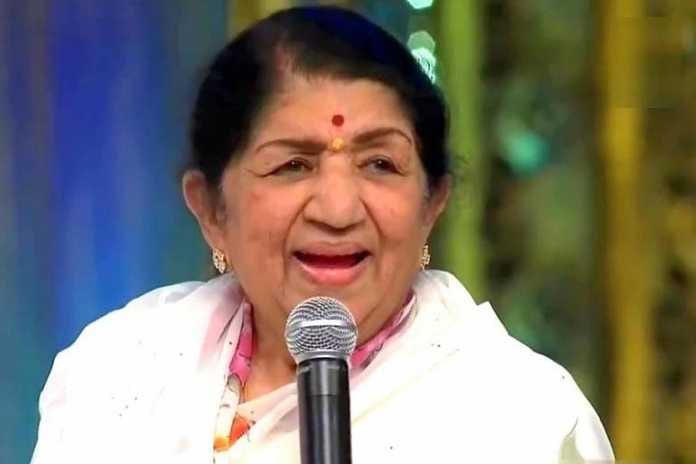
Beyond cinema, Lata Mangeshkar’s voice became a symbol of Indian patriotism. Her rendition of “Ae Mere Watan Ke Logo,” performed in the presence of Prime Minister Jawaharlal Nehru after the 1962 Sino-Indian War, is etched in history. It is said that the raw emotion in her voice moved Nehru to tears. This song cemented her status not just as a singer, but as a national treasure who could heal and unite a country through her art.
The Mangeshkar Musical Dynasty
Lataji was the pillar of a remarkable musical family. Her younger sister, Asha Bhosle, emerged as a legendary singer in her own right, known for her versatility and rhythm. Her sister Usha Mangeshkar also became a leading playback singer, particularly in Marathi cinema, while her brother Hridaynath Mangeshkar gained acclaim as a brilliant music composer. Despite being “competitors” in a professional sense, the family maintained a deep bond, collectively shaping the sound of Indian music for decades.
Finding Solace in Her Melodies
For the listener, Lataji’s voice provided more than entertainment; it provided therapy. As many fans testify, her songs like “Zara Si Aahat Hoti Hai” or “Tu Jaha Jaha Chalega” offer a sense of peace and solace during life’s most difficult trials. There is a meditative quality to her singing—a “suun” (purity) that resonates with the human soul. Listening to her melodies is often described as a spiritual experience, capable of transcending the mundane worries of daily life.
Unprecedented Honors and Accolades
The Indian government and international bodies showered her with honors that reflected her stature. In 2001, she was awarded the Bharat Ratna, India’s highest civilian honor, becoming only the second vocalist to receive it. Her trophy cabinet also included the Dadasaheb Phalke Award, the Padma Vibhushan, and multiple National Film Awards. Internationally, she was the first Indian to perform at the Royal Albert Hall in London in 1974, proving that her appeal was truly global.
Discipline and Longevity
Lata Mangeshkar’s career longevity is a case study in discipline. She remained the top female playback singer well into her 70s and 80s, adapting to the changing sounds of the 90s with hits like “Dil To Pagal Hai” and “Lagaan.” She maintained her voice through strict riyaz (practice) and lifestyle choices, avoiding cold drinks and spicy foods for decades to protect her vocal cords. This dedication allowed her to “rule” the film industry across eight different decades.
An Eternal Departure and Legacy
Lataji’s passing on February 6, 2022, marked the end of an era, but her legacy remains immortal. She left behind a vast library of music that continues to inspire young musicians and provide comfort to listeners worldwide. To have lived in the era of Lata Mangeshkar is often considered a blessing by music aficionados. While the physical presence of the “Melody Queen” is gone, her voice remains the heartbeat of Indian culture, proving that while people may fade, a perfect melody lives forever.
Principal Correspondent, Prime Post
Vidya Sagar Chaturvedula is a passionate film enthusiast whose four-decade career spans multiple sectors, including media and industry. Fluent in Telugu, Hindi, and English, he has a deep appreciation for cinema, particularly films in those three languages. His passion goes beyond simple viewing; he enjoys analyzing directional skill, the emotional depth of actors’ performances, and the profound meaning embedded in dialogue. Mr. Sagar is known for his ability to clearly articulate and narrate his insightful film analyses after watching a movie.
Lata ji was a legendary singer. He sung in different films in different languages. By her childhood she used participate in the programs along with her father. As everyone knows that she achieved so many national and international awards and she stood as the Icon of Indian film Industry. Good narration CH. sagar. Keep going on!.
It’s music music music…
just to hear her name.
Evolving through the times of Noor jehan, Zohrabai, Begum Akhtar to set a standard for herself
Nice review uncle
Latha ji is the one of the best singers in Hindi films like Susheela garu in Telugu .
Good review by Vidya Sagar.
Good review 👍
Sir it is very difficult to. Comment
On her
Good looking energetic and bold lady who sang thousands of melody songs which wii linger rest of our lifes
Songs are remembered. Generations after generations
We are very small to comment
She sang in all languages
Lastly she is known as
GANA kOKILA
Good Review
Lata Mangeshkar was a great singer
Awesome
Very nice review
Lata mangeshkar Indian playback singer and occasional music composer. She is considered one of the greatest and influential singer of sub continent. She sang many melodies and earned title queen of melodies. Very nice review.
Lata Mangeshkar was a versatile singer. Lata ‘s is unique and high pitched voice. She is known as Queen of melody. Over of 7 decades she sung thousands of songs in many languages . She was legendary playback singer of bollywood.
Great review.
Brilliantly reviewed
లతామంగేష్కర్ లెజన్డ్రీ సింగర్ ఈమె పాడిన పాటలు అన్నీహిట్సే భారతరత్న, పద్మభూషణ్ పద్మవిభూషణ్ దాదాఫాల్కే అవార్డ్ ఇలా ఇన్ని అవార్డ్స్ పొందినది ఒక్క లతామంగేష్కలశర్ ఒక్కతే దేశానికి చాలా గర్వకారణం
The melody queen enthralled the contemporary world with her soothing voice and melody. The vast stretch of her music career left no classical/folk, bhajan, patriotic, solo or a duet song untried adding to her compendium. She is truly deserving Bharatratna. We are indeed privileged to be of that era. Thanks for the post of the guest.
Very great singer. Well narrated.
Excellent contribution to the society through music, won the hearts enmass, remembered for long.