- From Chatbots to Agents: The Engineering Shift in Enterprise Software
- The Rise of “Inference Economics”: How DeepSeek Broke the AI Cost Barrier
- The Outcome-Based Pivot: Redefining the Indian IT Services Contract
The landscape of artificial intelligence is no longer characterized by a single, monolithic entity. Instead, it is a bustling ecosystem of specialized intelligences, each with unique architectures, philosophies, and intended impacts. Understanding the distinctions between the world’s leading “intel software” is crucial, as their rapid evolution is redrawing the maps of the global technology sector, nowhere more dramatically than in the Indian IT industry. This article will dissect the key players, starting with the safety-focused agentic AI, Anthropic.
The Specialized Minds of Modern AI
Anthropic: The Safety-First Agent
“Anthrotics” is an American AI startup founded by former OpenAI executives. Anthropic distinguishes itself not through sheer size, but through a fundamental commitment to ‘Constitutional AI’. This is a training technique where the model, known as ‘Claude’, is given a literal “constitution” of ethical principles and human values to follow.
The goal is to create AI that is “safe, reliable, and beneficial.” While competitors have struggled with biases and “hallucinations,” Anthropic has prioritized making Claude a reliable tool, particularly for enterprises. This focus has paid off, with enterprises now reportedly accounting for 80% of its business. Anthropic offers a family of models: ‘Claude 3.5 Opus’ for complex tasks, ‘Sonnet’ for a balance of speed and skill, and ‘Haiku’ for near-instant responses. Its recent releases, ‘Claude Cowork’ and ‘Claude Code’, represent a significant shift from simple chatbots to autonomous “agentic AI” capable of executing complete, multi-step workflows.
DeepSeek: The High-Efficiency Challenger
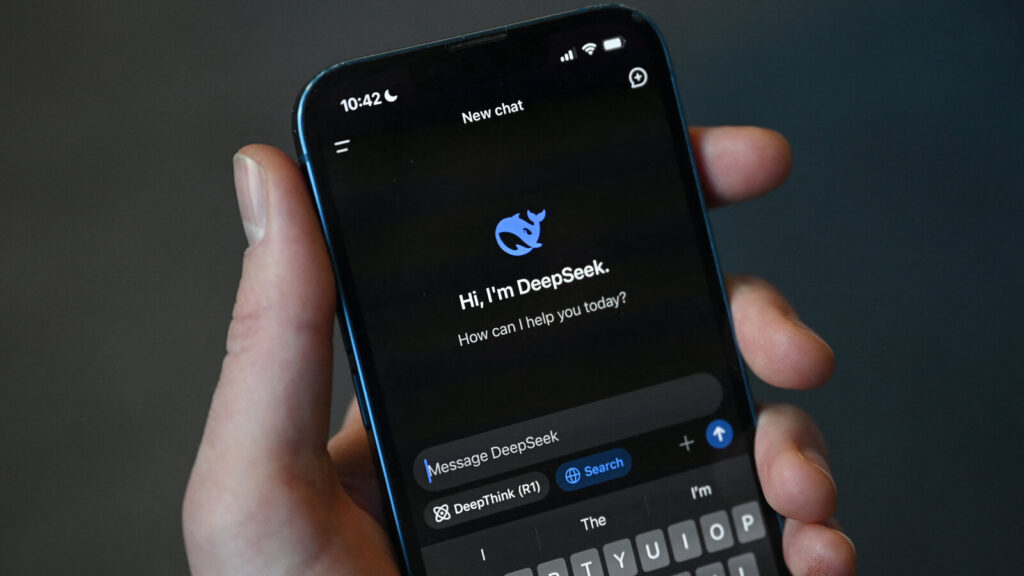
“DEEPstick” is a phonetic rendering of ‘DeepSeek’, a Chinese AI lab based in Hangzhou that has sent shockwaves through the industry. DeepSeek’s defining characteristic is its astonishing efficiency and cost-effectiveness. In January 2025, it released ‘DeepSeek-R1’, a reasoning model that reportedly cost just $6 million to train, compared to the estimated $100 million for OpenAI’s GPT-4.
DeepSeek achieves this through technical innovations like a “Mixture of Experts” (MoE) architecture, which activates only a fraction of its parameters for any given task. This drastically reduces the necessary computational power. DeepSeek models are “open-weight,” allowing developers to build upon its affordable technology. DeepSeek-R1 is notable for its strong reasoning capabilities, rivaling Western counterparts in complex tasks like coding and mathematics, all while being completely free for individual users.
Gemini and Chat PG (OpenAI): The Ecosystem Titans
The remaining giants are well-known. ‘Gemini’ is Google’s multimodal flagship, seamlessly integrated across its entire product ecosystem, from search to Workspace. Its strengths lie in its massive data access and deep integration, making it a default choice for Google users. “Chat PG” likely refers to the cultural phenomenon of ‘ChatGPT’ and its parent company, OpenAI. OpenAI, the first mover, continues to set the standard for powerful, large-scale general intelligence models (GPT-4o, OpenAI o1), pushing the boundaries of what is possible in language generation, reasoning, and creativity.
The Threat to Traditional IT: The “SaaSpocalypse” and India
The shift from standard chatbots to agentic AI—autonomous digital workers—has profound implications for the global IT services model, particularly in India. Indian IT giants like TCS, Infosys, and Wipro have traditionally operated on a “people-led, time-and-material delivery model.” This involves deploying large teams of skilled professionals to manage client software, legal compliance, HR workflows, and financial processes.
The arrival of Anthropic’s ‘Claude Cowork’ plugins has directly challenged this. These agents can now autonomously handle tasks like contract review, NDA triage, and compliance checks—work that was previously the domain of junior consultants and analysts. The market’s reaction was swift and brutal, a phenomenon dubbed the “SaaSpocalypse.” A selloff triggered by Anthropic’s new automation tools wiped $285 billion from software stocks in a single day, with the ripple effects extending to Indian IT companies.
Conclusion: Adapt or be Replaced
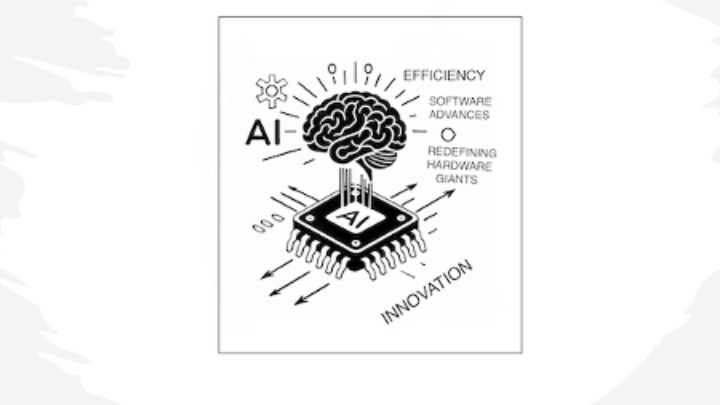
The landscape is clear. AI is no longer a helper to traditional software and services; it is becoming a replacement for them. Companies like Anthropic are moving from “selling the model to owning the workflow.” DeepSeek has democratized advanced reasoning, making it affordable for any enterprise to build its own autonomous agents. For the Indian IT sector, this represents an existential challenge. To survive, they must move away from the time-and-material model and embrace a value-based approach, leveraging their domain expertise to build and manage the very AI systems that threaten to replace them. The age of autonomy has arrived, and in this new era, the only constant will be change.

Editor, Prime Post
Ravindra Seshu Amaravadi, is a senior journalist with 38 years of experience in Telugu, English news papers and electronic media. He worked in Udayam as a sub-editor and reporter. Later, he was associated with Andhra Pradesh Times, Gemini news, Deccan Chronicle, HMTV and The Hans India. Earlier, he was involved in the research work of All India Kisan Sabha on suicides of cotton farmers. In Deccan Chronicle, he exposed the problems of subabul and chilli farmers and malpractices that took place in various government departments.