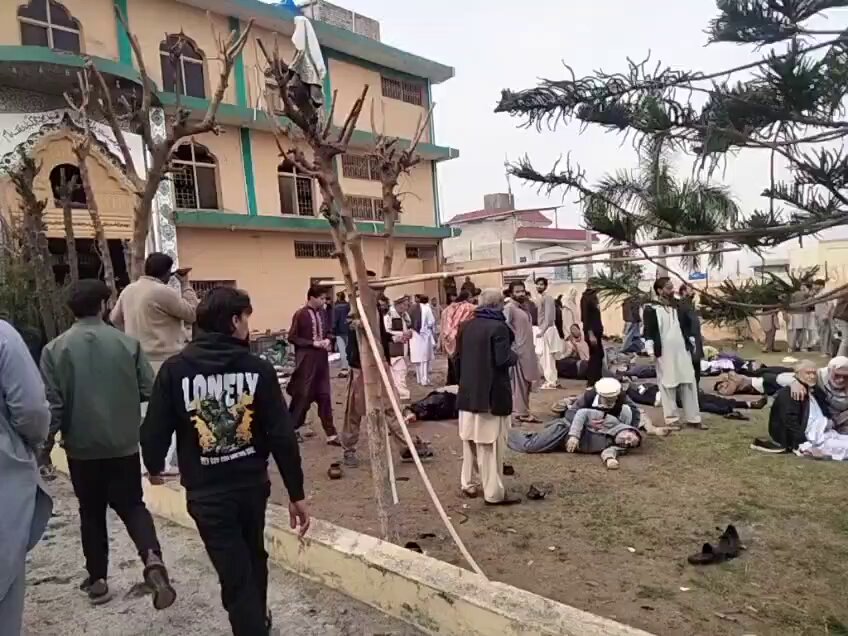
ISLAMABAD – The devastating suicide bombing at the Khadijatul Kubra mosque on Friday, February 6, 2026, has left Pakistan’s capital in a state of shock and raised urgent questions about a massive security lapse. While the official death toll has tragically climbed to 31 people with over 169 injured, the focus is now shifting to how a suicide bomber managed to strike the heart of the city during one of its most high-security weeks in recent history.
A High-Alert City Pierced
The timing of the attack is particularly alarming as Islamabad was effectively a “fortress” for the state visit of Uzbek President Shavkat Mirziyoyev. Thousands of additional police and paramilitary personnel had been deployed across the federal capital to secure foreign dignitaries. With the “Red Zone” under a strict security blanket and numerous checkpoints active across the city, the fact that a bomber could transport explosives into a populated suburban area like Tarlai (near Shehzad Town) has sparked intense public anger.
Investigators are now looking into the possibility of a “sleeper cell” within the city or a major breach at the entry points of the capital. Despite the presence of high-tech surveillance and increased patrolling, the attacker was able to reach the mosque’s gate before being intercepted.
The Anatomy of the Lapse
Initial reports suggest that the bomber may have utilized less-monitored back routes or blended into the local Friday rush to avoid suspicion. However, security experts argue that during a presidential visit, every sector of the capital should have been under “zero-tolerance” monitoring.
- Intelligence Failure: There are questions regarding whether there was any prior “threat intelligence” about sectarian targets that was overlooked.
- Checkpoint Efficiency: Authorities are examining if the heavy focus on the Red Zone—where government buildings and foreign embassies are located—left the “outer ring” of the capital vulnerable.
- The Guard’s Bravery: While the security guards at the imambargah are being hailed as heroes for stopping the bomber at the entrance, many ask why the attacker was able to get that close to a sensitive religious site in the first place.
Political and Public Backlash
The breach has put the Ministry of Interior and the Islamabad Police under immense pressure. Opposition leaders have demanded an immediate inquiry into the “intelligence breakdown,” pointing out that the capital has seen a worrying trend of attacks, including a court bombing just months prior.
Interior Minister Mohsin Naqvi has promised a “high-level probe” into the incident. Meanwhile, at the Pakistan Institute of Medical Sciences (PIMS), the atmosphere is thick with grief as families wait for news of their loved ones. Many victims are in critical condition, and the city’s blood banks have issued urgent appeals for donors to help save those fighting for their lives.

Deputy Editor, Prime Post
Anand Gantela is a seasoned media professional with nearly three decades of experience across the spectrum of Indian journalism. Having worked extensively in both print and broadcast media, he has held key positions at renowned outlets such as Prajashakthi, Andhra Bhoomi, Mudra, Media India, Siti Cable, Mana Telugu, and Maa TV. From ground-level reporting to managing news bureaus and overseeing bulletin production, Anand has witnessed the evolution of news firsthand. His wealth of experience reflects a deep understanding of the dynamic and ever- evolving landscape of news reporting.