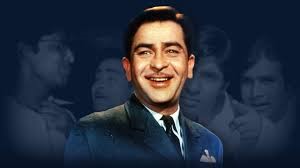
- The Architect of Bollywood’s Golden Age
- From Peshawar to Moscow: The Global Icon
- The Kapoor Dynasty: A Legacy of Storytelling
The history of Indian cinema is incomplete without the mention of “Raj Kapoor”, a polymath whose influence as an actor, director, and producer fundamentally shaped the Golden Age of Bollywood. Often hailed as the “Showman of Indian Cinema,” Kapoor was not just a filmmaker; he was a cultural ambassador who took the spirit of India to international shores, most notably the Soviet Union and the Middle East.
Early Life and the Kapoor Legacy
Born on December 14, 1924, in Peshawar (now in Pakistan), Raj Kapoor was destined for the spotlight. He was the eldest son of “Prithviraj Kapoor”, a pioneer of Indian theatre and cinema, and Rama Sarani Kapoor. He grew up in an environment steeped in the arts, alongside his brothers “Shammi Kapoor” and “Shashi Kapoor”, both of whom would later become legendary Bollywood icons in their own right.
Kapoor’s journey began at the tender age of 10, performing in his father’s Prithvi Theatre. This early exposure to the stage instilled in him a deep understanding of storytelling and audience connection that would later define his cinematic style.
The Rise of a Visionary
In 1947, Raj Kapoor made his debut as a lead actor in “Neel Kamal” opposite the ethereal Madhubala. However, his ambition stretched far beyond acting. At the remarkably young age of 24, he established “RK Films” in 1948. His directorial debut, “Aag”, marked the beginning of a new era. The 1950s saw the rise of his “Charlie Chaplin-esque” persona—the lovable tramp with a heart of gold. Films like “Awaara” (1951) and “Shree 420” (1955) were not just domestic hits but global phenomena. His portrayal of the common man, caught between tradition and modern urbanization, resonated deeply with audiences. Iconic songs like “”Mera Joota Hai Japani““ and “”Awaara Hoon““ became anthems across the globe, proving that his vision transcended language barriers.
The Masterpiece and the Mentor
Throughout the 1960s and 70s, Kapoor continued to push creative boundaries. “Sangam” (1964), his first venture into Technicolor, redefined the romantic musical drama. However, his most personal project was the magnum opus “Mera Naam Joker” (1970). Though initially a box-office failure, it eventually attained cult status for its philosophical depth. As a mentor, Raj Kapoor had an uncanny ability to spot and nurture talent. He launched his middle son, “Rishi Kapoor”, in the 1973 sensational hit “Bobby”. A vibrant teenage love story, “Bobby” revolutionized Bollywood by shifting the focus to youthful romance. The film featured a legendary soundtrack by “Laxmikant-Pyarelal” and introduced singer Shailendra Singh, whose voice became synonymous with Rishi Kapoor’s early career.
Later Years and Family Success
Raj Kapoor’s directorial prowess remained sharp in his later years. He directed his brother Shashi Kapoor in the visually stunning “Satyam Shivam Sundaram” (1978) and later steered Rishi Kapoor to another success in the socially relevant “Prem Rog” (1982). His final major success came with “Ram Teri Ganga Maili” (1985), which introduced his youngest son, “Rajeev Kapoor”, as a lead actor.The “Kapoor Khandaan” (Family) became the undisputed first family of Bollywood, with his children—”Randhir, Rishi, Rajeev, Reetu, and Reema”—all carrying forward his immense legacy.
A Legacy of Laurels
Raj Kapoor’s contribution to cinema was recognized with numerous accolades, including three “National Film Awards” and 11 “Filmfare Awards”. In 1987, the Government of India honored him with the “Dadasaheb Phalke Award”, the nation’s highest recognition in cinema. The Showman passed away on June 2, 1988, at the age of 63, following complications from asthma. Though he left the physical stage, his “circus” continues. Raj Kapoor remains a fatherly figure to the industry, remembered for his passion, his cinematic genius, and his ability to make the world dance to the rhythm of Indian stories.

Principal Correspondent, Prime Post
Vidya Sagar Chaturvedula is a passionate film enthusiast whose four-decade career spans multiple sectors, including media and industry. Fluent in Telugu, Hindi, and English, he has a deep appreciation for cinema, particularly films in those three languages. His passion goes beyond simple viewing; he enjoys analyzing directional skill, the emotional depth of actors’ performances, and the profound meaning embedded in dialogue. Mr. Sagar is known for his ability to clearly articulate and narrate his insightful film analyses after watching a movie.






What an amazing review 👏