- Labor Mobility Pact: A New Economic “Theatre”
- Strategic Defense and Nuclear Cooperation
- Trade Relations Beyond Russia: US and Europe
- India’s ‘Not Neutral’ Stance and Foreign Policy Imperatives
- Europe’s Shifting Alliances and India’s Diplomacy
- Missed Opportunity: The Protocol Snub to the Opposition
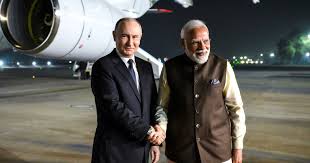
“India is not neutral. It is on the side of peace,” said Indian Prime Minister Narendra Modi standing next to Russian President Putin on Friday. This stance is in keeping with India’s foreign policy objectives of maintaining good relations with Russia, the US, and the European nations. India has been holding trade talks with all three delegations and requires deeper economic engagement with all the countries for its own national interest.
Indo-Russia relations have been time-tested, dating back to Indira Gandhi’s regime when she signed the Indo-Soviet Friendship Treaty for 20 years with Brezhnev before moving her army to liberate East Pakistan in 1971. Much water has flowed in the Ganga and the Volga in the last 55 years, during which time the Soviet Union collapsed and Russia emerged as a strong power.
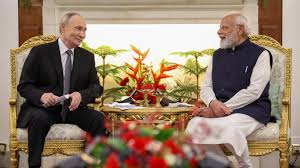
Indo-Russian relations were mostly limited to defence hardware until recently. With the bulk purchase of crude oil from Russia in recent years, the trade between the two countries has increased, but India faces a significant trade deficit. Indian exports to Russia are valued at a meagre Rs 5 billion. However, the total trade between the two countries reached Rs 69 billion by March 2025 thanks to increased Indian imports from Russia. India has to implement something radical to bridge the trade gap. The revised target suggested in the joint statement released at the end of Putin’s two-day visit to India on December 4 and 5 is Rs 100 billion by 2030.
This target is not very difficult to achieve. The labour mobility pact signed by the two countries has a lot of scope. It has come at a time when Russia was struggling with a labour crunch and the US was restricting immigration. Indian youth can make Russia their home and work there. This will be the third theatre for Indian labor, beside the US and the Gulf.
Indo-Russia Trade Ramps Up: Bridging the Deficit
It is quite clear by now that the improvement in trade with Russia would not be at the cost of trade relations with the US or European countries. A US trade delegation is due to visit Delhi next week. Talks with European delegations have been going on well. If the Ukraine war is out of the way, with the Trump initiative yielding fruits, there will be no hurdle for US-Russia-Europe triangle business deals with India. The Modi government has been working in this direction for some months. For India, Russia is the only country prepared to share its technology in submarines and anti-missile systems. The S-400 system, built with Russian technology, was effectively used in Operation Sindoor recently against Pakistan. Putin said Russia would be happy to share technology for small modular reactors (SMR) and nuclear plants.
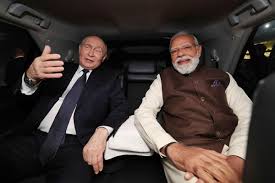
Modi did well by going to Palam airport to receive the Russian president as an exceptional gesture for a leader who was being sought to be isolated by the West. Putin went back to Moscow a happy man after the unusual warmth in reception and the substantial deals signed in Delhi. For the US, the containment of China is a priority in Trump’s second term, and the importance of India in its scheme of things has come down. For some reason, the Trump administration chose to pamper Pakistan by inviting General Munir, who was made chief of armed forces, to the White House for a rare dinner. The US seems to have abandoned its Indo-Pacific strategy for the time being.
The Geopolitical Ripple Effect: US and China Perspectives
How does China look at the closer relationship between India and Russia? China, no doubt, considers India an adversary. It does not want Russia to arm India and increase its military muscle. But India parting ways with the US is welcomed by China. It was aware that the US wanted to juxtapose India against China during the Bush term. Since Trump has been rubbing India the wrong way, China would be happy if India gets closer to Russia and moves away from the US. Europe, which is most unhappy with India giving a red-carpet welcome to Russia when the latter was attacking Ukraine and threatening the European countries, is also not happy with the unpredictable ways of President Trump. As the US emerges as an unreliable and often hostile ally, Europe prefers to improve its relations with India. Germany, England, and France have fairly good relations with India now, and they are set to improve further. India has enough experience to deal with countries with shifting alliances, and it has an obligation to treat a tested and historical ally like Russia in a very friendly and warm manner.
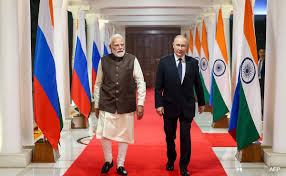
This was what Modi and his government did. Modi should have invited Congress President Mallikarjun Kharge and Opposition leader Rahul Gandhi for the Putin reception rather than Shashi Tharoor. It amounts to being small-minded on a big occasion. Modi’s image would have gone up had he shown statesmanship and extended an invitation to the opposition leaders. The PM chose to play Tharoor against the Congress high command in a petty fashion.
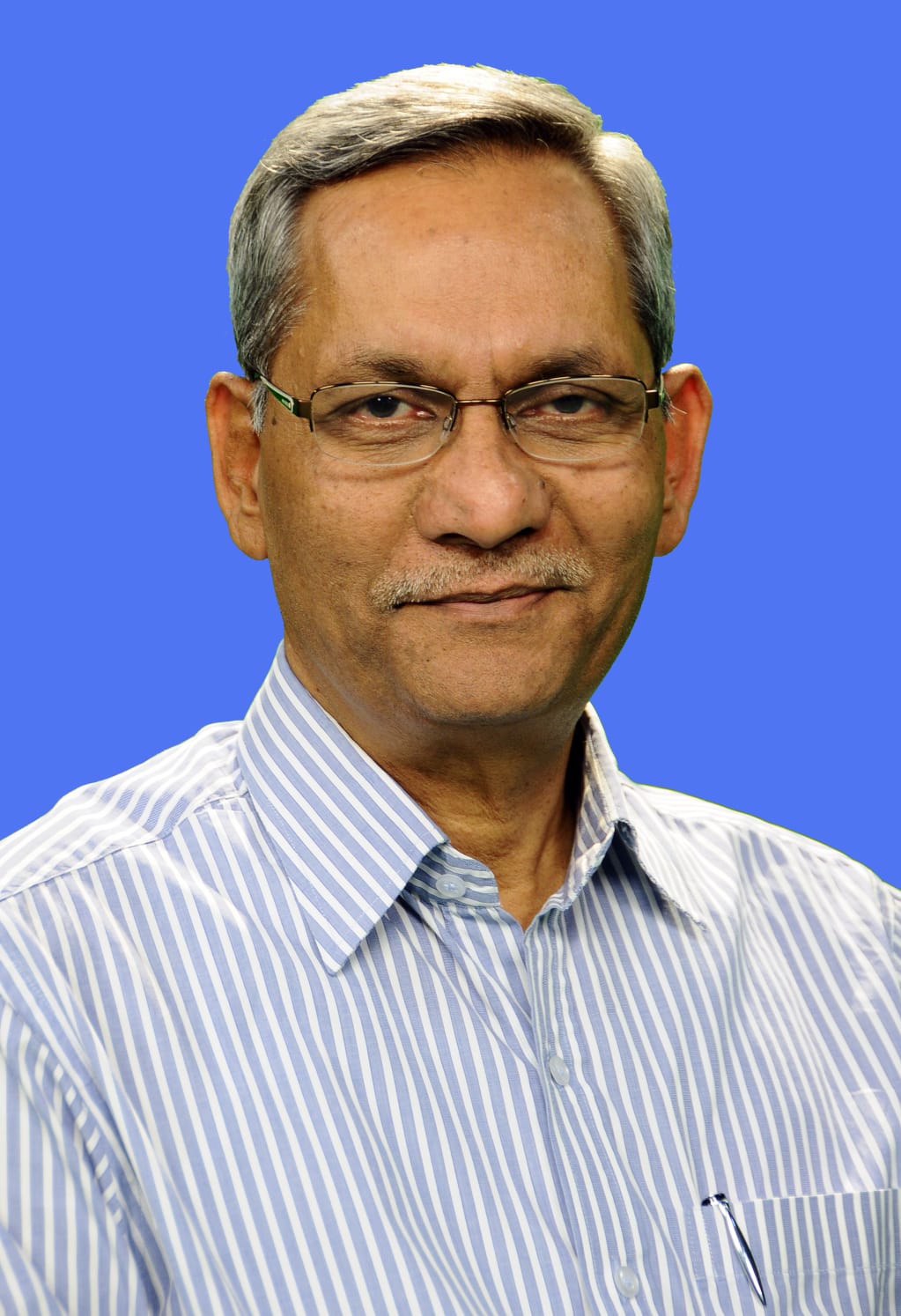
Prominent Journalist
Dr. K. Ramachandra Murthy is a versatile journalist with a distinguished career. Dr. Murthy began his extensive career with Andhra Prabha of The Indian Express group in Bengaluru. He was editor of Udayam, Vaartha and Andhra Jyothy. Dr. Murthy founded and edited HMTV news channel and The Hans India, an English newspaper. He was also editorial director of the Telugu newspaper, Saakshi. He was awarded Ph. D for his research work in rural reporting. Dr. Murthy’s five decades in journalism showcases his influential roles across both print and electronic media. He wrote the political biography of NTR published by Harper Collins.
Absolutely, Modi could have invited Kharge for this meeting as chief of INC along with Tharoor, It could have been seen as statesmanship.
RG though as a leader of opposition doesn’t posses stature to be part of high profile meeting.
And in today’s era, expecting Vajpayee period of politics is out of syllabus.
Anantji, your perspect on Vajpayee and Narendra Damodar Modi style and functional is perfect.