- No support from the govt to come out from the crisis
- Officials failed to add apt provisions in seed act to get compensation
Telangana are facing a severe crisis due to the widespread issue of genetically defective or ‘off-type’ oil palm plants, which is severely impacting their long-term income prospects with the falling output. The issue came fore only after four years while the plants no blossoming. Palm cultivation that started with 5850 acres in 2007 touched to 2.43 lakh acres by 2024-25.
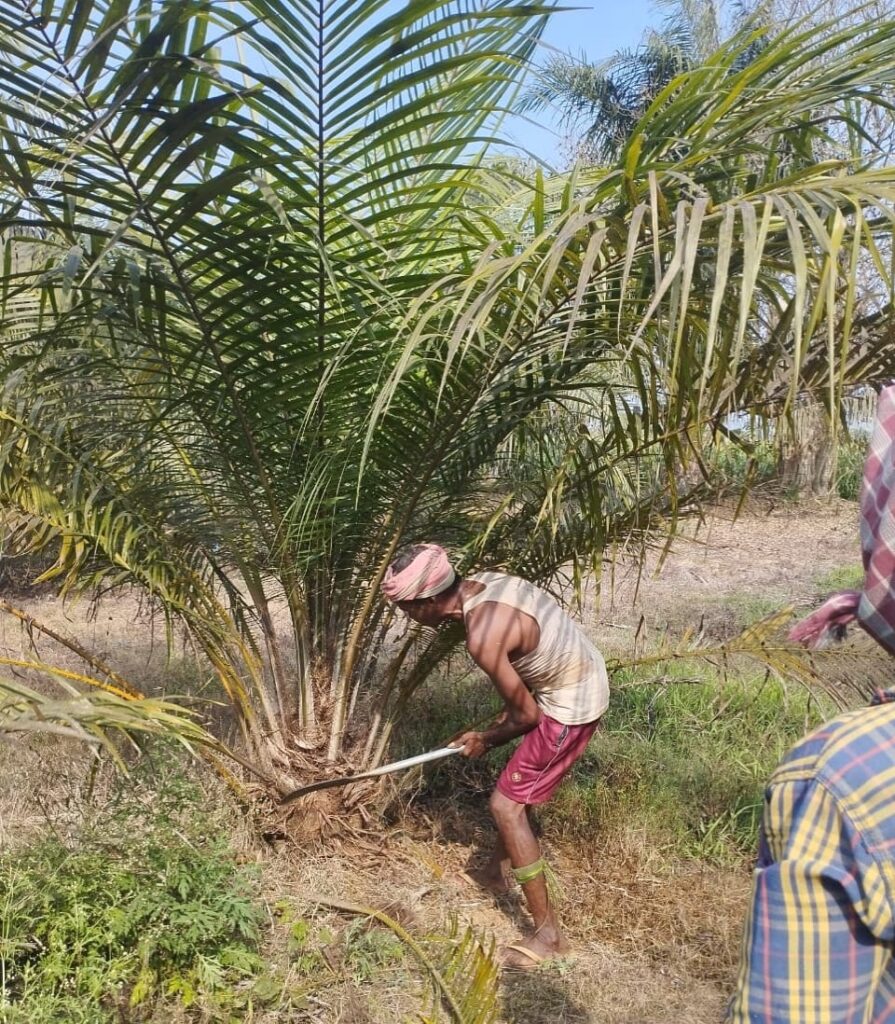
The defect in the oil palm plants, which are largely distributed under Telangana Oilfed Corporation, came fore in the recent months. The farmers stunned after knowing the off-type plants. It is estimated that defective planges ranging from fifteen to 30 percent. The farmers had two choices to come out the to bear the loss of dropping of prodiction and buldoze all the plants and sown the new seedlings.
As one estimate suggest that ‘off-type’ plants exist in nearly 10,000 acres of plantations (planted between 2018–2022), affecting over 3,000 farmers. About 200 farmers have formally reported defective plants across 1,500 acres to the state officials.
Kanasani Ravi of Ganeshpadu village in Aswaraopet constituency realized after three years that the plants, which were planted in 2022 for his six acres were defective one. He reports losing nearly Rs 80,000 per acre over this period and is now facing the prospect of waiting another three years after replanting for any yield.
Hurdles for farmers seeking relief is the current legal framework
No Compensation: While the Seed Act provides safeguards for short-term crops like paddy, its scope is restricted. Oilfed maintains that compensation is not applicable under the Oil Palm Act for these long-term crops.
Central Intervention: The issue was taken to the notice of Union Agriculture Minister Shivraj Singh Chouhan by the Palm Oil Farmers’ Association with the initiative of TRS MP Vaddiraju Ravichandra. This prompted the Union Ministry to order an investigation on the National Oil Palm Research Centre (Pedavegi) for not finding the issue so far though a scientific team collected samples and prepared a report. It is alleged that the report was kept in dark spot by Oilfed fearing of charges and liability.
Initially, Oilfed took the issue in lighter vain and not even transferring a district officer, who failed to check the inserting of off-type plants among the healthy one. The current relief measures offered by Oilfed are minimal and do not cover the significant financial losses incurred by the farmers.
Interestingly, Oilfed offers to uproot defective trees at free of cost in the plantations of the farmers and and supply free seedings from its nurseries. Farmers demand for replanting to correct their mistake by paying compensation for the wasting of their labour for the fuve years..
The affected farmers want appealing for comprehensive support, such as Oilfed, arrange an interest-free loan with a guarantee to help them sustain their families during the long, non-yielding period following replanting.
Principal Correspondent, Prime Post
Adapa Dora, journalist cum farmer, proved his excellence in both the fields. While working in Andhra Bhoomi (Telugu Paper) and Deccan Chronicle, he forced a famous seed company to pay compensation to the maize farmers for crop loss due to the supply of spurious seeds to them. He wished to maintain harmony between tribals and non-tribals in the mandals of Bhadradri-Kothagudem district for the prosperous of both groups.