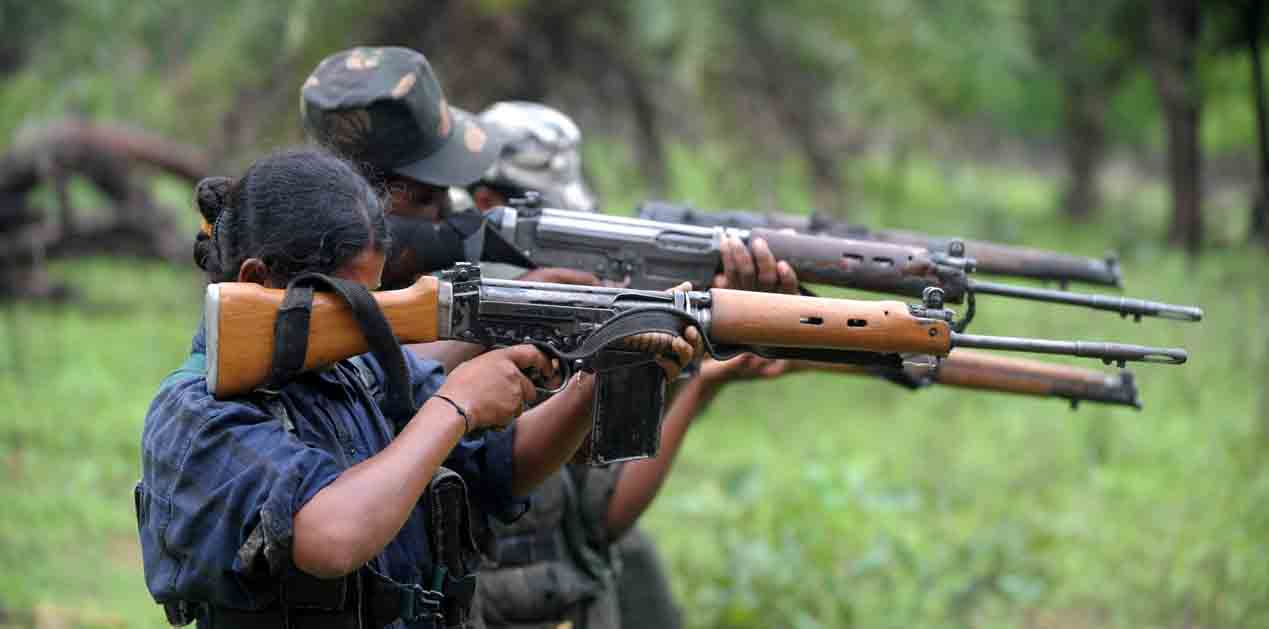
Tippari Tirupathi, who hails from Telangana, is the latest leader to control the Maoist party in Chhattisgarh as its General Secretary. He has adopted the alias name of Abhay from the surrendered top Maoist leader, Mallojula Venugopal Rao. He released two statements in the name of Abhay on October 16, which came to light three days later. The first statement called Venugopal Rao alias Sonu and Takkellapalli Vasudeva Rao alias Asanna alias Satish “counter-revolutionaries, traitors, and defectors.” He also said these surrendered leaders would be punished by the people for their betrayal.
It generally means that the Maoists would kill these two leaders. But what about Vanjem Kesha, daughter of Hidma, a powerful and youngest member of the Maoist Party’s Central Committee, who surrendered in Warangal on February 22, 2025? Vanjem Kesha’s husband, Ramesh, is in a Maharashtra jail. If Hidma allowed his daughter to surrender to the police in Telangana, he also must be thinking of following Sonu’s line sooner or later. The harsh statement released by Abhay must have been aimed at declaring to the world that the Maoist party is still “alive and kicking.” The second letter released by Abhay calls upon the people to observe a bandh. The date of the bandh was not given yet.
Why Mallojula’s Surrender Came into Discussion More?
There have been a number of surrenders by Maoist leaders of late, with little public notice. But when Mallojula Venugopal Rao alias Sonu surrendered, the reaction was unexpectedly strong. There may be some reasons to be angry with Sonu. Usually, leaders and cadres of revolutionary parties surrender when they become old and ill or when they develop irreconcilable differences with the leadership. The police, on their part, have been trying to create differences among the Maoist leaders. The police have been organizing letters from the kin of the Maoist leaders, pleading with them to surrender and come home. In recent months, 18 members of the Central Committee of the Maoist party had surrendered to the law of the land. The prominent members left in the Central Committee are Devuji, Hidma, and Bhaskar of Jharkhand. Hidma is a known face even to foreign journalists as he is a local tribal who knows the terrain, and he is the youngest of the lot. Born in the 1980s, Hidma must be around 45 years old.
Sacrifices of the Mallojula Siblings
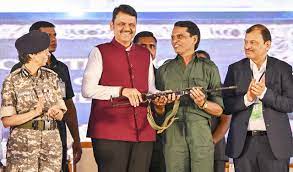
Sonu surrendered while in Maoist uniform and with an AK-47 gun in hand. He was smiling even though the Maharashtra Chief Minister, Devendra Fadnavis, was not. Sonu’s wife, Sarakka, who surrendered before Fadnavis on December 31, 2024, was present on the dais. Persons like Jampanna, who surrendered some time ago after working as a Central Committee member, say there may be some conditions imposed by the government. Surrendering with guns and appearing to be smiling may be two of such conditions. Just because Sonu was seen smiling briefly, one cannot question his integrity or berate him. One cannot call him a traitor. One should remember the five decades of dedicated service Sonu performed. It must also be kept in mind that his own brother, Mallojula Koteswar Rao alias Kishenji, became a martyr when security forces encountered him in the Jungle Mahal area in West Bengal in 2011. The two Mallojula siblings, who entered the movement when they were very young, had worked their way up from the lowest level and did a lot of service to the party. Sonu cannot be faulted easily just because he sported a smile for a while when he surrendered. The same can be said about Takkellapalli Vasudeva Rao, who contributed to the bomb blast at Tirupati involving Nara Chandrababu Naidu, the then chief minister of undivided AP, and the killing of Aliminati Madhava Reddy, a minister in Naidu’s cabinet. He worked for the party sincerely for more than four decades.
Jampanna says giving up the armed struggle is different from surrendering. What Sonu and others did was giving up armed struggle. There are thousands of people who have surrendered in the five decades of the Naxalite or Maoist movement.
History of the Movement
Dr. Marri Channa Reddy, who was about to lead the Telangana state movement in 1978, warned the government that all the Telangana protagonists would take to arms and become Naxalites if their demand for a separate statehood was not conceded. The Naxalite movement did not start in right earnest till then. Devulapalli Venkateswara Rao and Tarimala Nagireddy subsequently said the Naxalite movement would not be able to stand the test of time.
According to V. Prakash, a former Naxalite, water expert, and political analyst, Devulapalli Venkateswara Rao was the first to prepare the ground for the Telangana peasants’ armed struggle. Sundarayya, Chandra Rajeswara Rao, and Basava Punnaiah were members of the CPI committee which reviewed the struggle. They were advising the fighters but did not work in the field. Sundarayya visited Telangana during the days of struggle three times, Rajeswara Rao twice, and Basava Punnaiah never visited Telangana. Devulapalli had respect for Rajeswara Rao as he was responsible for the existence of the Communist Party in Telangana. Though all three are respected leaders, they did not have any role in the peasants’ armed struggle. It was, of course, Sundarayya who toured Telangana extensively, after the armed struggle was given up, to meet the survivors of the persons who laid down their lives in the armed struggle. He did a lot of work in that connection.
Stalin’s Dialogue to the CPI delegation in 1951
When the CPI delegation comprised Ajay Kumar Ghosh, Dange, Chandra Rajeswara Rao, and Basava Punnaiah met Stalin on February 9, 1951, the Soviet leader asked them to show where Telangana was located on the Indian map. Then he said a fight for a small place that does not have a border either with the Soviet Union or China and does not have a seashore is not feasible. “I cannot supply arms. How can you fight with the soldiers of the Indian government?” he asked. The talk about the difficulty in achieving the goal of the communist fight in Telangana has been going on ever since it started.
Moreover, even after six decades, the Naxalite movement cannot be called a people’s movement. It is not spread all over India. In the best of times during 1970-80, the movement existed in 16 out of 24 states in the country. Now, it is mostly confined to Chhattisgarh with a little presence in Telangana, Andhra Pradesh, Odisha, and Maharashtra. Prime Minister Narendra Modi said the other day, while speaking at a Navi function, that the Maoist movement is confined to three districts. He was confident that the deadline announced by Union Home Minister Amit Shah (March 31, 2026) would be successfully met. The Telangana peasants’ armed struggle, on the other hand, can be called a revolutionary movement as it involved the ordinary people fighting against the Nizam and the landlords, their oppressors.
How Long Can the Maoist Party Continue the Struggle?
It is, as they say, a million-dollar question. There were setbacks to the movement ever since it started in 1967. Seven people were killed at Naxalbari in the police firing. More than 350 persons were killed in Srikakulam district. Hundreds have been killed in Telangana and Chhattisgarh. But the movement could sustain the losses and proceed. This time, the situation is different. The central government’s single-minded concentration on wiping out Maoism is difficult to withstand. It is using armed forces, helicopters, drones, etc. The government has been busy creating problems for the Maoists by:
- Encouraging informers to infiltrate the Maoist groups on a large scale.
- Preparing to help Maoists to surrender by incentivizing the rehabilitation package and doling out money to the surrendered Maoists. Every cadre and every gun is paid for.
- Continuing with aggressive welfare measures.
- Shivadhar Reddy, DGP of Telangana, gave a call to the Maoists to surrender without any fear of action by the police.
- The state governments and the Centre have been implementing welfare measures for people of every vulnerable section. When all the unemployed, aged, and young students are taken care of, why do they need to join ‘dalams’ and risk being killed by the police? The software industry and increasing opportunities to go abroad for studies and jobs is another reason for the recruitment to the Maoist party to dwindle. During the early days of the Naxalite movement, Warangal and Hyderabad colleges used to be recruitment centers for them.
- The big companies that are mining in Chhattisgarh are felling trees, laying roads, and creating infrastructure facilities, making the forest accessible to all. The young have schools to attend. The general public has ceased to react when Maoists are killed. This has been the case since 2010. No revolutionary movement can sustain without the support of the people. There is no doubt that the Janathana Sarkar run by the Maoist party in Chhattisgarh adopted a 9-point program, which is useful to the people. But the same thing can be achieved through democratic means in peaceful ways, without violence. Young people in the country are busy with their education and other vocations. They have no time for the Adivasis for whom the Maoists are fighting. The RSS has been reaching the Adivasis in many states, including Chhattisgarh, to give them good education and nourishment. The BJP has been winning seats in Parliament and assemblies allocated for Adivasis because of the solid work being done by the RSS at the ground level.
Times Have Changed
The Telangana peasants’ armed struggle and the Naxalite (Maoist) movement did a lot of social good. The bonded labor that was in vogue during the landlords’ rule in the Nizam’s time is no longer in practice. Money lenders are not sucking the blood of the poor. Land reforms helped the landless. These are the tangible results of the armed struggles. The times have changed. The government is all-powerful now. It is armed to the teeth. It has vast resources of personnel and money power. People are not supportive of armed movements. There are instances like that of Cheepurupalli in Vizianagaram district, where a person, Dr. Pemmaraju Durga Kameswar Rao, born at Vijayawada, educated in Hyderabad, and working as a professor in Boston in the US, decided one fine morning to return to his own state and help the poor. He, a bachelor for life, settled down at Cheepurupalli. Since his return forty years ago, he has single-handedly helped to run educational institutions for the young and the aged, build houses for rickshaw pullers, barbers, and washermen, and train thousands of Anganwadi workers. He has been successful in eradicating the caste scourge and the inequalities in society. Officers like SR Sankaran helped him when vested interests tried to stop him in his journey. He is being felicitated by Justice B Sudershan Reddy at Tenali on October 30. If one person could do so much for society, why can’t hundreds of persons who changed their line in favor of peaceful existence do wonders if they work with the same sincerity and devotion? If the Maoists refuse to change their line and continue to remain in forests, they will be risking their lives for nothing.
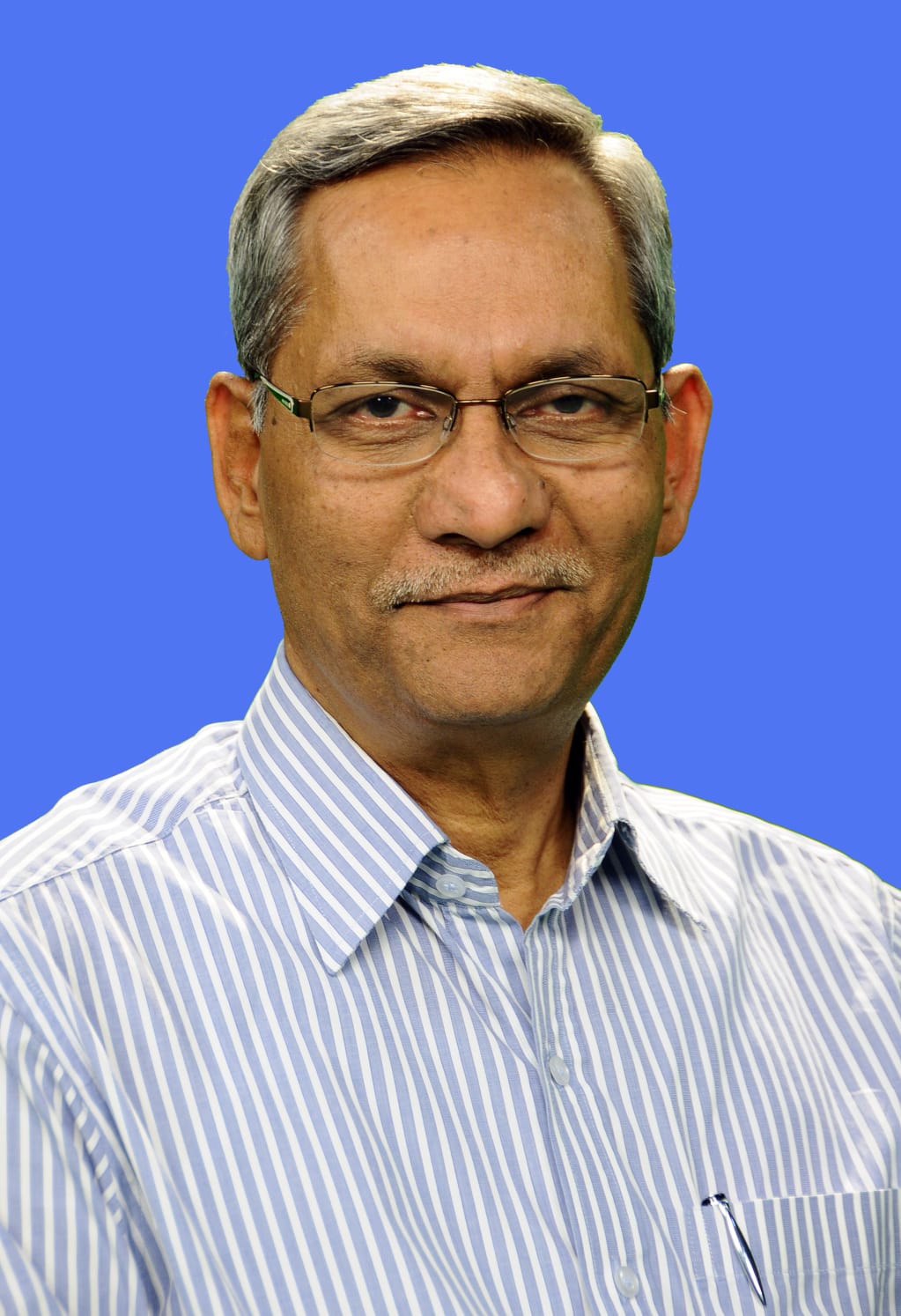
Prominent Journalist
Dr. K. Ramachandra Murthy is a versatile journalist with a distinguished career. Dr. Murthy began his extensive career with Andhra Prabha of The Indian Express group in Bengaluru. He was editor of Udayam, Vaartha and Andhra Jyothy. Dr. Murthy founded and edited HMTV news channel and The Hans India, an English newspaper. He was also editorial director of the Telugu newspaper, Saakshi. He was awarded Ph. D for his research work in rural reporting. Dr. Murthy’s five decades in journalism showcases his influential roles across both print and electronic media. He wrote the political biography of NTR published by Harper Collins.

It’s true that naxal activities have come down mostly because of welfare schemes started by the state Governments where it is active in Chattisgad, Telngana, Maharashtra, and Andhra Pradesh. And police also encouraging to surrender themselves so that no action will be taken against them. And one more reason is seen that maoists getting aged. And Central Government also concentrating to eliminate maoists with using Drones and all with new technology. Now it’s tough time for them to organise their activities. So they have to act as per times. A worthy news item by Sri K. Ramachandra Murthy Gaaru, Prominent Journalist.