- Mallojula and Aasanna surrender major shock to the movement
- Others may not be able to hold for long
The revolutionary movement which started in West Bengal’s Naxalbari more than five decades ago appears to be on the wane after a prolonged struggle. Inspired by Mao Zedong’s effort in peasant-led revolution, leftist groups mobilized against landlords sought to redistribute the land and also overthrow the governments through armed struggle. First it was called Naxalite movement. Then in 2004, while Naxal leaders were having talks with the YS Rajasekhara Reddy government in Hyderabad,the name was changed to Maoist party.
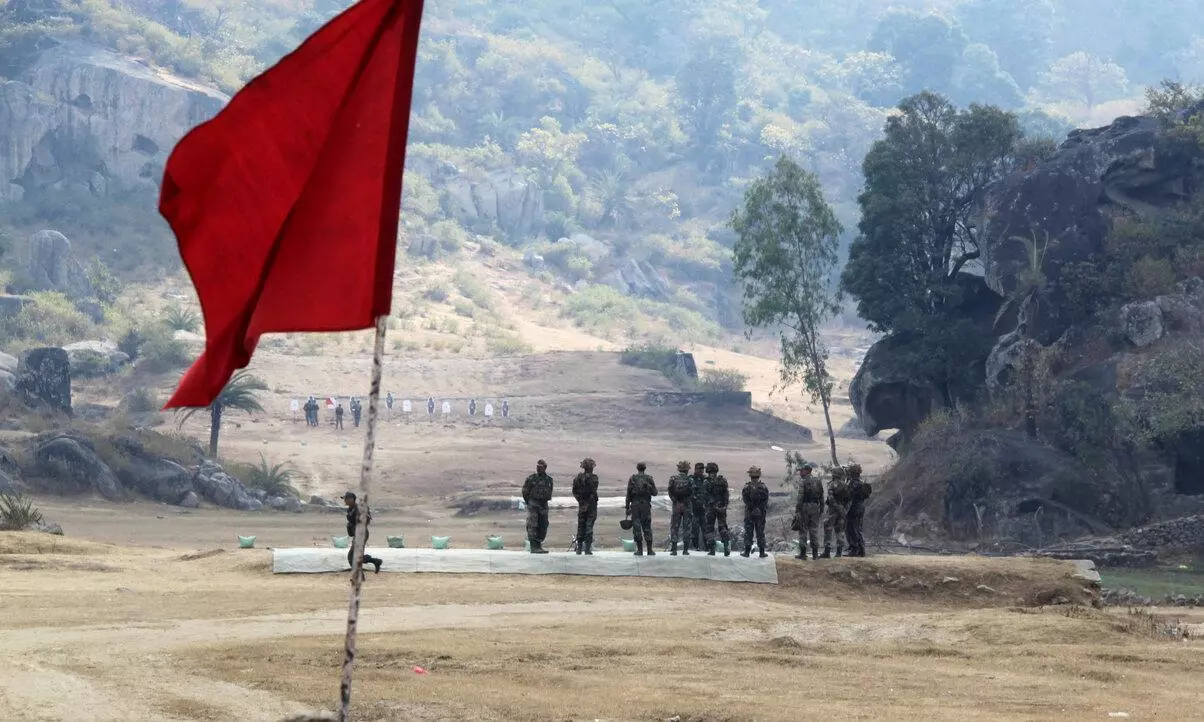
After the founding leaders Charu Majumdar and Kanu Sanyal became irrelevant (Majumdar died on 28 Juy 1972 and Sanyal committed suicide on 23 March 2010), it was in early 1990s that leaders of the caliber of Kondapalli Seetharamaiah and KG Satyamurthy, who led People’s War Group (PWG) and took the movement in undivided Andhra Pradesh to its peak in 1970-80, had surrendered to the police. It steadily lost its support base in Telangana and shifted to Chhattisgarh where it established a Janatana Sarkar, directly ruling some parts of Bastar. Dr. Manmohan Singh, when he was prime minister, described the Maoist movement as ‘the greatest internal security threat.’ Modi government has been focusing on the course to eliminate the Maoist movement by mercilessly killing its leaders in the name of ‘Operation Kagar’. It has also allowed the State governments to offer rehabilitation packages to surrendered Maoists while infrastructure development work was carried out in Leftist extremist regions. Having realized that the movement does not evoke sympathy among the countrymen any more, some of the prominent Maoist leaders surrendered to the government in the last one year while many others died in the encounters with police and paramilitary forces. The latest to surrender is Mallojula Venugopal Rao on Wednesday and Asanna on Thursday.
Most severe blow
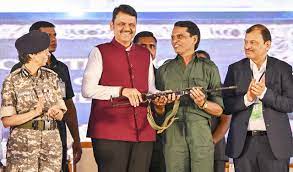
The Maoist movement was dealt the most severe blow on Tuesday when its ideological head, member of Politbureau and Military Commission Mallojula Venugopal Rao alias Sonu surrendered to Maharashtra police in Gadchiroli along with 60 other leaders and cadres. His sibling Mallojula Kotewara Rao alias Kishanji died in 2011 in an encounter in West Bengal. During 2010, Kishanji was talking from Jungle Mahal in West Bengal to me sitting in HMTV studio in Hyderabad on regular basis. He spoke only with HMTV and no other media. With the death and surrender of Mallojula brothers and Laxman Rao, also from Karimnagar district in Telangana, becoming old and ineffective, Home Minister Amit Shah’s declared his goal of wiping out Maoism from the map of India has moved closer to the reality although the strength of those who chose to remain in forests and not to surrender is not that insignificant. Tippiri Tirupati alias Devji, Hidma, Chandranna and Damodar are still at large. Asanna alias Thakllapalli Vasudeva Rao, one of the movement’s key leaders, surrendered to Chhattisgarh police on Thursday (Oct. 16, 2025). The Maoists are still active in Bijapur, Sukuma and Karriguntalu regions. As long as the lands belonging to the tribals are occupied by others and intricate problems faced by Adivasis and other marginalized sections remain unresolved, the insurgency would not die down completely. It would be there in form or the other. Police intelligence says all the remaining Maoist leaders will surrender if not today, tomorrow since the only alternative would be getting killed by the police. Telangana DGP Shivdhar Reddy described the Gadchiroli surrenders as ‘a major blow to the Maoist movement indicating that even senior leaders are convinced dialogue and rehabilitation offer a safer and more constructive path forward.’
Devendra Fadnavis scored more marks as CM
Maharashtra Chief Minister Devendra Fadnavis understandably in a celebrating mood what with police parade and all the noise. He is justified in being elated as the person who surrendered with his gun is no ordinary Maoist. He was ideological and military head of the extremist party. He convinced sixty other leaders and cadres to follow him.
Ideological debate
There has been an ideological debate going on among the Maoist for some time. The surrender and rehabilitation policy followed by Maharashtra government appeared better than the one followed by Telangana and Chhattisgarh governments. Many senior Maoists had, of late, surrendered to Maharashtra police. Over the last two years some 500 Maoists surrendered in Bastar region alone.
According to Union Home Ministry’s 2024 report, there was a 48 percent drop in incidence of Maoist related violence between 2013 and 2023 and 65 percent decline in related deaths, from 397 to 138. From 2024 till 2025 October some 1,850 Maoists laid down arms. The figure was 800 in 2022-23.
Those surrendered are engaged in education, vocational training and other livelihood programmes. Youth recruitments have fallen drastically. While the Maoists could boast of influencing 180 districts in 2006 they are now confined to less than 80 districts. Ageing leaders and their health problems are other concerns bothering the movement. Senior police officers say a letter by a surrendered Maoist Anil had influenced Venugopal Rao more than anything else. Anil detailed his activities after leaving the movement.
Interested in literature-Sonu’s pen name is ‘Sadhana’
Sonu and his elder brother Kishanji married women working in the movement with them. Kishan married Pothula Padmavati alias Sujatakka who hails from Penchikalapadu village in Gadwal district while Sonu wedded Vimala Chandra Sidam alias Tarakka from Jimal gatta village of Gadchiroli district. Sujatakka surrendered about a month ago before the Telangana police while Tarakka joined the mainstream in the presence of Maharashtra Chief Minister Devendra Fadnavis in January this year. Their eldest brother Anjaneyulu, retired from a job, lives at their residence in Peddapalli.
Sonu was interested in literature right from his young days. He mastered Hindi, English and Gond languages besides Telugu and wrote with the pen name ‘Sadhana.’ The title of his novel in Gond language is ‘Rago (means parrot).’ He wrote another book titled ‘Border’ in Telugu. Venugopal, born on 10 May 1956 to Venkaiah and Madhuramma, had revolution in his blood. His father participated in Telangana peasants’ armed struggle against Nizam. He was awared ‘Tamrapatra’ by government. Venugopal completed his B Com and briefly worked as an apprentice in Panchayati Raj department. When his elder brother beckoned him after Jagityala Jaitra Yaatra, Venu joined the Naxalite movement in 1978 at the age of 22. He first joined a dalam in Telangana. Both the brothers were founding members of PWG. They moved upwards to work in Gadchiroli and Abujhmad in Chhattisgarh. They became party’s politbureau members. When the Naxals killed Butchi Reddy, Peddapalli DSP in 1986, the angry local police had burnt the dwelling of Venkaiah forcing him and his wife to literally live in streets. After Cherukuri Rajkumar (Azad) was killed in 2010, Sonu took over as the Maoist party’s spokesman. Sonu has been thinking on the lines of surrender and wrote letters to his comrades asking them to rethink armed struggle. He felt that the movement faced an existential crisis and blamed the leaders including himself for the state of affairs. He called for cessation of armed struggle. He also wrote a letter to his mother on her death. He could not attend the funeral. ‘Dear mother, excuse me. I will not do anything that brings bad name to you or to my martyred brother and would not move away from the people,’ said Sonu in his letter. But ultimately he could not keep his promise as he had to move away from his people whom he, his elder brother and the wives of both the brothers served selflessly for about three decades.
Basavaraju’s killing a tactical success for the state
Venugopal alias Sonu alias Abhay alias Bhupati alias Vivek alias Rajan is arguably the most important Maoist leader to surrender carrying Rs 6 crore reward on his head. Basavaraju (Nambala Kesava Rao) was killed in May this year in an encounter. He was Maoist party’s General Secretary. If Basavaraju’s killing was a strategic and tactical success, Sonu’s surrender has effect on political and ideological front. Sonu thought he would be asked to fill the GS post held by Basavaraju. Instead, Devji was preferred which was said to be root cause for Sonu’s heartburn. There are one hundred court cases against Sonu. The pressure by cops had increased tremendously. They were always under the threat of being killed and were forced to move to new places as safety precaution. Sonu concluded that the time for armed struggle was over. Why did he choose to surrender to Maharashtra police instead of Telangana or Chhattisgarh cops? He did not trust Chhattisgarh police. He thought they were biased against him. To reach Hyderabad, he has to travel across a wide stretch of forest area which is not safe. Moreover, he was given to understand by Anil’s letter that rehab package offered by Maharashtra government is better. That was why he sent signals to Maharashtra police. A convoy of police buses escorted by a battalion of C-60 commandos had been waiting for Sonu’s group at Hodri village. From there they were taken to Gadchiroli police headquarters. There were six senior cadres from Telangana among the 62 Maoists who came out of the forest around 8 pm on Tuesday and surrendered to the police with weapons which included seven AK-47 guns.

Ripple effect
Sonu’s surrender would trigger a ripple effect. Among the three sub-zonal bureaus, north and western bureaus were merged into one. It was being supervised by Asanna from Gadchiroli till recently. After his surrender it has to be seen who would take over. Narayanpur, Dantewada and Kanker come under this bureau. The south zone comprising Bijapur, Sukma and Karreguttalu is still under Maoist influence. If the government continues with the twin policy of offence and rehabilitation package and also concentrate on development in the Maoist influence areas, the rest of the revolutionaries may not be able to hold for long. It also depends on how the governments treat the surrendered Maoists.
Prominent Journalist
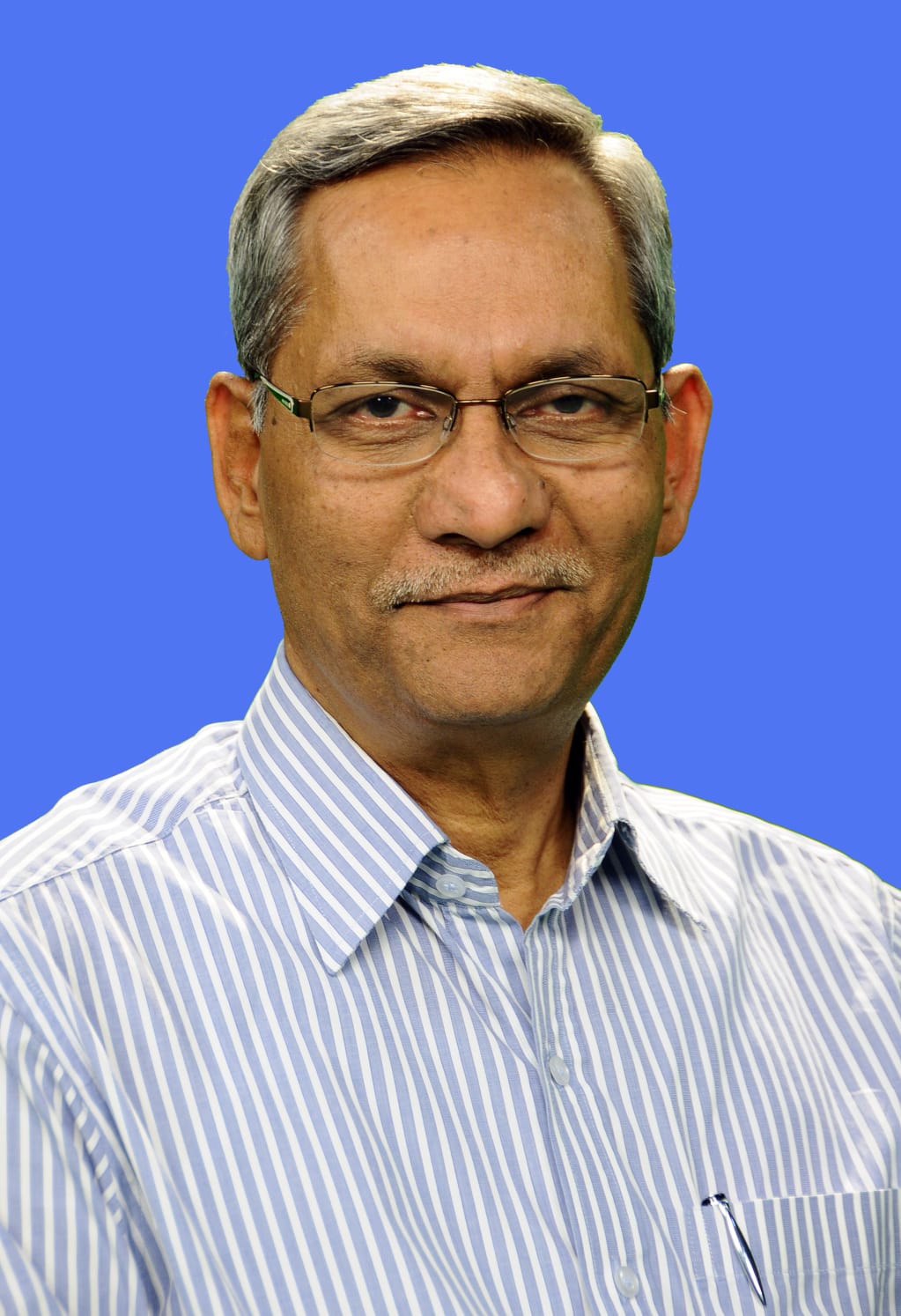
Dr. K. Ramachandra Murthy is a versatile journalist with a distinguished career. Dr. Murthy began his extensive career with Andhra Prabha of The Indian Express group in Bengaluru. He was editor of Udayam, Vaartha and Andhra Jyothy. Dr. Murthy founded and edited HMTV news channel and The Hans India, an English newspaper. He was also editorial director of the Telugu newspaper, Saakshi. He was awarded Ph. D for his research work in rural reporting. Dr. Murthy’s five decades in journalism showcases his influential roles across both print and electronic media. He wrote the political biography of NTR published by Harper Collins.
Yes. It is true that naxal activities have come down as said by Sri K. Ramachandra Murthy Gaaru, prominent journalist. The surrender and rehabilitation program by Mr. Fednavis, Maharashtra C M, and police pressure on naxals also lead to come down naxal activities. Altogether, it’s glad to see the change in naxal activities. A worthy news item by Sri K. Ramachabdra Murthy Gaaru, prominent journalist.
The article elaborated most of the details of maoist movement in infis
Yes. It is true that naxal activities have come down as said by Sri K. Ramachandra Murthy Gaaru, prominent journalist. The surrender and rehabilitation program by Mr. Fadnavis, C M, Maharashtra and police pressure on naxals have come down naxal activities. It is glad to see the change in naxal activities.