
- Cooperation Amidst Conflict: The Role of National Leaders
- The ‘Samvidhan’ Moment: Patel’s Stance and Ambedkar’s Resignation
- The ‘Modern Manu’: Ambedkar’s Philosophy of Social Transformation
- The Trade-off: Stability Versus Radical Vision
- A Global Icon: Ambedkar’s Legacy in US Universities and Social Movements
- The Uniqueness of Caste and Ambedkar’s Critique
- Ambedkar’s Warning: Majoritarianism and the Risk to Democracy
At the very outset, I must express my deep sense of gratitude to Dr. B.R. Ambedkar Memorial Trust for asking me to give this lecture. Both Dr. K. Lingaiah, the president, and G. Gnaneshwar, General Secretary of the Trust, were kind enough to meet me and give information about the past lectures. Though I have been involved in journalism for more than five decades and the work concerning Dalit Development for quite some time, I am not an academic who was trained to study Ambedkar’s life and works. I understand, today, 78 years after attaining freedom, and 75 years after our Constitution came into being, it is Ambedkar who stands tallest among the leaders, reminding new generations that it is his constitution that is keeping India united. He has become an icon of human rights throughout the world today.

It is Baba Saheb’s death anniversary today. The best way to commemorate the great man is by rededicating ourselves to the Constitution and trying to protect it with all our might.
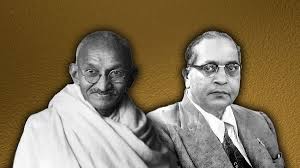
India is fortunate to have leaders like Babasaheb Ambedkar, Mahatma Gandhi, Jawaharlal Nehru and Sardar Vallabhbhai Patel before and after it became free. It is because the task of drafting the constitution was entrusted to Dr. Ambedkar that we are still a democracy. He had the background necessary to understand important factors like poverty, untouchability, oppression, caste discrimination and inequalities which he experienced in his childhood and which persist even today. He was also a brilliant student who was the first Indian to study at Columbia University and the first Asian to be a student at London School of Economics. He was also a barrister. He was a great student who finished his course in one and a half years where other students take three years. He was the best person to deal with the subject of drafting the constitution and he did an excellent job. Gandhi was instrumental in appointing Ambedkar the chairman of the drafting committee of the constitution, and Nehru and Patel cooperated with Ambedkar as far as possible, notwithstanding the tremendous pressure brought on them by caste Hindus, the capitalist class, and status quoists. We, the Telugus, should be happy that it was Prof N.G. Ranga who moved the motion that Ambedkar should be made the chairman of the drafting committee.
There is one important scene in Shyam Benegal’s documentary ‘Samvidhan’ that has ten parts. In that scene, Sardar Vallabhbhai Patel walks into Ambedkar’s residence and talks to him about his resignation. Ambedkar offered to resign from the chairmanship of the Drafting Committee of the Constitution as a protest against the negative attitude of the majority leaders of the Constituent Assembly towards reservations for Scheduled Castes and Scheduled Tribes. Patel takes the resignation paper into his hands from Dr. Ambedkar, tears the paper into pieces and requests him to continue the job. It is a very moving scene. Ambedkar, of course, accepts the request.
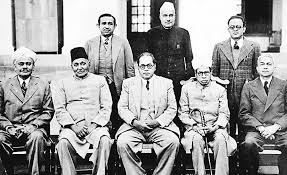
Ambedkar, on his part, had to compromise on a number of issues in order to be acceptable to the majority in the Constituent Assembly. He was pragmatic and practical. But in the process he stood his ground in finding an answer to majority tyranny and incorporated it in the constitution as provisions to protect minority rights. The Fundamental Rights, meant to protect minority rights, came to represent the basic structure of the Constitution, and the legislatures were given no authority, whatever may be the majority, to tamper with the basic structure of the Constitution. The Supreme Court in its 1973 judgment made it crystal clear that it is not within the powers of the Parliament to take away Fundamental Rights under Part III of the Constitution.
Dr. B.R. Ambedkar, the leader of the depressed classes (1891-1956), should be viewed as a social scientist, reformist, thinker, writer, statesman and a constitutional visionary. He is known as the messiah of the social revolution against all kinds of oppressions and discriminative practices prevailing in our social structure. He was vehemently opposed to the caste system and the practice of untouchability which is perpetuated by orthodox Hindus. In order to neutralize these social evils, Dr. Ambedkar evolved a theory of safeguards and protections for the backward classes and weaker sections of the society for the cause of social justice and equality. His philosophy was based on his experience with untouchability, discrimination and inequality during his childhood. He developed a concept of social justice and security along with political equality and sought its due place in the constitutional laws of India.
For his relentless struggle, Dr. Ambedkar was dubbed as ‘Modern Manu’ and praised as a social reformer who throughout his life wrote extensively on the political and social problems facing Indian society. He was concerned with certain problems, namely, caste system, untouchability, backwardness and exploitation. On his part, he suggested various solutions to transform the Indian society on the basis of democratic values, secular credentials and social equality. In that sense, Babasaheb was a man of thought and action as his political and social philosophy revolves around humanism, equality, liberal democracy, secularism and social cohesion.
If he had a free hand …
If Dr. Ambedkar had a free hand in framing the constitution, things would have been entirely different. Without Congress moderation, Gandhi’s emphasis on a rural outlook, or the debates in the Constituent Assembly during which 7,635 amendments whittled his draft, Ambedkar would have faced no pushback from conservative Hindus resisting personal law reforms, Muslims guarding Sharia, or capitalists opposing socialism. India’s Constitution would have been a bold manifesto of social and economic justice, dismantling caste, enforcing socialism and secularism with a modern, urban emphasis. It would reflect his dream of a casteless, classless society. The urgency of partition (1947-50) and the integration of princely states had forced pragmatic concessions like retaining colonial law (Indian Penal Code).
Such a document, however, might have unified India’s downtrodden but alienated elites, risking implementation challenges or civil unrest. But its ambition might have tested India’s fragile post-independence unity. The actual Constitution, tempered by collaboration, traded some of this vision for stability, a compromise Ambedkar accepted but never fully embraced (If Dr. Ambedkar had a free hand what would have been the shape of the Indian constitution, SR Darapuri, National President, All India People’s Front, Counter currents.org, 10 April 2025). The Constitution made by a free Ambedkar would have been shorter, sharper and revolutionary. Scholars like Granville Austin, an American historian, and a great friend of India, noted Ambedkar’s pragmatism in the real process balancing ideals with consensus suggested that he knew a radical draft would not survive 1940s India.
The caste system in India is unique in the world. According to Dr. Ambedkar, it contributed to economic imperialism, political tyranny and social fascism of the Brahmins of Indian society. (‘Dr. Ambedkar, Mahatma Gandhi and Dalit movement’ – NS Gehlot). More than one hundred years after he returned from the US completing his studies at Columbia University, the people of the US now consider him as a great liberator. The protestors in the US are holding his photo on placards and doing dharnas demanding social justice. He has become a world icon for social justice. ‘The Annihilation of Caste’, written by Ambedkar, is part of the syllabus in American universities. No wonder that no Indian university has so far prescribed this book in its syllabus.
What does tyranny mean?
Tyranny is defined as an abusive exercise of authority by those who have power over the powerless people. Those who are experiencing tyranny lack control over the dominant individual or group. They risk basic freedoms, property, employment or life itself. Tyranny is based upon physical or psychological domination or even both.

What does tyranny of the majority mean?
Tyranny of the majority refers to a situation where the majority group in a democracy can oppress or suppress the rights and interests of minority groups. It occurs when the majority uses its power to impose its will on the minority, disregarding the minority’s rights and concerns.
Tyranny of the majority happens when a numerically larger group of people enacts policies or institutes a regime benefiting the majority alone, with little concern of how these laws and changes impact others. A majority may try to silence or marginalize persons who disagree with mainstream thought. Tyranny of the majority may also occur if certain regions of a country having a larger population tend to dominate other areas more sparsely settled. North India dominating South India comes under tyranny. People of Telangana being dominated by the people of the Andhra region in undivided Andhra Pradesh can be another example.
Tyranny of the majority refers to a situation in majority rule where the preferences and interests of the majority dominate the political landscape, potentially sidelining or repressing minority groups and using majority rule to take undemocratic decisions and resort to autocratic actions.
1. Tyranny of the majority can lead to the suppression of individual liberties and the marginalization of minority groups.
2. The concept of tyranny of the majority was a concern of the framers of the U.S. Constitution who sought to protect minority rights through the Bill of Rights and the system of checks and balances.
3. Democracies are vulnerable to tyranny of the majority if there are no constitutional protections for minority rights and if the majority is able to consolidate too much power.
4. Judicial review and protection of civil liberties and Fundamental Rights are important safeguards against the tyranny of the majority in a democratic system. Judicial review, which allows the courts to strike down laws and government actions that violate the basic structure of the Constitution is a crucial safeguard against the tyranny of the majority. By protecting the individual rights and Fundamental Rights the courts can prevent the majority from using its power to oppress the minority groups.
5. Proportional representation and power-sharing arrangements can help mitigate the risks of tyranny of the majority in diverse societies to some extent. In diverse societies where there are multiple minority groups, the risk of tyranny of the majority is more. Proportional representation where the seats in a legislative body are allocated based on the percentage of the popular vote each party gets can help ensure that minority groups have a voice and a stake in the decision-making process, can also prevent the majority from dominating and oppressing the minority.
This idea was discussed for the first time in the West by various thinkers including John Stuart Mill (On Liberty), a British political philosopher and Alexis de Tocqueville (Democracy in America), a French historian, diplomat and political philosopher.
First it was Edmund Burke, an Anglo-Irish politician and thinker, who wrote in 1790 a letter about ‘The tyranny of a multitude is a multiplied tyranny.’ Then it was popularized by John Stuart Mill who was influenced by Tocqueville in ‘On Liberty (1859)’, Friedrich Nietzsche used the term in his sequel to ‘Human,’’ All Too Human (1879).‘ Ayn Rand, the Russian born American writer, the author of ‘The Atlas Shrugged, and ’The Fountainhead’ wrote that individual rights are not subject to a public vote and that the political function of rights is precisely to protect minorities from oppression of majorities and “the smallest minority on earth is the individual.” Herbert Spencer, James Madison and others followed Mill and other political thinkers.
Ambedkar’s take
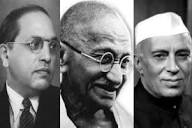
Dr. Ambedkar was not the first Indian thinker to reflect on democracy. But he was the first to offer original answers to the three basic questions that a theory of democracy must address. One, a theory must set out a norm, an ideal of what democracy should be like. Two, it must evaluate the current state of democracy in the light of its ideal and offer a critique. Three, it must spell out a path to a democratic ideal, from where we stand to where we should aim to be. Ambedkar’s answers were original because they were not drawn from some abstraction. His reflections were firmly located in the Indian context. Dr. Ambedkar’s answers were strikingly different from the two ways of thinking about democracy that dominated his times. On the one hand were ‘liberals’ like Jawaharlal Nehru who expected the Western fairy-tale of democracy to be replayed in India, albeit with time lag. He was known as Fabian socialist who believe in gradual, democratic implementation of socialist reforms. For the second kind of thinkers, Western democracies were the model towards which India had begun its journey by enacting a Constitution and holding free and fair elections. Gandhiji also shared misgivings about democracy but he was not articulate about it. Ambedkar, on the other hand, cautioned the people about Western democracies and advised them to follow optimism drawn from the theory of caution and conditional optimism.
Dr. Ambedkar, the architect of the India’s constitution and a champion of social justice, held profound concern about the ‘tyranny of the majority.’ He viewed it as a fundamental threat to genuine democracy. He argued that unchecked majority rule could devolve into oppression, particularly in a society riddled with deep-seated inequalities like India’s caste system, where the numerical majority (often aligned with upper castes) might dominate and marginalize minorities, including Dalits (whom he referred to as ‘depressed classes’). He distinguished between political tyranny (from government) and social tyranny (from society) asserting that the latter is far more insidious and pervasive as it “enslaves the soul itself.”
A key aspect of Ambedkar’s thought was the interplay between caste and majoritarianism. He viewed caste as a barrier to equality and fraternity enabling “communal” majority to perpetuate domination rather than fostering an inclusive political majority. He famously noted, “Political tyranny is nothing compared to social tyranny and a reformer who defies society is a more courageous man than a politician who defies government.”
The way BJP leaders conduct themselves in the public sphere today is what Ambedkar apprehended some eight decades ago. The NDA governments at the center and in many states are not inclusive. They have the majoritarian streak. This trend has been going on since 2014 when Narendra Modi became the prime minister.
In his final speech to the Constituent Assembly on 25 November 1949 – often called the “Grammar of Anarchy” speech Ambedkar indirectly addressed these risks by cautioning the people against the monopoly of power by a few which had historically treated the masses as “beasts of burden” and “beasts of prey.” He urged preventing class struggles or wars that could divide the nation, emphasizing fraternity and equality to sustain democracy. Without these, he warned, India risked losing its democratic structure, echoing his broader fear of majoritarian excess.
Dr. Ambedkar’s ideas shaped the Indian Constitution’s provisions for minority rights, reservations, and checks on power, aiming to promote inclusion and oppose majority tyranny. His warning remains relevant, reminding that democracy thrives not on majority might but on justice to all.
Welfare, the ultimate goal
Welfare was the ultimate goal for Ambedkar. He said the Constitution is expected to bring about welfare of the people. Democracy, according to Ambedkar, is “A form and method of government whereby revolutionary changes in the economic and social life of the people are brought about without bloodshed” (Conditions Precedent for successful working of Democracy, 1952). Ambedkar puts equality and fraternity at the heart of Democracy instead of liberty, as is the practice with Western democracies. He said, “A democracy is more than a form of Government. It is primarily a model of associated living. The roots of Democracy are to be searched in the social relationship, in terms of associated life between the people who form the society.”(Prospects of Democracy in India, 1956). Ambedkar said Buddhist Sanghas were the ultimate models for parliamentary democracy. While some other social revolutionaries of Ambedkar’s time were advocating violent revolution, Ambedkar offered a Buddhist solution.
States and Minorities

The text of Dr. B.R. Ambedkar, ‘States and Minorities’, was submitted on behalf of the All-India Scheduled Castes Committee to the Constituent Assembly on 15 March 1947. This was forwarded to the Fundamental Rights Committee of which he was a member. This memorandum contains 64 pages including the Preface written by Ambedkar. Babasaheb forcibly argues that the Scheduled Castes are a minority. He said, “Anyone with a fresh and free mind, reading it as a general proposition, would be justified in saying that it is capable of double interpretation. I interpret to mean that the Scheduled Castes are more than a minority and that any protection is given to the citizens and the minorities will not be adequate for the Scheduled Castes.” He argued that special safeguards are required against tyranny and discrimination of the majority. In the memorandum Babasaheb provided the safeguards for the Scheduled Castes (In Article II – Section IV). Sanction for safeguards, and amendment of safeguards in Part III, and protection of Scheduled Castes in the Indian States in Part IV. If one were to say that Scheduled Castes were not a minority it amounts to misunderstanding the meaning of the word ‘minority.’ In other words, it means that their social, economic and educational condition is so much worse than that of the citizens and other minorities that in addition to protection they would get as a citizen and as minorities as Scheduled Castes would require special safeguards against tyranny and discrimination of the majority. The other interpretation is that the Scheduled Castes differ from a minority and therefore they are not entitled to the protection which can be claimed by a minority. The interpretation appears to be such an unmitigated nonsense that no sane man need pay any attention to it. The Scheduled Castes must be excused if they ignore it. I am justified in demanding that for the Scheduled Castes all the benefit of the Fundamental Rights of citizens, all the benefit of the Provisions for the Prevention of the minorities and in addition special safeguards. He says separation of religion is not the only test of a minority. Nor is it a good and efficient test. Gandhi had also thrown light on Fundamental Rights and Minority Rights. He said India faces the problem of Minority and Majority Rights.
Among the many problems the Constituent Assembly has to face, there are two which are admittedly most difficult. One the problem of the minorities and the other is the problem of the Indian States. As Ambedkar is an expert in the subject he hoped the Constituent Assembly would elect him to the States Committee on Indian States. Since he was not elected, he thought the next best thing is to incorporate his ideas in a brochure or memorandum along with the Rights of the Citizens, of Minorities and of the Scheduled Castes.
In States and Minorities, the Fundamental Rights of Citizens are recognized in Article II-Section I. The Fundamental Rights that are included in this article are borrowed from the constitutions of various countries. In the Draft Constitution, the Fundamental Rights that were prescribed by Dr. Ambedkar, were justifiable in the court of law. Ambedkar observed ‘Equality of Opportunity’ was the most important amongst all the rights. Fundamental Rights meant the establishment of equality and liberty to reform the social system of India. But the system was full of inequalities, discriminations that were in conflict with our Fundamental Rights. As he saw it, if social and economic inequalities remained, political democracy, too, would be diluted. Full democracy is possible, according to Ambedkar, where there are relatively high levels of living and literacy and a fair amount of equal opportunity. In his view political democracy alone was not enough. It must evolve social and economic democracy to avoid the majority’s tyranny over the minorities.
The proportion for Scheduled Castes set out in the Poona Pact was fixed out of the balance of seats which remained after
1. The share of other communities had been taken out.
2. After weightage to other communities has been allotted and
3. After seats had been allotted to special interest groups. This allotment of seats to the Scheduled Castes has resulted in great injustice according to Ambedkar.
Weightage, according to Ambedkar, has become a double controversy – one is differences between majorities and minorities and, the other among the minorities themselves. There is an unequal distribution of the weightage among the minorities, some get access to more of it whereas, some untouchables have got none. He says that this wrong must be rectified by distributing it on some intelligent principle.
The Poona Pact, Electorates, and the Minority’s Choice
The Poona Pact’s Clause (2) and (4) guarantee the method of electing the electorate. If the minorities want to have a joint electorate, the majority must concede it to them and cannot refuse to grant them their wish. Whether it is a joint electorate or separate electorate should be decided by the minority, Ambedkar felt. “If it is large enough to influence the majority, it will choose joint electorate. If it is too small for that purpose it will prefer separate electorates for fear of being submerged,” says Ambedkar.
In this memorandum, he also suggested that the Untouchables should be given a separate electorate so that the orthodox Hindus would not be able to restrain them from developing a political constituency with leadership of its own. This document gave the Untouchables access to all the public places. It went on declaring that social boycott is a criminal offense by prescribing punitive measures. Untouchables would be protected from social boycotts. A positive discrimination is demanded within the electoral system as Babasaheb doubted if the universal adult franchise alone could secure equal rights to the Untouchables. Ambedkar managed to accommodate this draft into the Constitution. The provisions of Minority Rights have been guaranteed in Article II Section III. Clause 1, 2, 3 and 4 of the memorandum. Clause 1 of the text takes the American form of Executive as a model and adopts it to the Indian Constitution, especially to the requirement of minorities.
The best remedy to the tyranny and oppression by a majority against the minority is there in Clause 2 which talks about an inquiry, publicity, and discussion. The Tej Bahadur Sapru Committee also published a report which dealt with similar factors for resolving issues about minorities on 1 December 1945. The committee appointed in November 1944 tried to resolve issues pertaining to minorities that had plagued Indian political and Constitutional discourse. The committee submitted its report within thirteen months after it was appointed.
State Socialism and Economic Democracy

This memorandum is meant to benefit not only the untouchables but also other weaker sections because it deals with economic system the country should have after attaining independence. It’s main focus is on the protection extended to Dalits (Scheduled Castes) against tyranny and discrimination by the majority. He thought democracy alone will not be able to protect the minorities.
When it comes to economics, in which subject Dr. Ambedkar was a scholar, he advocated State ownership, State management of key industries and State monopoly of insurance sector. Agriculture should be in the hands of the State. However, Ambedkar’s idea of State socialism was rejected by Sardar Patel and JB Kriplani. Later Ambedkar approached Babu Rajendra Prasad and Jawaharlal Nehru urging them to have State Socialism among the Fundamental Rights. Both of them did not agree. Then Ambedkar was upset with Nehru’s Objectives Resolution which he considered as retirement from the idea of State Socialism. He said since the Objectives Resolution did not mention nationalization of land, it might not ensure social, political and economic justice. In States and Minorities, Ambedkar focused more on economic democracy. Till then the Indian National Congress had no programme about the economic structure of India. Babasaheb was the first to advocate the principle of economic democracy. He blamed the constitutional lawyers for not seeing beyond Fundamental Rights and Universal Adult Suffrage. He thought it is the part of the Constitution to suggest the economic structure the country is going to have.
A fear expressed variously by Plato, Aristotle, Madison, Tocqueville and J.S. Mill was about majority tyranny. If the majority rules, what is to stop it from expropriating the minority? Or from tyrannizing it in other ways by enforcing the majority’s religion, language or culture on the minority? Madison argued that the United States must have a federal structure. The separation of powers among legislature, executive and judiciary at federal level would be a further protection against majority tyranny. J.S. Mill’s solutions to majority tyranny were proportional representation and extra votes for the rich and the well-educated. Neither solution stands scrutiny. Proportional representation is a solution to a different problem. If there is a majority for one party, it is a majority for the same party even under proportional representation system. It will not make it less so (although it may correct some overrepresentation of the majority). The majority of voters in Northern Ireland since 1921 has been Protestant; the population votes almost entirely along religious lines; therefore any fairly elected Northern Ireland Assembly must have a protestant majority.
The essence of democracy is majority rule. However, constitutional democracy in our times requires majority rule with minority rights. Thomas Jefferson, third President of the United States, proposed the concept of democracy in 1801 in his inaugural address. ‘All bear in mind this sacred principle, that through the will of the majority is in all cases to prevail, what will be rightful must be reasonable, that the minority possess their equal rights, which equal law must protect and to violate that law would be oppression’ he said. To guard against majority tyranny, the American constitution built in protections such as the separation of powers, a bi-cameral legislature, judicial review, federalism and the Bill of Rights.
To limit the tyranny of the majority in the United States, the framers of the Constitution established a government with checks and balances designed to prevent any one part of the government from becoming too powerful. Additionally they made it more difficult for Congress to ignore the needs of the minority groups by requiring the supermajority for major decisions. Further, the makers of the Constitution created the Electoral College system to theoretically prevent presidential candidates from ignoring the needs of less populous states in favour of highly populated states. They allotted two seats in the Senate for every state irrespective of their size.
All democracies aware of minority rights
In every genuine democracy today, majority rule is both endorsed and limited by the Supreme law of the Constitution which protects the rights of individuals. Tyranny by minority over the majority is barred, but so is tyranny of the majority against the minority. This fundamental principle of constitutional democracy, majority rule coupled with the protection of minority rights is embedded in the constitutions of all genuine democracies today.
Indian Constitution provides various safeguards to minorities including the Right to Equality (Article 14), prohibition of discrimination on the grounds of religion, race, caste, sex or place of birth (Article 15), and the right to freedom of religion (Article 25-28). Additionally there are cultural and linguistic rights to preserve culture, language and heritage. There are six fundamental rights in the Indian constitution. They are:
1. Right to equality, including equality before law, prohibition of discrimination on grounds of religion, race, caste, sex or place of birth.
2. Right to freedom of speech and expression, assembly, association or union, movement, and right to practice any profession or occupation (Some of these rights are subjected to scrutiny of the State), friendly relations with foreign countries, public order, decency and morality.
3. Right against exploitation, prohibiting all forms of forced labour, child labour and tracking in human beings.
4. Right to freedom of conscious and free profession and propagation of religion.
5. Right of any section of citizens to conserve their culture, language or script and right of minorities to establish and administer educational institutions of their choice.
6. Right to constitutional remedies for enforcement of Fundamental Rights. These rights are applicable to every Indian citizen. They cannot be taken away by parliament or judiciary.
Part III of the constitution comprises Article 12 to Article 35. All of them are fundamental rights enforceable through the courts of law. They are inspired by Bill of Rights of the American constitution. Western political thinkers like John Locke, Rousseau and Montesquieu were responsible for the idea of democracy. But much before them we have Gautama Buddha who preached and practised the democratic ideals. Later Asoka, the great, was the beacon of democracy where he treated all people equal. BR Ambedkar was inspired by both Buddha and Asoka besides western political thinkers.
Our Constitution adopted the best features of most of the major Constitutions of the world as per the needs of our country. Though borrowed from many Constitutions around the world, the Indian Constitution has several salient features that distinguish it from the Constitutions of other countries. Ours is the lengthiest written Constitution. Untouchability is a peculiar problem in India. To abolish untouchability, Article 17 was accommodated in the Constitution. Most important parts of the Constitution are the third and the fourth. Article 22 deals with habeas corpus. Had Ambedkar not changed the Article 3 of the constitution bringing in the presidential reference and the role of parliament instead of leaving all the powers to the concerned Assembly, new States would not have been formed. Telangana would have been impossible to achieve. According to the changed article, the Bill proposing a new State will be referred to the concerned Assembly for its ‘opinion’ (not decision) and the ultimate decision would be taken by the Parliament and the centre whatever be the Assembly’s opinion.
Article 38 and Article 46 are also important. Article 38 deals with securing the welfare of the people and Article 46 is about the State’s role in promoting educational and economic interests of the backward people, particularly Scheduled Castes and Scheduled Tribes and protect them from social exploitation and injustice. Articles 19, 20, 21 and 22 deal with individual protections and rights of the citizens.
The right of minorities not to be tyrannized by the majority is now understood to be a central tenet for democracy. The principle of minority rights has extended to racial, ethnic, religious, national, linguistic, sexual and other minorities. Minority rights are also now embedded in international law. The United Nations adopted clear protections for minority groups in both the Universal Declaration of Human Rights and the Convention on the Prevention and Punishment of the Crime of Genocide (both adopted in 1948). Additional protections are there in Article 27 of the UN’s International Covenant on Civil and Political Rights (1966) and the Declaration on the Rights of Persons Belonging to National or Ethnic, Religious and Linguistic Minorities (1993).
Concern for women
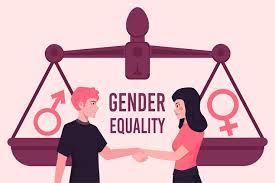
‘Gender Equality’ is another important aspect that Dr. Ambedkar considered. According to him, the women of a community would progress only if the whole community is progressive. He reflected on his major concern for women of society, not only Dalits, but also elites, in areas concerning inheritance and divorce in his proposed ‘The Hindu Code Bill’ approaching gender equality. Ambedkar placed social and economic equality alongside political and civic equality in contrast to the use of these principles in the French and American declarations of independence. Equality and non-discrimination are clearly at the centre of his conceptual framework of human rights.
Dr. Ambedkar saw a deep underlying connection between the suffering of women and the Dalits. It is this perspective and deep concern that took him from his central concern for the Dalits to the gender question. He made a serious attempt to analyze and understand the conditions of Indian women, particularly the upper castes, through a historical method. In order to provide insights into the gender question he had thrown light on the dark corners of history. He saw an essential connection between caste system and the plight of the upper caste women in Hindu society. The super imposition of endogamy on the traditional or ancient practice of exogamy gives rise to the caste system which has serious implications. It is absolutely necessary to maintain numerical equality between the marriageable units of the two sexes within the group. Left to nature, the much needed parity between the units can be realized only when the couple die simultaneously. It does not happen that way.
Dr. Ambedkar says that preservation of numerical equality was sought to be achieved in two different ways. First, burn the woman with her deceased husband on the same pyre and get rid of her. Otherwise, the widow might marry outside her caste and violate endogamy or may marry within the caste affecting the numerical equality of both the sexes. Enforcement of widowhood on the woman whose husband died was the second option mostly adopted by Brahminical order. It is more practical than burning. Concerning surplus men, from time immemorial man had always enjoyed upper hand over woman. He cannot be disposed off like woman. The numerical parity can be maintained between two sexes by 1) burning the widow with her husband 2) compulsory widowhood 3) imposing celibacy on the widower and 4) wedding him to a minor girl.
The recent rise of nationalist and chauvinist practices that seek to block immigration and maintain dominance of a racial majority has been showing the prospect of a return of majority tyranny in a number of established democracies like the US and India.
Rise of rightist parties
In Europe, the rightist parties have gained power through elections as in Hungary, Italy and Poland. Some smaller parties have entered majority coalitions as in Sweden. In Netherlands, an anti-immigrant party gained popularity in recent elections but it did not get absolute majority and its leader was prevented from heading the government. In the US, an openly chauvinistic candidate Donald Trump won the presidency in 2016 and he is elected once again in 2024. Trump has been giving sleepless nights to the leaders around the world with his atrocious tariff impositions, making immigration difficult and following racist policies.
I am sorry to say India is not lagging behind in this aspect. Ever since Narendra Modi became prime minister in 2014, India has been continuing the rightist onslaught. The leaders of the ruling party at the centre have been making hate speeches targeting the Muslims. Hindu religion is occupying the centre stage. “Jai Shriram,” a religious slogan, has been often mouthed by the prime minister himself. Democratic institutions have been diluted. Mainstream media is called ‘Godi Media (Modi’s lapdog). Election Commission is doing the BJP’s bidding. Judiciary is on the edge of collapse. By 2018, the BJP was in power at the centre and 21 states. It is omnipresent and omnipotent.
Recently while hoisting the saffron flag over Ram Mandir at Ayodhya, as part of Dhvajarohan programme, Prime Minister Narendra Modi said, “Ram is not a person, but a value, a discipline and a direction. Indians must break free from mentality of slavery and take pride in its civilisational identity. Macaulay sowed the seeds of separating Indians from their roots 190 years ago. We gained independence but not freedom from inferiority. Next ten years must be dedicated to reversing this mindset.” Our beloved prime minister forgets that Hindu rulers in India invited Mughals to defeat their local rivals and occupy their kingdoms. It did not start with Macaulay.
Lynching of Muslims

On August 10 this year, “Hindustan mein rehna hai to Jai Shriram kahna hoga (To live in India you must chant Jai Shriram) slogans were raised in the heart of Indian capital, New Delhi, just a few hundred meters from the Indian Parliament. “jab Mulle kate jayenge, Ram Ram chillayenge (They will chant Ram Ram when the Muslims will be killed).” A few days later, a poor hapless Muslim rickshaw driver was beaten up, paraded in public and forced to chant “Jai Shriram.” Since the BJP came to power at the centre, incidents of lynching, killings of Muslims and Dalits have become a norm.
As of February 2019, Human Rights Watch reported at least 44 lynching incident between May 2015 and December 2018. The victims are overwhelmingly Muslims followed by Dalits and most of the perpetrators are Hindus. The Government is not directly involved. Some of its ministers encouraged the perpetrators and they have not been warned or acted upon. In India’s federal structure, it is the states which are responsible for justice and ‘law and order.’ Most cases of lynching have been unresolved. Ever since the attainment of freedom and formation of democratic government, there have been many instances of Hindu-Muslim violence with scores of lives lost on both sides. In the wake of the felling of Babri Masjid on this day (December 6) in 1992, there were riots in Maharashtra and other places. Later there were communal disturbances in Gujarat where about 2000 persons, mostly Muslims, were killed when Narendra Modi was the chief minister. It was the response of Hindus to the alleged killing of about 50 kar sevaks returning from Ayodhya at Godhra by locking them in train compartment and burning it. The dead bodies of Kar Sevaks were paraded in the streets of Godhra arousing passion and anger.
The people who protested against CAA (Citizenship Amendment Act) and NRC (National Register of Citizens) were detained and booked under the draconian UAPA law. Students, social activists and lawyers were put behind bars for months without trial or bail. Umar Khalid, a student leader of JNU, and other activists have been in jail without getting bail for more than five years. The courts of law have not been helpful. Their trial has not yet started. Our Telugu Revolutionary poet VaraVara Rao was one of the many stalwarts who were imprisoned in Mumbai in Bhima Koregaon case. He was not permitted to visit Hyderabad to consult his eye doctor recently. Out of 403 MLAs in UP Assembly, the BJP has 306 members, but there is not a single Muslim among them. Same is the case with national level. BJP is the only major parliamentary party not to have a single Muslim member. According to the last census, Muslims are 15.5 percent of India’s 1.3 billion (130 crore) population.
Maya Mirchandani, a senior journalist says, “India needs to bell the proverbial cat, and accept the potential dangers of growing majoritarian violence in order to address it and preserve the country’s fundamental freedoms.”
The Parliament is meeting these days. It is being adjourned everyday without any debate. While the first and the fourth Lok Sabha met for an average 135 and 123 days per annum, in recent times its sitting have declined to a historic low. The 16th Lok Sabha averaged 66 sittings per year and the 17th Lok Sabha slumped to just 55 sittings. Of the 179 bills (except financial bills and appropriation bills) passed by Lok Sabha, 35 per cent approved after less than one hour of debate. Only 16 per cent of the introduced bills were referred to standing committees. They are lying with the committees without being examined. Opposition members of Parliament are suspended on flimsy grounds even when they ask legitimate questions.
Dr. Ambedkar had warned the nation against such a danger. He feared that India might replace constitutional methods with authoritarian shortcuts encouraged by political climate that elevates leaders rather than institutions. Beside institutional imbalance lies another grave threat- the weakening of India’s federal structure. Dr. Ambedkar and other framers of the constitution were unequivocal that India should be a ‘Union of States,’ a federal system in which the union and the states draw their authority from the constitution and not from each other. Today federalism itself is in visible strain. The increasing centralization of fiscal powers, reflected in shrinking tax devolution, growing dependence on centrally designed schemes and the functioning of GST council has led to weakening of federalism. The partisan role of the governors and the blatant use of central agencies against the opposition leaders in opposition-ruled states had transformed the Constitutional instruments into levers of coercion. Here the states have become a minority as against the union which is playing the role of majority using tyranny against the states by denying their constitutional rights. This is against the role of the Constitution Dr. Ambedkar envisaged.
It is time Indians woke up and saved their country from divisive leadership. People have to follow Ambedkar with dedication and application. Only Ambedkar’s thoughts can protect the Constitution, democracy and the Idea of India.
Jai Bhim!
Jai Hind!!
(The full text of the speech delivered at Basheerbagh Press Club, Hyderabad, in connection with the death anniversary of Dr. B.R. Ambedkar on 6 December 2025)
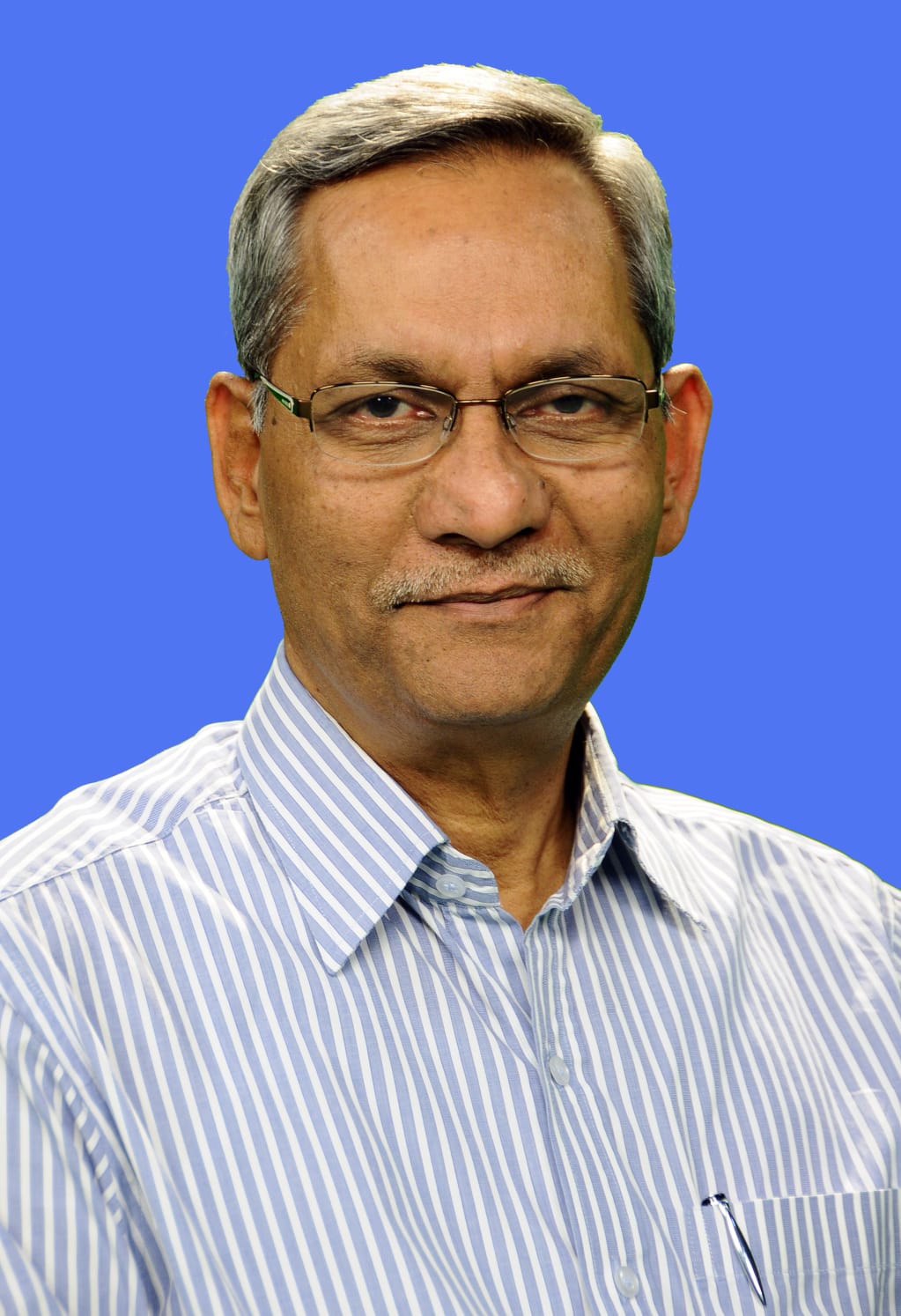
Prominent Journalist
Dr. K. Ramachandra Murthy is a versatile journalist with a distinguished career. Dr. Murthy began his extensive career with Andhra Prabha of The Indian Express group in Bengaluru. He was editor of Udayam, Vaartha and Andhra Jyothy. Dr. Murthy founded and edited HMTV news channel and The Hans India, an English newspaper. He was also editorial director of the Telugu newspaper, Saakshi. He was awarded Ph. D for his research work in rural reporting. Dr. Murthy’s five decades in journalism showcases his influential roles across both print and electronic media. He wrote the political biography of NTR published by Harper Collins.
Even after nearing centenary celebrations by 2047, why we still talking about upliftment.
The Congress party is culprit by advocating vote bank politics and divided India to quarrel on the basis of Caste & Religion.
The brain drain is happening to Western nations becoz of lack of opportunities in Govt Jobs for UC’s, as they are equipped but dint got necessary support.
Yes, we have to uplift SC’s & ST’s with One Family One Reservation policy. So that the coming generations of those families will become independent and will work to be competitive.
Why India even after these so many years has not become developed country ? Are these reservations in Policy making Jobs may be one of the reasons.
And one more major reason is Corruption. Every Indian has been affected by this, there is no bar of Caste or Religion for this. And we have to have strict rules to over come this. See the examples set in China they hang politicians or bureaucrats depending on serious allegations of corruption.
We also should emulate this kind of policy. And the families should be banned from Govt Policies & Reservations & their Kins should be barred from getting Govt postings & be barred from participating in Elections.
If we implement this and see, we need not have vision documents which spans for 25 years how to reach Trillion $ Economy.
Your point on reservations to be made available to more financial weaken persons or not getting government jobs so far in the reserved communities itself is correct.