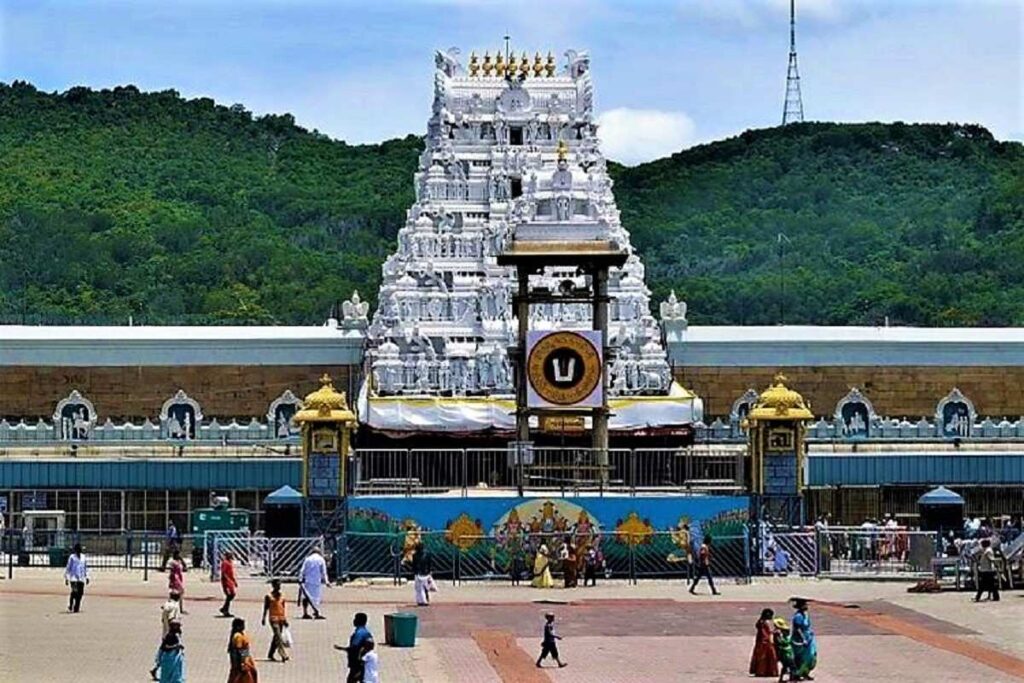
(Part 3)
A Constitutional/Judicial Point No. 5:
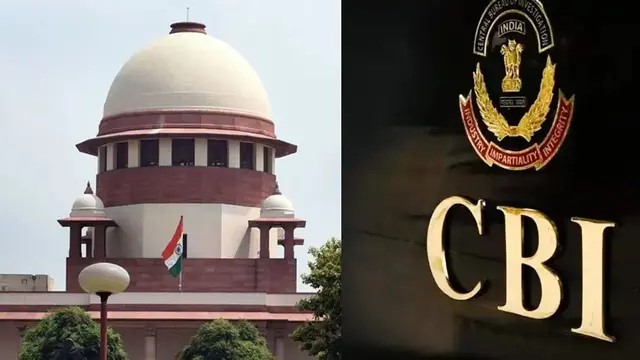
The High Court held: “The CBI Director could not have directed the 10th respondent to conduct the investigation. Such a direction runs contrary to the Hon’ble Supreme Court’s instructions in paragraph 9 of WP (Civil) No. 622 of 2024. The proceedings dated 28.10.2024 issued by the Director amount to overreaching the orders of the Hon’ble Supreme Court.”
Violation of the SC direction and the CBI
And said again:
“The writ petition is allowed. Respondent No. 2 is directed to ensure a free and fair investigation by supervising the probe to be carried out by the SIT reconstituted pursuant to the directions of the Hon’ble Supreme Court,” June 10, 2025.” Even this was violated.
“Constitutional signal to insulate the probe”
This was not a mere procedural directive; it was a constitutional signal to insulate the probe from political pressures and restore confidence among “crores of devotees.”
A Constitutional/Judicial Point No. 6. Alleging that the investigation had derailed
The HC further referred: “We need to understand the Petitioner’s Charge and the Overreach and Coercion. Enter Kaduru Chinnappanna, a former Special Officer of Andhra Pradesh Bhavan, who approached the High Court alleging that the investigation had derailed. His grievance was serious:
- He was summoned multiple times by Respondent No.10, an officer named J. Venkat Rao, who was not a member of the Supreme Court-mandated SIT.
- Statements were allegedly extracted under duress, re-recorded 7–8 times, and earlier versions deleted.
- Proceedings were video-recorded in the presence of multiple officers, creating an atmosphere of intimidation.
Most critically, Chinnappanna argued that the 10th respondent assumed the role of Investigating Officer despite being neither named in the Supreme Court’s SIT nor authorized by any judicial order.
Administrative Pragmatism
The CBI, for its part, argued that the Director had instructed Respondent No.10 to assist in the investigation, citing logistical needs like drafting notices and examining witnesses. It leaned on precedents such as:
- H.N. Rishbud v. State of Delhi (1954) – irregularities in investigation can be cured by law.
- Bhanuprasad Hariprasad Dave v. State of Gujarat (1968) – An initial defective investigation does not nullify proceedings.
- State of Bihar v. Anil Kumar (2017) – procedural defects do not always mandate reinvestigation.
A Constitutional/Judicial Point No. 7: Can the CBI Director override?
But these were generic principles. The question before the High Court was far sharper: Can the CBI Director override the Supreme Court’s explicit order and insert an outsider into the SIT?
The High Court’s Reasoning: Judicial Supremacy Prevails
Justice Harinath N’s 28-page order meticulously dissected the issue. First, it reaffirmed the “binding nature” of Supreme Court directives:
“The order of the Hon’ble Supreme Court makes it very clear that investigation should be conducted by an independent SIT consisting of the members referred to above. The CBI could not have nominated the 10th respondent as the investigating agency contrary to the directions of the Hon’ble Supreme Court of India.”
A Constitutional/Judicial Point No. 8: substantive violation!
The Court noted that the inclusion of Respondent No.10 was not a minor administrative tweak; it was a substantive violation of the very structure the Supreme Court had crafted to inspire confidence.
Religious sentiment amplified the gravity:
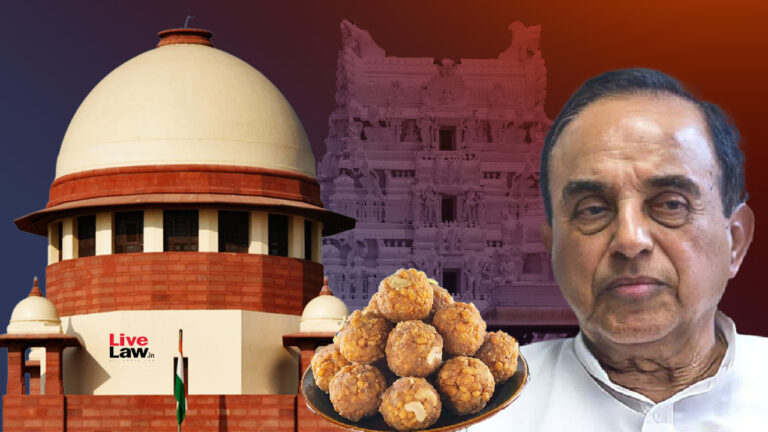
“The case on hand involves religious sentiments of crores of devotees and the cloud on the invaluable sacredness of the Laddu Prasadam is being investigated.”
Consequently, the Court rejected CBI’s reliance on the cited precedents, holding that they did not apply to a scenario where judicial orders were unambiguously prescriptive.
A Constitutional/Judicial Point No. 9: HC ‘no officer outside this composition’
In this background of the order, like a strong judgment, the Writ Petition was allowed. Then, CBI was directed to ensure a free and fair investigation strictly by the SIT constituted under the Supreme Court’s order in WP(C) No.622/2024, and no officer outside this composition, including Respondent No.10, can assume investigative authority.
In short, the High Court drew a hard line: “Administrative convenience cannot override a judicial command”.
Law professor and eminent columnist
Madabhushi Sridhar Acharyulu, author of 63 books (in Telugu and English), Formerly Central Information Commissioner, Professor of NALSAR University, Bennett University (near Delhi), presently Professor and Advisor, Mahindra University, Hyderabad. Studied in Masoom Ali High School, AVV Junior College, CKM College, and Kakatiya University in Warangal. Madabhushi did LL.M., MCJ., and the highest law degree, LL.D. He won 4 Gold Medals at Kakatiya University and Osmania University.
Whatever,it’s all started by Chandrababu Naidu and Pavan Kalyan. Now it is said by the Honourable Court that no animal fat is mixed with the ghee which is used for making Tirupati Laddu. It’s proved that it’s mere allegation. Now Chandrababu Naidu and Pavan Kalyan should stop defending themselves and apologize to the devotees. That’s it.