- Is it fearing the New Geography of Wealth?
- The country surprise of new billionaire number form other than US
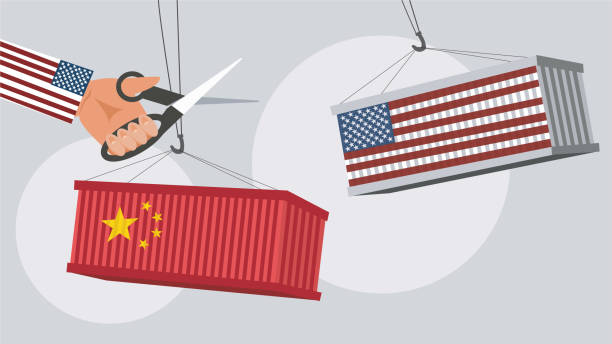
The 1980s saw the United States frequently criticize developing countries, like India, for their closed markets and protectionist policies, arguing that such measures perpetuated backwardness and poverty. This era of strained relations included instances like a U.S. newspaper’s reported headline, “Indian Prime Minister came for begging wheat,” referring to Indira Gandhi’s visit during a time of food scarcity.
Today, the irony is notable as the same country, the U.S., is increasingly implementing its own protectionist policies, such as tariffs and subsidies, to safeguard its domestic industries and national security interests. This pivot reflects a departure from the free-trade principles the U.S. long advocated globally.
The shift in global wealth is undeniable and is perhaps the most forceful rebuke to the ‘America-first’ wealth creation narrative. Since 2015, the global billionaire population surged, with seven out of ten new billionaires emerging outside the U.S. While the number of names on the Forbes list in the US grew by a substantial 70%, it was dwarfed by 90% or more growth in nations like India, China, Canada, Israel, and even Italy. This isn’t merely a passive shift; it reflects a new global economic dynamism, acording to economist Ruchir Sharma. The US is making efforts to check of bringing a new currency from BRICS countries.
A significant portion of this new global wealth stems from what one might call “steady compounders”—companies demonstrating consistent, long-term growth. The emerging fortunes, from Indian manufacturing tycoons to the Dassault family in French aerospace and resource magnates like Prajogo Pangestu (Indonesian chemicals) and Andrew Forrest (Australian mining), are testament to a diverse, globalized economy. The new centers of gravity for capital accumulation are increasingly found in manufacturing, technology, and finance sectors across the world, not solely Silicon Valley or Wall Street. Foreign markets are no longer simply recipients of American capital; they are outpacing it in the generation of new, enduring fortunes.
The Shadow of Debt and Domestic Strain
Against this backdrop of global economic flourishing stands the enormous and foreboding figure of the US national debt, which recently crossed the $37 trillion mark and is rapidly approaching $38 trillion. Analysts review this colossal figure not just as a number, but as an ever-increasing burden that demands a growing percentage of federal outlays for interest payments—a cost that can quickly supersede spending on vital domestic programs like Medicare or national defense.
The rapid rise in debt-to-GDP ratio, driven by sustained large budget deficits and compounded by higher interest rates, fuels international anxiety. The dollar’s dominance gives the US some breathing room, but foreign investors and nations are increasingly wary. The trustworthiness of U.S. Treasuries, the bedrock of global finance, is quietly—but consistently—being questioned abroad. This precarious fiscal state is viewed from the outside as a significant vulnerability to global financial stability.
Compounding the economic anxieties is a bizarre yet potent domestic social indicator: US universities are reporting nearly empty classrooms this semester. Whether this is due to prohibitive tuition costs, a shift in perceived value of higher education, or demographic changes, it suggests a profound breakdown in the American engine of human capital and innovation. A decline in university enrollment is a grim signal for the future workforce, especially in the high-skill sectors where US global leadership is still strong.
The Democratic Voice and Global Worries
The Democratic Party’s voices on the present situation largely focus on a dual strategy: growing the economy from the “middle out and bottom up” while demanding that the wealthiest individuals and large corporations pay their “fair share” in taxes. They view the current situation as one of extreme inequality—where wealth concentrates at the top while the national debt balloons—and advocate for a more progressive tax structure to fund social services, infrastructure, and education.
On the educational front, Democrats consistently push for slashing student loan debt, expanding access to affordable higher education, and investing in public school systems to secure a high-quality education as a right, not a privilege. They would likely point to the “empty classrooms” as proof of systemic failure in making education affordable and accessible.
From the outside world’s perspective, the worries regarding US developments are multifaceted:
Economic Risk: The massive debt and domestic economic instability are seen as a threat to global financial markets. Any significant fiscal crisis in the US would send global shockwaves.
Geopolitical Uncertainty: Partisan gridlock, particularly over fiscal issues like the debt ceiling, is viewed as unpredictable and damaging to long-term policy and international trade stability.
Decline in Soft Power: The signs of domestic strain extreme wealth inequality, infrastructural needs, and faltering education diminish the US’s long-term soft power and moral authority as a model democracy and economic engine.
In sum, the journalist’s view is one of a once-unquestioned economic superpower facing a tectonic shift. The American Century’s financial dominance is being challenged by global compounders, while the domestic foundation is being hollowed out by debt and a crisis in human capital development. The question is no longer whether America has competition, but whether its political will can coalesce to address the internal fissures before the global wealth shift becomes an irreversible global power shift. Interestingly, the Us is still strong economy and far ahead of other economies. (eom)

Editor, Prime Post
Ravindra Seshu Amaravadi, is a senior journalist with 38 years of experience in Telugu, English news papers and electronic media. He worked in Udayam as a sub-editor and reporter. Later, he was associated with Andhra Pradesh Times, Gemini news, Deccan Chronicle, HMTV and The Hans India. Earlier, he was involved in the research work of All India Kisan Sabha on suicides of cotton farmers. In Deccan Chronicle, he exposed the problems of subabul and chilli farmers and malpractices that took place in various government departments.


Excellent article 👏
I enjoyed .reading it and gained a new perspective as well.
Thank you sir. Your comments are always welcome
Very intresting on present state of affairs of US policy.