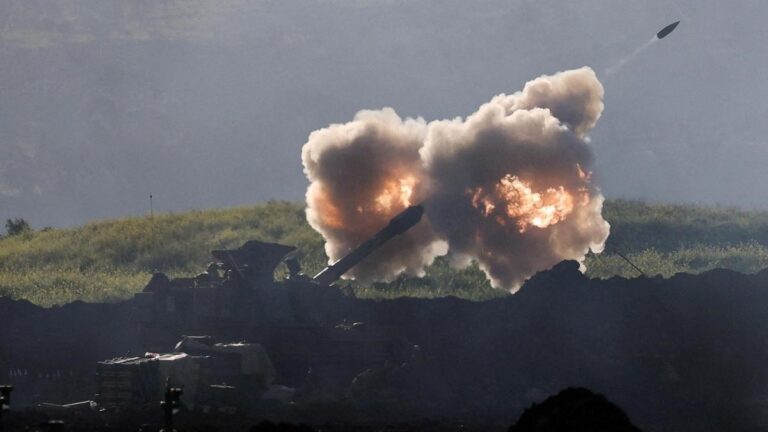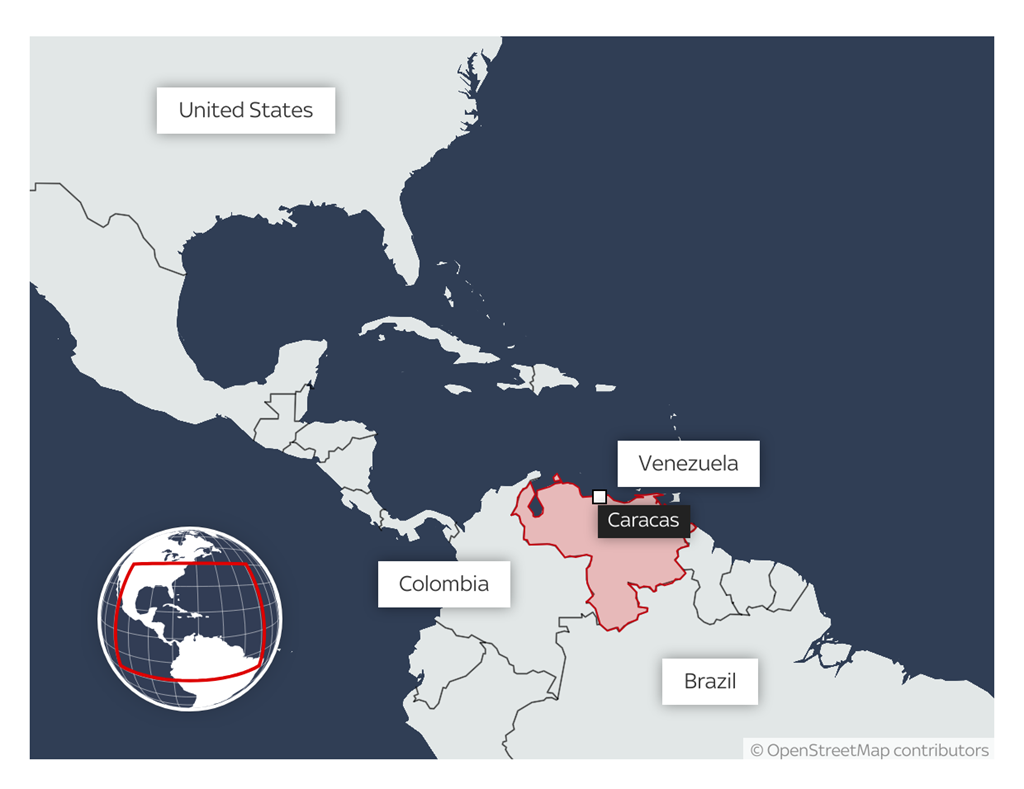
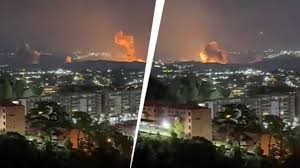
The early morning explosions that rocked the Venezuelan capital of Caracas on January 3, 2026, have triggered an international crisis, with many wondering if the world is entering a new Cold War. Following the blasts, which targeted military bases like Fuerte Tiuna and the La Carlota airfield, Colombian President Gustavo Petro called for an emergency session of the United Nations Security Council (UNSC). He described the incident as a “missile attack” and warned that such aggression could destabilize the entire Latin American region.
A World Divided
The response at the UN has revealed a deep global divide, reminiscent of the 20th-century Cold War. On one side, the United States justifies its military pressure—part of Operation Southern Spear—as a necessary fight against “narco-terrorism.” U.S. officials have long accused President Nicolás Maduro of leading a drug cartel that poisons American streets.
On the other side, powerful nations like Russia and China have strongly condemned the strikes. They argue that using “anti-drug operations” as an excuse to bomb a sovereign capital is a violation of international law. Moscow has labeled the U.S. actions as “cowboy behavior,” while Beijing warned that the fight against crime should never be used for regime change. This has led to a stalemate at the UNSC, with veto-holding members unable to agree on a path forward.
The “Trump Corollary” and Regional Fears
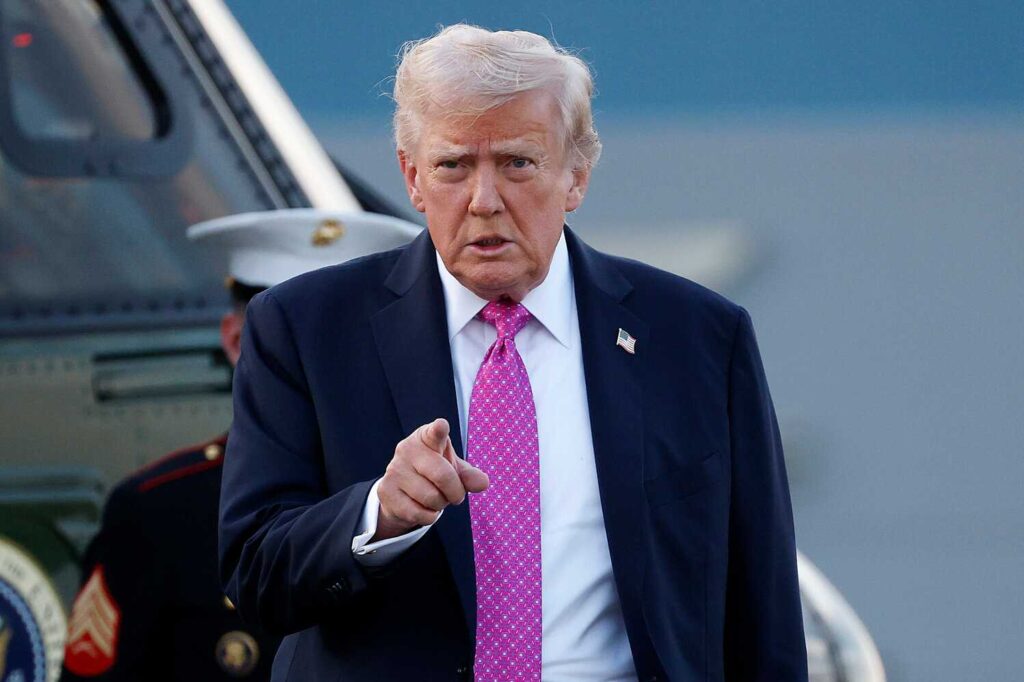
The current tensions are being driven by what some experts call the “Trump Corollary” to the Monroe Doctrine. Under this policy, the U.S. asserts its right to use military force in the Western Hemisphere to stop mass migration and drug trafficking. For many South American nations, this brings back painful memories of past U.S. interventions.
- Support: Some neighbors, like the Dominican Republic, have supported the U.S. presence to curb crime.
- Opposition: Major regional powers like Brazil, Mexico, and Colombia have warned that military strikes will only lead to a massive humanitarian crisis and more migration.
Escalation or Diplomacy?
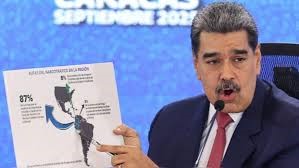
Despite the violence, there were small signs of hope just hours before the blasts. President Maduro had expressed a willingness to negotiate with the Trump administration regarding drug trafficking and oil. However, with missiles now falling on Caracas and a National State of Emergency declared in Venezuela, the window for diplomacy seems to be closing.
As the UN Security Council prepares to meet, the world is on edge. If the U.S. continues its strikes and Russia or China increase their support for Maduro, the Caribbean could once again become the center of a dangerous global power struggle.

Deputy Editor, Prime Post
Anand Gantela is a seasoned media professional with nearly three decades of experience across the spectrum of Indian journalism. Having worked extensively in both print and broadcast media, he has held key positions at renowned outlets such as Prajashakthi, Andhra Bhoomi, Mudra, Media India, Siti Cable, Mana Telugu, and Maa TV. From ground-level reporting to managing news bureaus and overseeing bulletin production, Anand has witnessed the evolution of news firsthand. His wealth of experience reflects a deep understanding of the dynamic and ever- evolving landscape of news reporting.