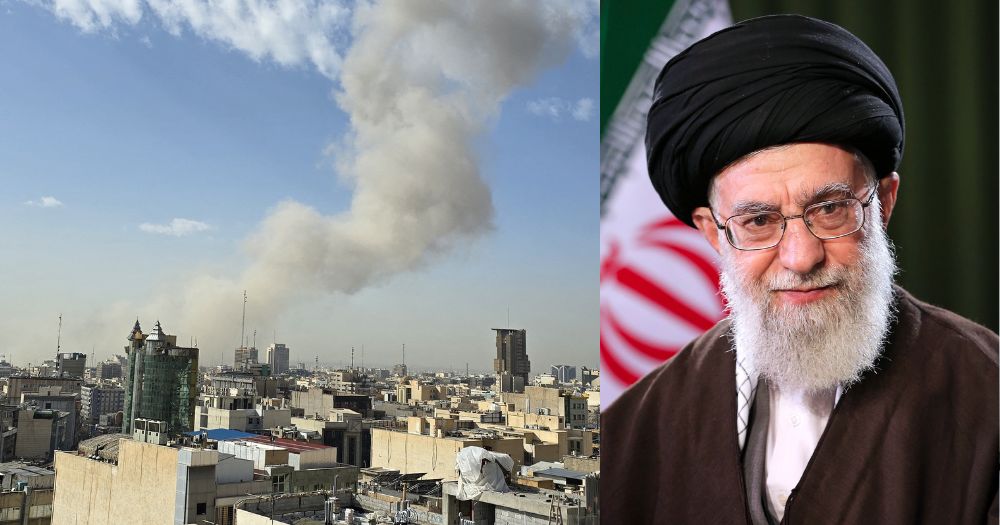
- Military Conflict: “Operation Epic Fury”
- A Power Vacuum and the Succession Crisis
- Internal Upheaval and Civilian Defiance
- Regional Escalation and “Operation Epic Fury” Aftermath
As of March 1, 2026, Iran is facing a period of unprecedented volatility following a series of massive military and political escalations that have unfolded over the last 48 hours. The country is currently grappling with a profound leadership crisis following the confirmed death of Supreme Leader Ayatollah Ali Khamenei on February 28, 2026, during joint U.S. and Israeli airstrikes known as “Operation Epic Fury.”
While a 40-day national mourning period has been declared and a temporary leadership council is expected to manage affairs, there are significant concerns regarding an internal power struggle, specifically that the Islamic Revolutionary Guard Corps (IRGC) may attempt a direct military takeover to bypass the traditional clerical succession process.While he was killed on Saturday, the official confirmation from Iranian state media (IRIB) did not come until approximately 5:00 AM on Sunday, March 1. This delay was likely due to the severity of the damage at the site and the internal chaos as remaining officials scrambled to verify the loss and manage the immediate power vacuum.
Others Killed in the First Wave
The “first strike” was not limited to Khamenei. It effectively wiped out a significant portion of the military and political elite who were with him or in nearby command centers. His daughter, son-in-law, and grandchild were also confirmed dead in the same initial blast. As per the reports, Ali Shamkhani (Senior Security Adviser), Mohammad Pakpour (IRGC Ground Forces Commander) and Amir Nasirzadeh (Defense Minister) were also dead.
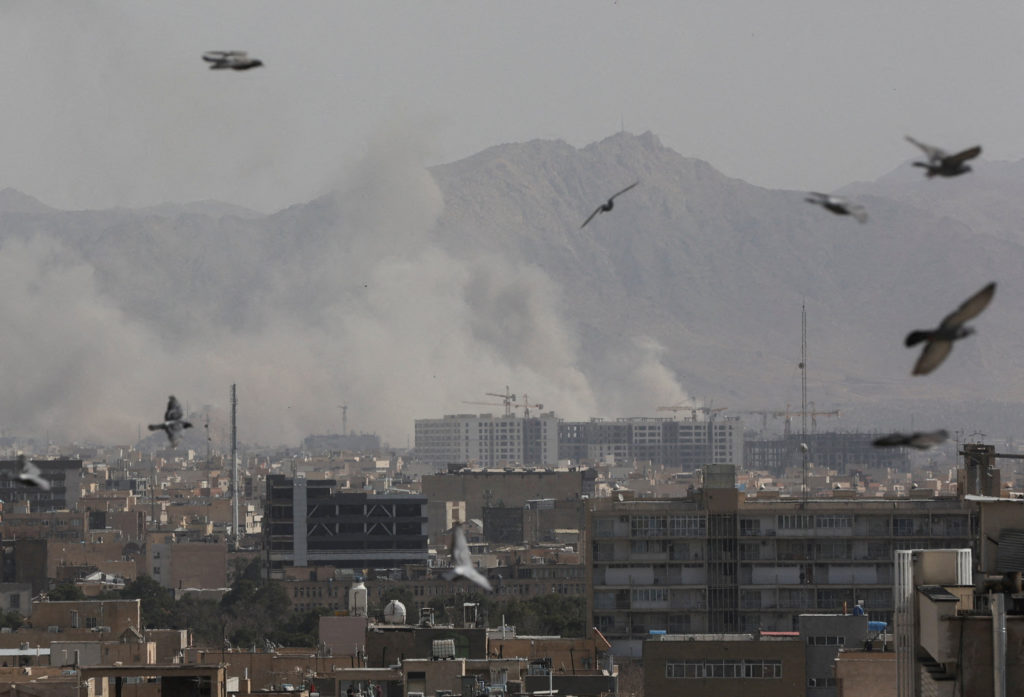
Internal Power Struggle
There are significant concerns that the Islamic Revolutionary Guard Corps (IRGC) may attempt a direct military takeover to ensure stability and bypass the clerical succession process. The U.S. and Israel launched a massive air campaign targeting Iran’s military infrastructure, nuclear sites, and command centers. Iran responded with “Operation Truthful Promise 4,” launching missile and drone swarms at Israel and U.S. bases in the Persian Gulf.
Regional Fallout
Countries including the UAE, Qatar, and Bahrain have reported debris or direct impacts. A fire was reported at Dubai’s Burj Al Arab after an interception, and casualties have occurred at Abu Dhabi’s airport. The IRGC Navy has reportedly issued warnings to maritime traffic, threatening to close the world’s most vital oil chokepoint, causing global energy markets to spike.
Domestic Unrest and Economy
The strikes occurred against a backdrop of the most severe internal protests in decades, which began in late December 2025. The Iranian rial recently plummeted to over 1.1 million per 1 USD, rendering the currency virtually worthless for imports. Nationwide protests have seen citizens demanding the end of the Islamic Republic. In response, the government implemented a near-total internet blackout in early 2026 that remains largely in place.
Nuclear Program
The recent strikes specifically targeted the Isfahan and Bushehr complexes. While enrichment facilities were severely damaged in earlier June 2025 strikes, recent reports suggest the U.S. goal is the permanent elimination of Iran’s nuclear breakout capability. Talks scheduled for this week in Geneva are effectively suspended as the region enters what analysts call a “total war” footing.
Global Economic Shockwaves
The escalation has immediately destabilized global energy and financial markets, as Iran sits at the center of the world’s most critical oil transit route. With the Strait of Hormuz effectively closed by the IRGC, nearly 20% of the world’s daily oil supply (roughly 20 million barrels) and a significant portion of global Liquefied Natural Gas (LNG) are currently blocked. Brent crude prices have surged toward the $100-per-barrel mark. This has sparked fears of a “bidding war” for energy between Europe and Asia, particularly as Europe’s gas storage remains low following the loss of Russian pipeline imports.
The death of Ayatollah Khamenei has left a power vacuum that the IRGC is currently filling with a “total war” footing. While President Masoud Pezeshkian remains the nominal head of the transitional council, the military’s control over the Strait of Hormuz and the domestic crackdown suggests that the clerical establishment is being sidelined by a direct military junta.
Tehran in Mourning
State television has been broadcasting images of the leader with black banners, while news anchors have been seen breaking down in tears during live broadcasts. Flags are flying at half-mast, and large-scale public gatherings are being organized to pay respects. A state of national mourning has been declared for 40 days, a period of deep spiritual significance in Shia Islam leading up to Arba’een. Seven days of public holidays have been announced, with government offices and schools expected to remain closed as the nation processes the loss.

Editor, Prime Post
Ravindra Seshu Amaravadi, is a senior journalist with 38 years of experience in Telugu, English news papers and electronic media. He worked in Udayam as a sub-editor and reporter. Later, he was associated with Andhra Pradesh Times, Gemini news, Deccan Chronicle, HMTV and The Hans India. Earlier, he was involved in the research work of All India Kisan Sabha on suicides of cotton farmers. In Deccan Chronicle, he exposed the problems of subabul and chilli farmers and malpractices that took place in various government departments.


This has been regular course of action taken between Iran and Israel. This is the problem since decades. Around the Muslim countries Israel is only the small country giving fitting reply to Iran being religious (Muslim) country. It is my observation since decades Iran will always provoke Israel and Israel will give fitting reply. Technically Israel very sound. Even we buy war flights from Israel. It’s a religious problem.