- Evaluating the Impact of MGNREGS changes on Laborer Empowerment
- BJP’s Conspiracy behind the Renaming of the MNREGS-Javed
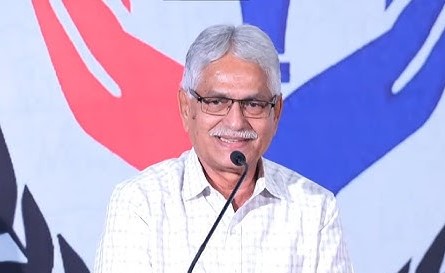
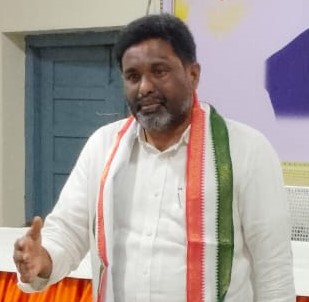
- Mahammad Javed, TPCC member shares his views on MNREGS with Prime Post. The following are his excerpts of his views.
The changes made to MGNREGS (Mahatma Gandhi National Rural Employment Guarantee Scheme) by the NDA government hit the very core benefit to wage seekers in the rural areas of the country. Whether the NDA public policy makers studied the impact of the scheme or not, the self-respect of the laborers might be affected by the new changes.
What was the core benefit to the laborers in the previous MGNREGS?
The scheme reduced social differences among castes in rural areas with the assurance of 100 days of employment. Farmers, understanding these changes, began to view agricultural workers more positively. Because of this, a cordial atmosphere prevailed between farmers/landlords and farm workers in almost all villages. This cordial relationship resulted in a change in the language farmers used when calling wage seekers to work in their fields. It is difficult for any government to achieve such a social shift, even by spending lakhs of crores, yet MGNREGS reduced the gaps within the village caste structures. Instead of using harsh language, landowners began to foster a softer, more respectful atmosphere when interacting with workers.
Agri-crisis in the country in 1990 and 2000
By the late 1990s and early 2000s, rural India witnessed severe droughts, agricultural crises, hunger deaths, and large-scale migration. These conditions made the “Right to Work” an urgent necessity for the rural poor. Although prior employment programs existed, they lacked legal protection and enforcement. Various trade unions and NGOs fought for a legal right to work, a demand that the UPA government recognized, making the Rural Employment Guarantee Act a key promise in its 2004 election manifesto.
To honor Mahatma Gandhi’s ideals of rural development, self-reliance (swadeshi), and non-violence (ahimsa), the UPA government named the program Mahatma Gandhi National Rural Employment Guarantee Act (MGNREGA). Gandhi believed that “India lives in its villages,” and the scheme sought to empower gram panchayats to plan and execute local works such as ponds, check dams, and soil conservation a step toward true grassroots self-governance.
UPA’s Objectives under MGNREGA
The guarantee of 100 days of wage employment per rural household annually, unemployment allowance if work was not provided within 15 days, works to be planned by gram panchayats based on local needs — roads, water conservation, ponds, etc, reservation: 33% for women, priority to SC/ST workers and full wage cost borne by the Centre, with transparency through social audits and gram sabhas. MGNREGA thus became a safety net for rural India, rooted in Gandhian principles of equity and self-reliance.
But the new VB–G RAM G scheme (Viksit Bharat Guarantee for Rozgar and Ajeevika Mission Grameen), introduced in 2025, shifts this philosophy from a rights-based framework to an allocation-based, performance-controlled system. The cost-sharing is now 60:40 between Centre and States, reducing central responsibility and weakening federalism.
Centralization and the Federal Imbalance
The shift to a 60:40 formula and a “normative allocation” model undermines India’s federal structure. Under this system, the Centre fixes a predetermined budget cap for each panchayat or district, irrespective of local demand. Once that limit is reached, the Centre bears no further responsibility even if rural workers remain unemployed. Financially weaker states then face impossible choices: reduce employment days, delay payments, or divert funds from other sectors. Under VB–G RAM G, States and panchayats are graded (A, B, or C) by the Centre based on performance parameters such as workdays provided, timely wage payments, geo-tagging of works and social audits. Each parameter carries specific weightage (total 70%). A-grade panchayats get up to 30% extra funding and C-grade lose 20–50% of funds. This means workers’ wages and project validity now depend on bureaucratic “marks” rather than their legal right to work a direct violation of Article 23 (prohibition of forced labour) and the Minimum Wages Act.
For example Telangana requests enough work to use ₹12,500 crores, but if it’s graded “C,” central funds may be cut by 30%. Then, the effective budget falls to ₹8,750 crores. Under the 60:40 ratio, the Centre gives ₹5,250 crores and the State ₹3,500 crores. The remaining ₹3,750 crores (cut by the Centre) must be entirely borne by the State. Thus, the State ends up paying*₹7,250 crores of the total ₹12,500 crore requirement an enormous fiscal load.
Violation of Workers’ Rights
Telangana alone has over 1.1 crore registered job card holders, and between 32 and 54 lakh active workers annually, of whom, 22% are SC, 16% are ST and 61% are women. Districts like Nalgonda, Mahabubnagar, and Nizamabad have the highest dependence. For Dalit and tribal households, MGNREGS wages are a lifeline preventing distress migration. MGNREGA wages remain below State agricultural minimum wages often ₹300 under MGNREGA vs ₹400–₹500 for agricultural work in Telangana.
Courts have repeatedly raised concerns for paying below minimum wages amounts. In Sanjit Roy (1983) case, the Supreme Court held paying below minimum wage amounts to forced labour. In 2015, the Court reiterated that MGNREGS wages below State minimums violate the Constitution’s spirit of labour protection. Yet, VB–G RAM G retains Section 6(1), perpetuating wage inequality. Since States now bear 40% of costs, they are pressured to cut the number of workdays instead of raising wage rates.
Telangana’s Case: Fiscal and Human Impact
Telangana has around 32 and 54 lakh active MGNREGA workers and Rs 500 crores in pending wage arrears. Under the new cost-sharing model, the State may face Rs 1,600–1,700 crore extra burden annually due to delayed or reduced central releases and additional unemployment allowance liabilities and “performance-based” wage suspensions. The consequences include shrinking workdays, rising migration, and weakening of panchayat autonomy.

Editor, Prime Post
Ravindra Seshu Amaravadi, is a senior journalist with 38 years of experience in Telugu, English news papers and electronic media. He worked in Udayam as a sub-editor and reporter. Later, he was associated with Andhra Pradesh Times, Gemini news, Deccan Chronicle, HMTV and The Hans India. Earlier, he was involved in the research work of All India Kisan Sabha on suicides of cotton farmers. In Deccan Chronicle, he exposed the problems of subabul and chilli farmers and malpractices that took place in various government departments.