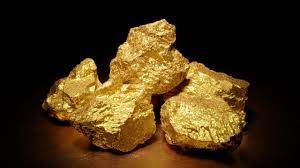
- The 35,000-Tonne Gold Treasure
- Indian households hoard Rs 340.71 lakh crore worth of gold
- Predictions-Gold price will be Rs 1.82 lakh to 3.15 lakh per 10 gram by 2030
- Gold 2025: From Family Heirlooms to National Assets
- Financial Security or Safe Haven and Status Symbol
- The Future of Wealth in India
- Cultural and Religious Aspects
- The demand is driven by a unique blend of pragmatism
- Hedge against Inflation
- Every gram of gold bought is a gram imported
Monday, December 23, 2025, gold prices in India have surged to new record highs. On the Multi Commodity Exchange (MCX), gold per 10 gram futures crossed the ₹1,36,000 mark.
Liquid Sun – the Eternal Bond between India, Her People, and the World’s most Precious Metal. In India, gold is far more than a luxury; it is a parallel currency, a cultural anchor, and a “family bank.”As of late 2025, India’s relationship with gold has reached historic levels, with household holdings and market prices both hitting record highs. Gold is considered shagun (auspicious) in India and festivals like Dhanteras and Akshaya Tritiya, along with the “Great Indian Wedding” season, account for over 50% of annual demand. Indians traditionally trust gold more than the Rupee. When the currency weakens, gold preserves purchasing power. For rural populations with limited access to banks, gold is the most portable and reliable form of savings. It remains a visible indicator of social standing and wealth.
How Much Gold is in Indian Households?
Gold as a “Cash Fund” for Households

Recent 2025 estimates from Morgan Stanley and the World Gold Council (WGC) suggest that Indian households hold approximately 34,600 to 35,000 tonnes of gold. This hoard is valued at nearly 340.71 lakh crore, which is roughly 88% of India’s GDP. About two-thirds of this is in the form of ornaments (jewelry), while the remaining third is held as coins and bars. Yes, ornament gold is the primary source of “emergency cash” in India through Gold Loans.
Unlike real estate, gold can be converted to cash in minutes. In 2024–25, bank loans against gold jewelry saw a massive 50.4% increase, reaching an outstanding value of over ₹1.54 lakh crore. The Loan-to-Value (LTV) of Gold a per RBI rules, households can generally get up to 75% of the gold’s value as an instant cash loan. To answer to the question, “Is Gold Helping India’s Economy? It is a “double-edged sword”. The positive impact is the Gems and Jewelry industry contributes about 7% to India’s GDP and provides millions of jobs. Gold loans also provide vital capital to small businesses and farmers. The negative impact is, since India produces very little gold, it must import most of it. This creates a high current Account Deficit (CAD), as billions of dollars leave the country to buy bullion, which can weaken the Rupee.
International Market Affairs (2025 Context)
Gold Price Prediction for 2030
Global gold prices hit record highs (surpassing $4,300/ounce in late 2025) due to central Bank Buying. Central banks (including the RBI) are buying gold to diversify away from the US Dollar. Geopolitics and persistent tensions in the Middle East and the Russia-Ukraine conflict have kept “safe-haven” demand high. US Monetary Policy showed impact on gold. Interest rate cuts by the Federal Reserve have made gold more attractive compared to bonds. Market analysts and long-term forecasts suggest a continued bullish trend. Many experts project gold could reach Rs 5.56 lakh per ounce globally. In India, due to Rupee depreciation and high demand, prices are estimated to range between Rs 62,000 and Rs 1,80,000 per 10 grams by 2030. The countries like China, Australia and Russia are producing 3600 per year and India’s production is between1.2 to 1.5 tonnes. India produces less than 0.05% of the world’s gold but consumes nearly 25% of it.
India’s Silent Economic Engine
As the sun sets over the bustling jewelry hubs of Zaveri Bazaar in Mumbai and T-Nagar in Chennai, a quiet revolution is taking place. In 2025, India’s private gold hoard estimated at 35,000 tonnes has become the largest pool of domestic savings outside the formal financial system. Globally, gold is often viewed as a “dead asset.” However, in the Indian heartland, it is a living, breathing financial tool. When a farmer in Bihar needs seeds or a small shopkeeper in Kerala faces a medical emergency, they don’t look to credit scores; they look to the family’s gold bangles. This “ornament-to-cash” pipeline has created a gold loan market that grew by 50% this year alone, proving that India’s gold is anything but “idle.”
Passion comes at a cost
Every gram of gold bought is a gram imported, putting pressure on the national trade balance. The Indian government has attempted to “paperize” this demand through Sovereign Gold Bonds and Monetization Schemes, but the emotional pull of physical gold remains unmatched. As we head toward 2030, with prices predicted to nearly double, gold will continue to be the “ultimate insurance policy” for the Indian household, bridging the gap between ancient tradition and modern economic survival.

Editor, Prime Post
Ravindra Seshu Amaravadi, is a senior journalist with 38 years of experience in Telugu, English news papers and electronic media. He worked in Udayam as a sub-editor and reporter. Later, he was associated with Andhra Pradesh Times, Gemini news, Deccan Chronicle, HMTV and The Hans India. Earlier, he was involved in the research work of All India Kisan Sabha on suicides of cotton farmers. In Deccan Chronicle, he exposed the problems of subabul and chilli farmers and malpractices that took place in various government departments.



Yes. It is true that gold can be converted into immediate cash. As said India produces 0.05 percent of gold against our requirement about 25 percent. This has become costly affair to get imported gold from abroad. We should go for new inventions in producing gold. It is said recently that some more gold reserves are found. Let us be successful in getting gold from new reserves. A worthy news item.