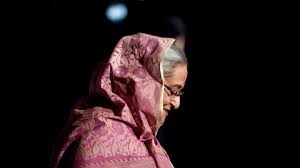
Would India extradite Bangladesh former prime minister Sheikh Hasina to Dhaka as demanded by the interim government? It is most unlikely. The government that has asked for Hasina’s extradition is an interim government that has no basis in the constitution. The primary ruler Yunus ruler is the chief advisor while others who are looking after various ministries are also called advisors, not ministers. It is unelected government headed by a person who happened to have won Noble Prize for social work. He is backed by the US.
The verdict of the International Crime Tribunal in Bangladesh on Monday sentencing Sheikh Hasina is highly prejudiced and blatantly partisan. There is no doubt that Hasina and her regime acted arbitrarily and undemocratically in dealing with the students who were protesting last year. It is also true that hundreds of students were killed. But the actions of a government in volatile times cannot be treated as acts against humanity by a tribunal which has no justification in calling itself international tribunal. For, it has no international jurist or prosecutor as is the historical practice with most of the international tribunals. All the three judges are Bangladeshis handpicked by Yunus who himself does not enjoy a status of an elected representative of the people. He was selected by the leaders of a violent movement allegedly supported by their mentors in the US. The movement may be justified because of the authoritarian attitude of the government. Hasina, who was elected prime minister for the fifth time a few months before the student community rebelled, had to flee the country because of the intense movement demanding her resignation and seek asylum in neighbouring India.
It was violent uprising
The violent uprising that led to sheikh Hasina’s ouster was accompanied by widespread arson against the properties and symbols associated with Mujibur Rahman, the Father of the Nation. The street violence is not only against Hasina but also the league represented by the Awami League which was instrumental in attaining freedom from Pakistan. There was assault against the judiciary and some judicial officers were forced to resign due to pressure from the protesting students.
One of the judges is known for his affiliation to Bangladesh National Party headed by Khaleda Zia which has welcomed the verdict immediately after it was delivered. Khaleda was in jail when Hasina was on throne. It is natural that the former prime minister is happy at the turn of events forcing her bitter rival to flee the country. A judge sympathetic to Khaleda’s party cannot be expected to be objective towards Hasina. Moreover, the prosecution took place in the absence of Hasina who was staying in an undisclosed place in Delhi. The defence council appointed by the Yunus regime did not ask for a single adjournment nor did he object to the way prosecution went on unilaterally for three months. The tribunal has given the maximum punishment for Hasina and her Home Minister Adasuzzaman Khan Kamal while the then Inspector General of Police Chowdhury Abdullah Al-Mamun, who implemented Hasina’s orders, escaped the harsh sentence by becoming a witness on behalf of the government. He was awarded five years imprisonment.
Awami League banned
Yunus said he was keen on holding elections in Bangladesh as soon as possible. But at the same time he has banned Hasina and her party Awami League from partaking in elections. Hasina is the daughter of Muzibur Rehman, the Father of Bangladesh. Muzib fought for freedom from Pakistan and succeeded in liberating the then East Pakistan from the clutches of Punjabi dominated Pakistan army. Awami League had fought for the freedom under the leadership of Muzib who ruled the country for some years as prime minister before he was brutally assassinated along with many of his family members. Awami League has now become a party which is banned from contesting elections.
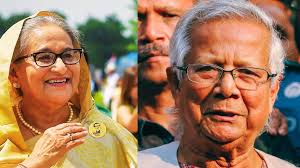
Though Hasina’s rule was autocratic, she conducted elections periodically and the democratic traditions were not altogether thrown to the winds. Now the Islamist forces appear to be in lead and there are frequent disturbances and violent incidents making it clear that the Yunus regime is not that stable or popular. Yunus’ move to get closer to Pakistan and distant from India also speaks volumes about the attitude of the present regime. Yunus prefers the army which indulged in genocide to the country which helped its liberation. Jamaat-e-Islami that is anti-India and pro-Pakistan has sided with Pakistani army during the liberation war some fifty four years ago. Yunus himself is on record saying proudly at the Clinton Initiative in New York in September last year that the revolution in Bangladesh was “meticulously designed” by Mahfuz Alam, the brain behind the uprising. He was introduced at that meet by Yunus in glorious manner.
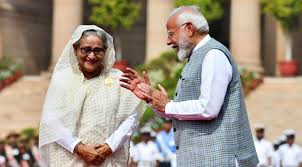
Even though Yunus issued fresh appeal to India to extradite Hasina so that he can get her hanged it is not binding on India. The 2013 treaty with Dhaka states extradition can be refused if offence for which it is sought is of a political character. The biased verdict no doubt, is politically motivated. The presence of Hasina in India is an irritating factor for Yunus. Instead of indulging in unfriendly actions towards India, Yunus and his advisors could have acted more wisely by holding talks with India. One of the advisors holding the law portfolio in Yunus government said, “If India continues to shelter such a mass murderer (Hasina), it must know this would be an act of enmity against Bangladesh and its people. The spokesman of the UN Human Rights Commission had welcomed Hasina’s sentence as justice done. Hasina, of course, rejected the ruling as politically motivated, calling the tribunal “rigged” and accusing the interim government of trying to wipe out the Awami League. She said she was willing to face reasonable charges before a fair judicial forum. The Ministry of External Affairs has stated, “As a close neighbor, India remains committed to the best interests of the people of Bangladesh, including in peace, democracy, inclusion and stability.” It added that, “it would engage constructively with all stakeholders” in Bangladesh. It is on a positive note without referring to the verdict of the tribunal.
Long process
It is most unlikely that India would send Hasina back to Bangladesh. Extradition is a difficult process. India could not get economic offenders such as Vijay Mallya from UK and terrorist from the US for years. Even from Yunus’ point of view bringing the 78-year-old leader back to Dhaka would increase the internal strife making it difficult to manage before the February elections. Though there have been attempts to forge unity between Awami League and Bangladesh Nationalist Party (BNP), it is not likely to happen as Tarique Rahman, the son of BNP chairperson Khaleda is not interested in unity as he assumes Awami League has anti-incumbency sentiment and it would be better for the BNP to contest in the forthcoming elections alone. In the meanwhile, the Jamaat-e-Islami leaders have launched a Hindu wing for their organization. Since then there were no attacks on the Hindus. There were attacks on Hindus in wake of Hasina’s fall. After India raised strong objection, however, Yunus government barred the entry of Islamic fundamentalist leader Zakir Naik into Bangladesh.
Prominent Journalist
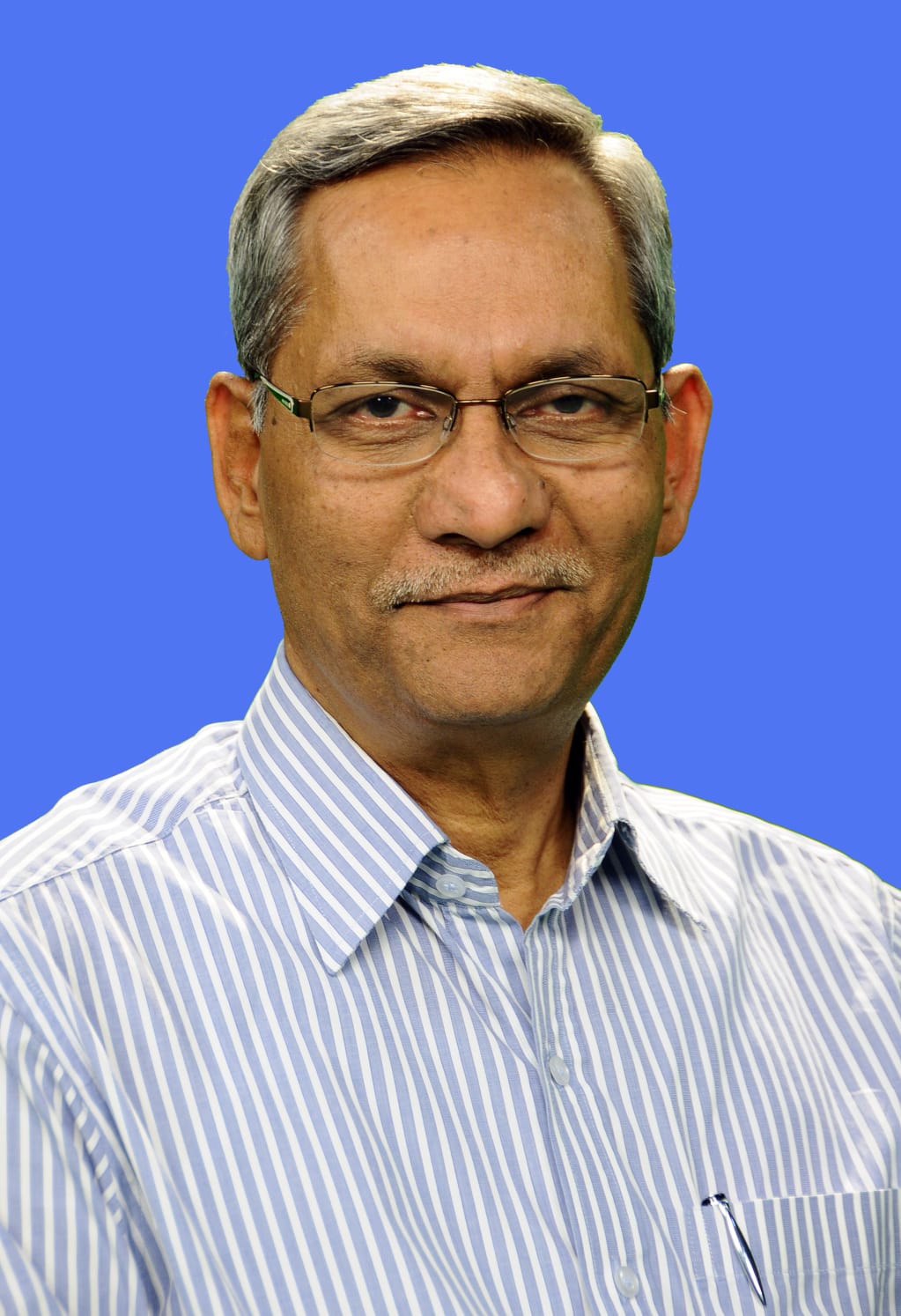
Dr. K. Ramachandra Murthy is a versatile journalist with a distinguished career. Dr. Murthy began his extensive career with Andhra Prabha of The Indian Express group in Bengaluru. He was editor of Udayam, Vaartha and Andhra Jyothy. Dr. Murthy founded and edited HMTV news channel and The Hans India, an English newspaper. He was also editorial director of the Telugu newspaper, Saakshi. He was awarded Ph. D for his research work in rural reporting. Dr. Murthy’s five decades in journalism showcases his influential roles across both print and electronic media. He wrote the political biography of NTR published by Harper Collins.
No fair elections can be held in Bangladesh. It’s my observation since last 3 decades. Arson might have taken place in Sheik Hasina Government. But she stands for India, whenever it is needed as India played vital role in getting Bangladesh separately deviding from Pakistan. And her father Mujibur Rehman was maintained friendly relation with India. Modi Government will decide whether to relieve Sheik Hasina Or not? As per prevailing situation.