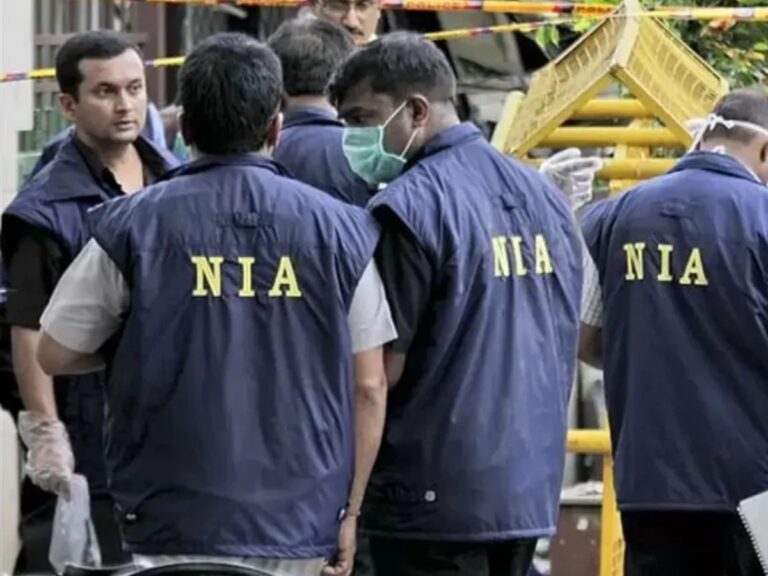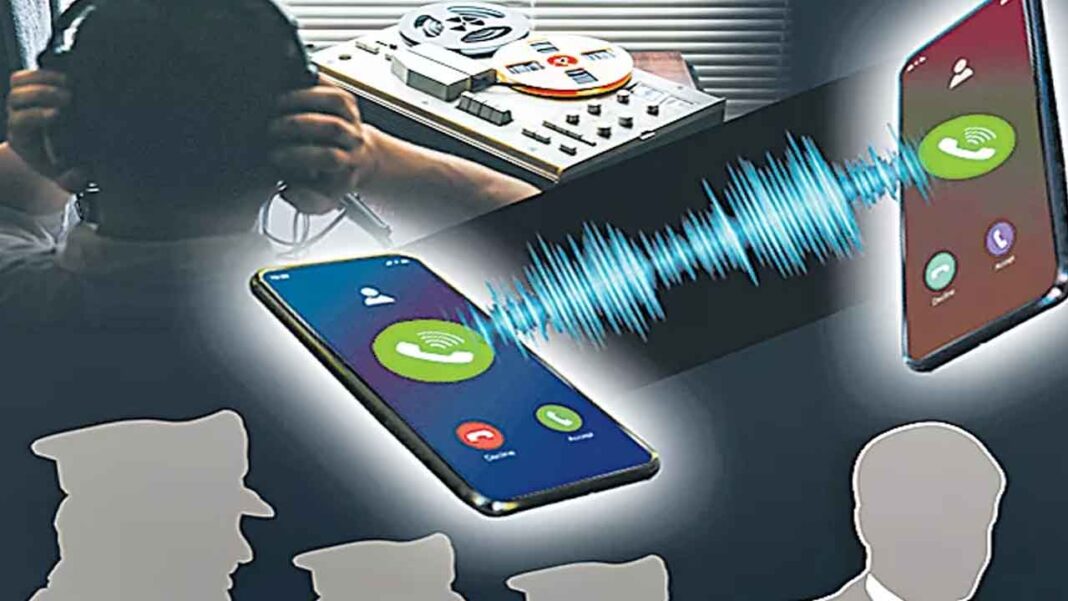
It is difficult to establish a serious and substantial scam that goes undetected. It is not fair to charge or judge any person, much less the former Minister T Harish Rao. The issue is that the destruction of data in the Telangana phone-tapping case was not merely a digital deletion but a systematic, physical purge designed to ensure that the evidence was irretrievable. Based on the investigation and forensic reports as of January 2026, here is exactly how the data was destroyed and what the SIT has uncovered.
1. Physical Destruction of Hardware
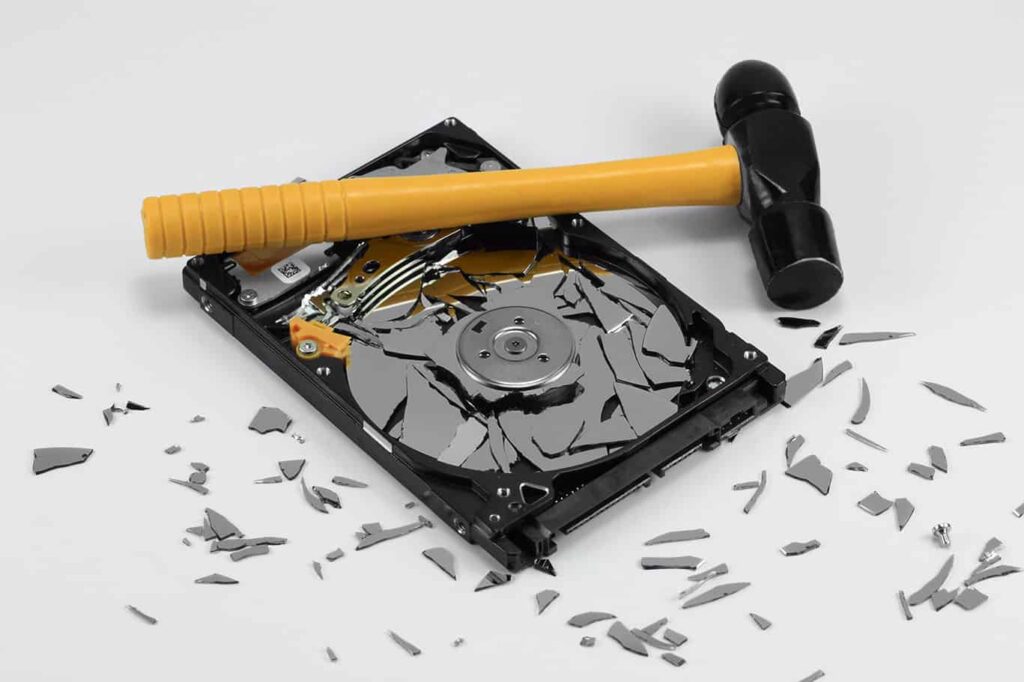
The most dramatic aspect of the cover-up involved the physical destruction of 17 computer systems and servers at the Special Intelligence Bureau (SIB) office, which were thrown into the Musi River!
- Destruction of Evidence: The prosecution alleges that 17 computer systems and hard drives were physically destroyed using electric cutters and thrown into the Musi River. Fragments of these drives have reportedly been recovered based on statements from co-accused officers.
- Disposal: The cut fragments were then dumped into the Musi River near Nagole.
- The “iCloud” Conflict: A major sticking point in court has been Prabhakar Rao’s digital footprint. The state government claims he reset his iCloud passwords but deleted the data before providing access, effectively “sanitizing” the evidence while under interim protection.
- Surveillance of the Judiciary: Recent SIT affidavits allege that the “Special Operations Team” under Prabhakar Rao monitored the movements of a sitting High Court judge, Justice Sarath Kaja, to potentially influence or counter cases involving the then-government.
- Method: Investigators allege that on the night of December 4, 2023 (just after the BRS lost the election), the accused used electric cutters to physically slice through approximately 50 hard drives.
- Recovery: While the SIT managed to recover several pieces of these drives from the riverbed using divers and cranes, the physical damage was so severe that forensic labs have found it nearly impossible to reconstruct the data.
2. The “Digital Wipe” and Formatting
Beyond the physical disks, the “digital footprint” of the operation was systematically erased:
- iCloud Accounts: The state government informed the Supreme Court that former SIB chief T. Prabhakar Rao allegedly formatted his mobile devices and wiped his iCloud accounts while he was in the United States. Out of five linked accounts, three were reportedly found to be completely empty when passwords were finally shared.
- Server Formatting: The main IP servers used to coordinate the “Special Operations Team” (SOT) were formatted multiple times to remove logs of which phone numbers were being intercepted.
- CCTV Sabotage: To hide who was present during the destruction, the CCTV cameras at the SIB office were reportedly switched off for several hours on the night the hard drives were removed.
3. Destruction of the “Golden Record.”
The most sensitive data lost was the “Golden Record”—a 360-degree digital profile of over 1,200 individuals (including judges, journalists, and politicians).
- What it was: This was a massive integrated database that combined intercepted calls with private data like electricity bills, property records, and voter IDs.
- The Loss: Police affidavits state that this destruction didn’t just hide illegal spying; it accidentally (or intentionally) wiped decades of genuine intelligence on Maoist activities and internal security, putting national safety at risk.
4. What must have been done? (The Investigation’s Theory)
The SIT’s working theory is that the destruction was a “two-tier” operation:
- Operational Level: DSP Praneeth Rao and his team carried out the physical destruction to protect themselves from immediate arrest.
- Command Level: The SIT believes this could not have happened without high-level authorization, as it involved the destruction of state property and sensitive national security data. This is why the focus has now shifted to questioning political leaders like T. Harish Rao to find out who gave the final order to “sanitize” the SIB office.
Even After Clean Chit?
It is a case of ‘clean chit’ to former Minister and important leader of the BRS party in Telangana, T Harish Rao. The Supreme Court’s dismissal of the Telangana government’s petition against Harish Rao marks a significant turning point in the broader phone-tapping scandal that has gripped the state since early 2024.While this specific ruling provides a “clean chit” to Harish Rao, the overarching case continues to be a major legal and political battleground.
Detailed case of a Bench headed by Justice BV Nagarathna refused to interfere with the Telangana High Court’s earlier order quashing the FIR registered against Harish Rao and former DCP Radhakishan Rao. Significantly, what was stated was that ‘there was no basis to reopen the matter’.
The complainant later challenged the High Court order in the Supreme Court, but the apex court dismissed that plea as well. Despite this, the Telangana government again moved the Supreme Court on June 18, arguing that the investigation was ongoing and that Harish Rao needed to be questioned. Senior advocate Siddharth Luthra appeared for the State.
On Monday, the Supreme Court rejected the argument, recalling that the High Court had clearly held that Harish Rao had no role in the alleged phone tapping. The Bench observed that it could not interfere with a reasoned High Court order in the absence of fresh evidence.
All was around the ‘real estate’.
All was around the ‘real estate’, politics, and corruption. It’s difficult to say when the cases end. It starts from small cases to the Supreme Court. That has all happened between the two political parties of both ruling estates, comprising former and present leaders. Natural there will be cases, investigations, appeals to the Supreme Court, and come back to Hyderabad. The Siddipet-based real estate businessman Chakradhar Goud, in 2024, filed a complaint at the Panjagutta police station, which registered a case, alleging illegal phone tapping during the BRS government’s tenure. A FIR was subsequently registered. Harish Rao approached the High Court seeking quashing of the FIR, and on March 20 last year, the court ruled that there was no evidence linking him to the alleged offence.
Arrest, the rest is history It started shortly after the Congress party took power in Telangana. It began with the arrest of suspended DSP D. Praneeth Rao. He was accused of destroying official data and hard disks at the Special Intelligence Bureau (SIB) office, a day after the BRS lost the 2023 Assembly elections. Investigators alleged that under the previous BRS regime, a clandestine unit within the SIB was formed to conduct unauthorized surveillance on opposition leaders (including current CM Revanth Reddy), judges, journalists, and even members of the BRS party.
Investigation and Developments (2024–2026)
The investigation expanded to include high-ranking officials and political figures. Several senior police officers, including former DCP Radhakishan Rao and Additional SPs Bhujanga Rao and Thirupathanna, were arrested and have since provided confession statements.Former SIB Chief T. Prabhakar Rao was named the main accused (A1). He left for the US as the probe began, but returned in June 2025 after Supreme Court intervention.
Is there any case against T. Harish Rao?
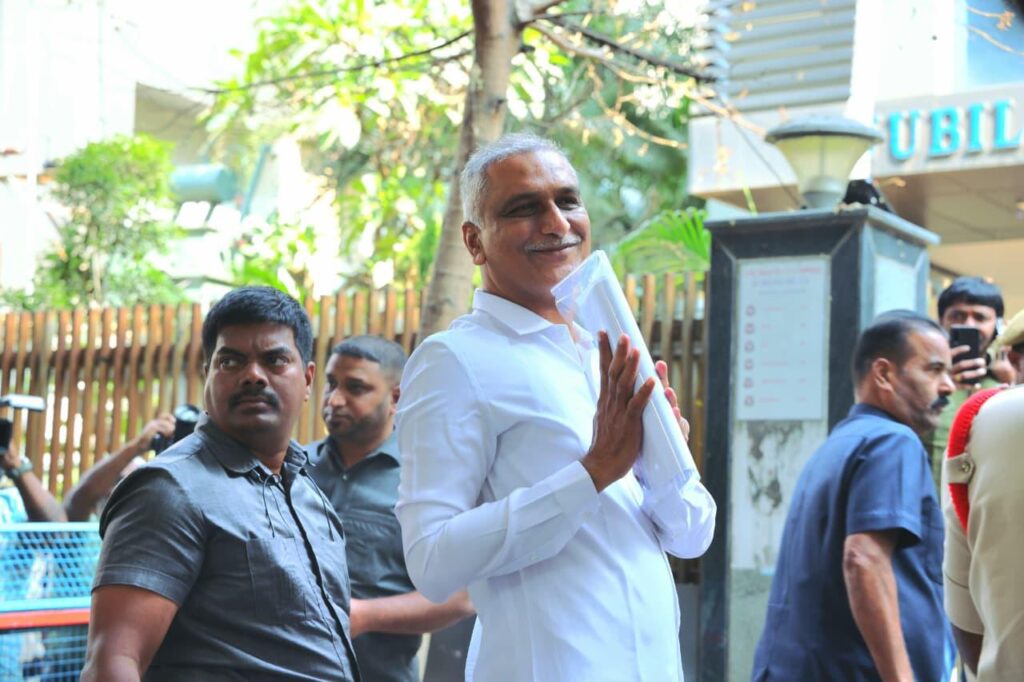
The petition dismissed by the Supreme Court on January 5, 2026, was a specific offshoot of the main case: Realtor Chakradhar Goud (who contested against Harish Rao) alleged that his phone was tapped to sabotage his political activities. The HC Verdict: In March 2025, the Telangana High Court quashed the FIR against Harish Rao, citing a lack of evidence linking him to the SIB’s operations. The Supreme Court upheld this quashing, noting that the state could not provide “fresh evidence” and that a similar petition by the original complainant had already been dismissed.
BRS Defense: BRS leaders view the SC ruling as proof that the Congress government is engaging in “political vendetta” and “witch-hunts.” Congress Stance: CM Revanth Reddy continues to maintain that the BRS used state machinery to subvert democracy, framing the case as a “battle for privacy.” BJP’s Demand: The BJP has consistently called for a CBI probe, arguing that a state-led SIT cannot impartially investigate senior political figures.
As of January 7, 2026, the status of former SIB chief T. Prabhakar Rao has shifted from being “absconding” to being under direct judicial and custodial scrutiny. After spending over a year in the United States, his return and subsequent surrender have become the focal point of the SIT investigation.
It appears that almost every ‘case’ is reaching the Supreme Court and coming back.
- Following a strict directive from the Supreme Court, Prabhakar Rao surrendered at the Jubilee Hills Police Station in Hyderabad.
- The Supreme Court initially allowed custodial interrogation to help the SIT establish how the surveillance network was planned. His custody was later extended until December 25, 2025, after the state argued he was not fully cooperating.
- He was released from police custody on December 26, 2025. However, the Supreme Court has barred any “coercive action” against him until the next major hearing, scheduled for January 16, 2026.
The “Marxist” Defense
During his interrogation and court hearings, Rao’s legal team has argued that his actions were part of his mandate to track Left-Wing Extremism (LWE).
- State’s Counter-Argument: Solicitor General Tushar Mehta argued that the “Marxist tracking” was a facade used to maintain illegal surveillance on political rivals, judges, and businessmen.
Broadening the Probe
With Prabhakar Rao back in the country, the SIT has intensified its reach:
- Pen Drive Discovery: Investigators recently found a pen drive containing hundreds of phone numbers and profile details of senior journalists and politicians, believed to be part of Prabhakar Rao’s “Golden Record” database.
- Political Links: On January 4, 2026, the SIT questioned BRS MLC Naveen Rao, signaling that the investigation is now moving from the police officers to the political figures who may have authorized the operations.
Politico-Legal Issues:
- The SIT is under pressure to produce concrete evidence linking “political bosses” to the surveillance, beyond just officer confessions.
- Privacy Precedent: The case is being watched nationally as a benchmark for how courts handle the destruction of digital evidence by state officials.
- Institutional Reform: The scandal has led to calls for stricter oversight of the State Intelligence Bureau to prevent future misuse.
Calendar of the Scandal. Ø Dec 12.2025, T. Prabhakar Rao surrenders to Hyderabad Police, Ø Dec 26, 2025, Released from police custody under SC orders, Jan 4, 2026, BRS MLC Naveen Rao, questioned by SIT, and Ø Jan 16, 2026, Next Supreme Court Hearing to decide on his anticipatory bail. Jan 20, 2026, SIT examination of one sitting was done, which continues.
1. The Core Crime: Misuse of Power & Stalking
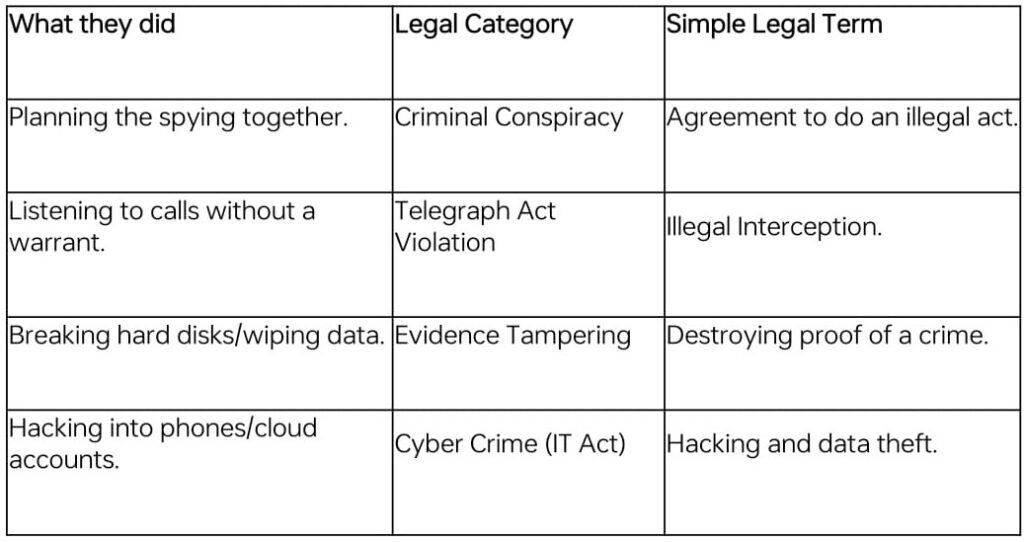
In simple terms, the Telangana phone-tapping case revolves around the misuse of government power to spy on private citizens and then destroying the evidence to cover it up. The primary crime is Criminal Conspiracy and Stalking.
- The Act: A group of high-ranking officials allegedly worked together to listen to private phone calls without a legal warrant.
- The Law (IPC/BNS): Under the law, spying on someone or intercepting their communication without a valid security reason is a crime. If two or more people plan this together, it becomes a “Criminal Conspiracy.”
2. The Cyber Crime: Unauthorized Access & Data Destruction
Since this spying was done using sophisticated digital tools, it falls under The Information Technology (IT) Act.
- Unauthorized Access: Using government surveillance software to hack into private phones or listen to calls for non-official purposes.
- Destruction of Evidence (Digital): This is the most critical part of the current case. The accused allegedly smashed hard drives and wiped “iCloud” data.
- The Law: Section 66 of the IT Act punishes anyone who dishonestly damages or destroys data in a computer resource. Section 201 of the IPC also punishes “causing disappearance of evidence” to protect a criminal.
3. Violation of Privacy (The Right to Privacy)
- The Act: Every citizen has a fundamental right to privacy under the Constitution of India (Article 21).
- The Law: While there isn’t one single “Phone Tapping Act,” the Indian Telegraph Act governs this. It says the government can only tap phones in cases of “public emergency” or “public safety.” Using it to gain a political advantage is a direct violation of the Supreme Court’s guidelines (from the famous PUCL vs. Union of India case).
The Offense vs. The Law
Why did the Court dismiss the case against Harish Rao?
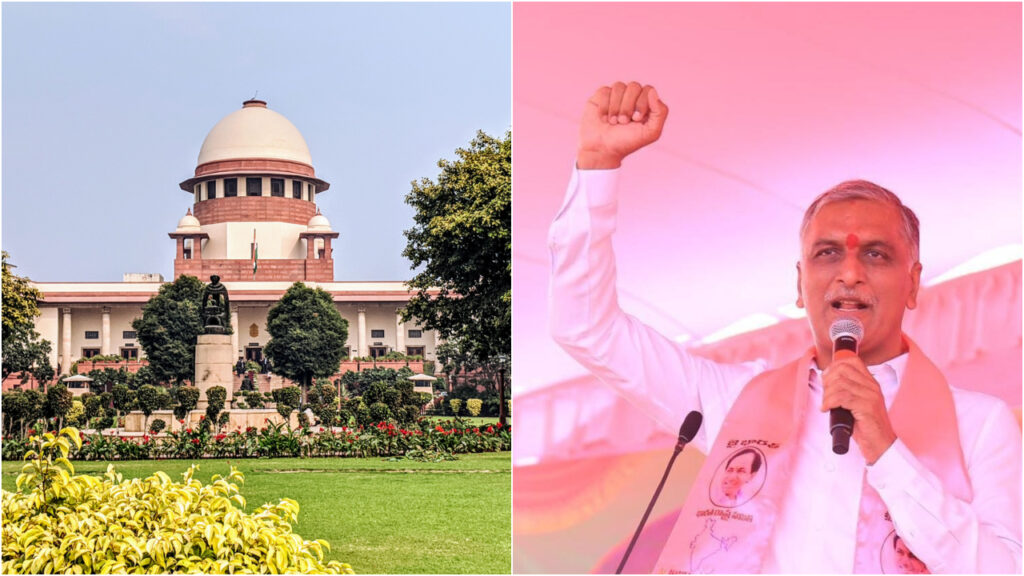
In legal terms, a person can only be tried if there is “Prima Facie” evidence (meaning “at first sight,” there is enough proof to start a trial).
The court found that while the police officers might have committed these crimes, there was no direct paperwork, recording, or witness testimony linking Harish Rao to the specific order to tap those phones. Without a direct link, the law says a person cannot be forced to face a criminal trial.
It is a Political crime. By the time, the present term of the Telangana Government (Congress) may be completed. If the Congress Government continues for the second term, courts may get some time to reach the High Court, or the parties may approach the Supreme Court. If the Government is changed in the coming elections, then what will happen to the status of trials and appeals in these politico-legal Cyber Crimes?
Mystery of Cyber Crime and the Law
Readers should understand the Crime, Cybercrime, and the Law in simple terms; it helps to think of them as the rules of the “game of life” and what happens when someone cheats. In simple terms, a crime is an unlawful act that the government has decided is harmful enough to society that it deserves punishment (like a fine or jail time).
For an act to be a crime, it generally needs two things:
- The Action (Actus Reus): You actually did something wrong (e.g., taking a phone that isn’t yours).
- The Intent (Mens Rea): You meant to do it or were extremely reckless. Accidentally bumping into someone isn’t a crime; hitting them on purpose is.
What is Cybercrime?

Cybercrime is simply a traditional crime with a digital twist. It is any illegal act where a computer or the internet is either the tool used to commit the crime or the target of the crime.
- The Tool: Using a computer to steal money from a bank account (instead of walking into the bank with a gun).
- The Target: Hacking into a website to shut it down or stealing someone’s private photos from their cloud storage.
Common Examples:
- Phishing: Sending fake emails to trick you into giving away your password.
- Identity Theft: Using someone else’s personal info to pretend to be them online.
- Cyberstalking: Harassing or following someone across social media.
What is “The Law”?
“The Law” is the set of official books (statutes) that define what is allowed and what isn’t. In the context of the Telangana Phone Tapping Case you mentioned earlier, two main types of law are at play:
A. Traditional Criminal Law (The “Old” Rules)
In India, this is primarily the Indian Penal Code (IPC). It covers crimes like:
- Cheating & Fraud: Deceiving someone for gain.
- Criminal Intimidation: Threatening someone.
- Defamation: Damaging someone’s reputation.
B. Cyber Law (The “New” Rules)
In India, the main law is the Information Technology (IT) Act, 2000. It was created because the old IPC didn’t know what a “computer” or “hacking” was.
- Section 66: Punishes hacking or damaging data.
- Section 66E: Punishes violating someone’s privacy (like taking private photos without consent).
- Section 66F: Covers “Cyber Terrorism” (threatening the country’s security via digital means).
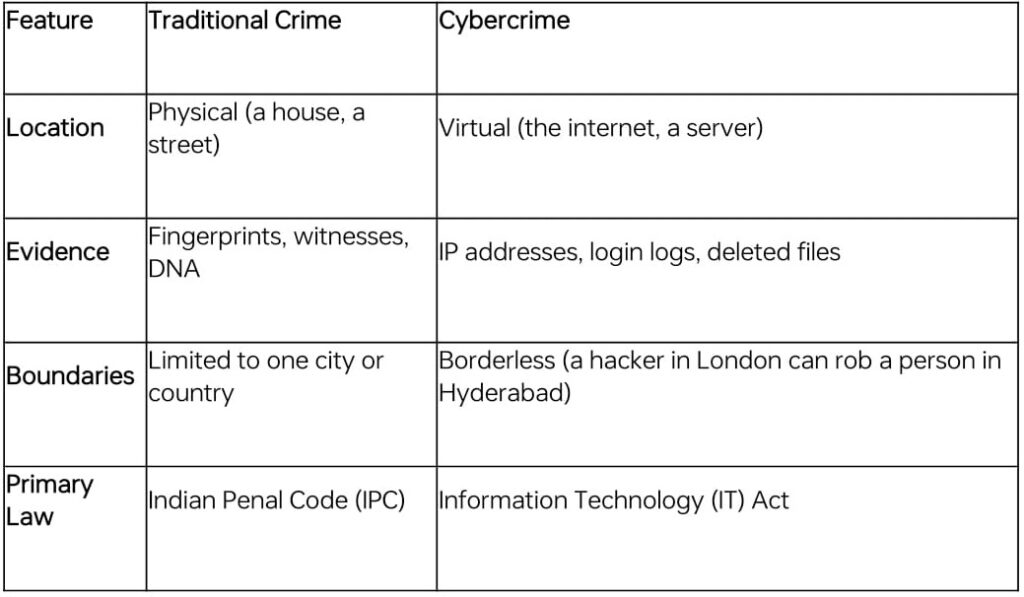
Summary Comparison
Law professor and eminent columnist
Madabhushi Sridhar Acharyulu, author of 63 books (in Telugu and English), Formerly Central Information Commissioner, Professor of NALSAR University, Bennett University (near Delhi), presently Professor and Advisor, Mahindra University, Hyderabad. Studied in Masoom Ali High School, AVV Junior College, CKM College, and Kakatiya University in Warangal. Madabhushi did LL.M., MCJ., and the highest law degree, LL.D. He won 4 Gold Medals at Kakatiya University and Osmania University.