Who Will Respect the Deadline on Defections ?
Two of the defected MLAs of BRS to Congress, Danam Nagender, and Kadiyam Srihari appealed to Speaker Gaddam Prasad Kumar to grant them more time to respond to the disqualification petition on November 23, second time. Eight other BRS defected MLAs submitted their affidavits.
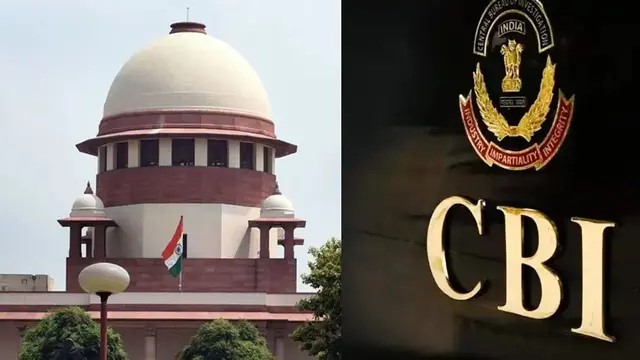
Recently, the Supreme Court issued contempt notices to the Speaker after the BRS filed a petition objecting to the delay in ruling on the disqualification of the turncoat MLAs. The apex court has directed the Speaker to act on the matter within a week. The court has asked the reason for the delay in the disqualification case. It directed the Speaker to explain to complete the process within four weeks. The order is welcome. But the real question is: who will save this country from the menace of political defections ?
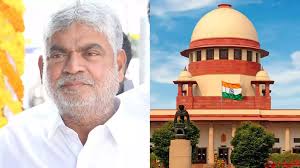
The bench bluntly asked: “Will you take action ? Or should we take action ?” Blunt and direct. Newspapers say, “The Supreme Court’s displeasure has heated up the issue again.” Heated up? Nothing is heated. Everything has been cooled down for years. Media reports say “the Supreme Court was dissatisfied,” but the public does not care for such words. Satisfaction or dissatisfaction these words don’t matter to them.
This is not the BRS’s story. It is not a moral issue. It is a problem every party faces when its MLAs defect to another party. How long must the Speaker, the ten MLAs, and the people of those constituencies wait ? Eternal pendency. Even in the Speaker’s court, adjournment is essential! Lawyers win cases by delaying. Who will put an end to this ?
The Speaker’s lawyers told the Court they needed eight more weeks to complete the hearing of the disqualification petitions. The Supreme Court responded sharply and gave only four more weeks. It asked: “Can the Speaker give us any specific date ?”
It was ordered that the hearing must be completed within these four weeks, and a decision must be submitted. If the Speaker does not comply, will the Court initiate contempt proceedings? That will also require a hearing, further adjournments more months lost. By then, the Assembly’s term may virtually end.
Even if the Court expresses anger, even if it imposes deadlines, will anything change ? If the Supreme Court raises fresh questions next month, there may be fresh petitions. “They will hear when they have time,” someone might say lightly. But contempt notices cannot be taken casually. And replacing the Speaker is not an option. So, this Speaker must act.
Who caused the delay ?
The great achievement here is not taking action. Not acting has itself become the action. Look at how the media phrases it: “The Speaker’s office has delayed the matter for long.” Not the Speaker. Not his judgment. Not the Chief Minister. Not any individual. A nameless ‘office’ is shown as the culprit an office that apparently checks the calendar each day to see how many months are left before the Assembly’s term ends! The Public Relations Office drafts the press note, party-friendly media add praise, opposition media add criticism, and the story is printed.
What Is a “Hearing” ?
These ten MLAs were originally BRS legislators. After the 2023 election, they decided to join the ruling Congress. But decisions and press conferences are not enough. Each MLA must individually explain how and why they defected. Some will argue, “Did I not resign? Show me where I didn’t!” And the drama continues.
Everyone knows the truth. These ten gentlemen openly declared their defection. They appeared in videos, gave statements, and every newspaper covered their movements. Evidence is plentiful. But the Speaker must still “hear” the matter. Lawyers must argue. Adjournments will be sought. A few hearings will be held. Some progress will be shown. But even after partial hearings, someone will claim it is “still incomplete.” What is a deadline? What does completion mean? These, too, will become subjects of legal debate.
Defection and Delay
Lawyers of the BRS working president shuttle between Hyderabad and Delhi these are not their only cases. Judges can hear only when everyone is available. And the Speaker has only this case to hear? Will he not find time? Half the legislative term has already evaporated while this case remains pending. Even now, hearings are progressing slowly. These defector-MLAs seem determined to enjoy five years of power, funds, and privileges without shame. And half of their five-year term is already gone. Half of the time remains.
Do we need a Neutral Tribunal ?
The delay in deciding the disqualification petitions of the 10 MLAs who defected from BRS to Congress arises from several institutional, political, and procedural factors. Article 190 and the Tenth Schedule(Anti-defection Law) do not prescribe a mandatory deadline for Speakers to decide disqualification petitions. Speakers often use this gap to delay proceedings indefinitely. A Speaker usually belongs to the ruling party. If defectors support the ruling party, delaying helps them retain the majority and stability. In Telangana, the defected MLAs are supporting the ruling Congress government, creating a political incentive not to disqualify them. Similarly, typical delaying methods are used across India. In the case of Telangana, the Speaker’s lawyers have repeatedly asked for additional time first 8 weeks, then 4 weeks—despite the case being pending for months. Courts traditionally avoid interfering with the internal functioning of the legislature. This allows Speakers to use procedural autonomy to prolong matters. The problem is that there is no punishment in the Constitution for a Speaker who delays defection proceedings, except the possibility of judicial direction, or contempt of court (rarely invoked). This practical immunity emboldens delay. This is an expression of constitutional frustration. Many States have repeated this pattern over decades.
There are many judgments on this issue. In Keisham Meghachandra Singh v. Speaker, Manipur (2020), the Court held that Speakers are not neutral when they delay defection cases, and it recommended an outer limit of 3 months for Speakers to decide petitions. Though not binding, it is a strong guideline. In another case, Rajendra Singh Rana (2007), the Court said Speakers cannot defeat the Tenth Schedule by not deciding cases. While in Nabam Rebia (2016), Speakers exercising power under the Tenth Schedule must act promptly and constitutionally, and not be influenced by political considerations. In recent years, 2024-25, in States like Maharashtra, Manipur, and Telangana, the Supreme Court has repeatedly criticised Speakers for inaction, given deadlines, and threatened contempt. The Supreme Court has hinted in earlier judgments that, in extreme situations, it may intervene and decide on disqualification directly or appoint an independent tribunal to decide defection cases.
The inaction raises questions of Constitutional morality, Legislative integrity, Voters’ rights, and the stability of government. The Speaker is both a political actor and a constitutional judge, an inherent conflict of interest, because he belongs to the ruling party, decides cases that affect the ruling party’s survival, and faces no penalty for delay. Thus, every State in India—from Andhra Pradesh to Karnataka, Manipur to Maharashtra—has seen chronic abuse of this loophole. The Supreme Court is pushing the Speaker to finish the case in four weeks, using its latest precedents to ensure constitutional accountability. But it is almost impossible, because of a fundamental flaw in the Tenth Schedule, the absence of a neutral tribunal, and binding timelines, remains unresolved.
Who cares about constitutional morality ?
The Speaker took an oath to uphold the Constitution. These ten MLAs also took the same oath. Before God or before their “conscience,” they declare while taking the oath. But do they understand what that oath means ? Who is their God ? Where is their conscience ? Do the Speaker and these MLAs truly believe in what they swore ?
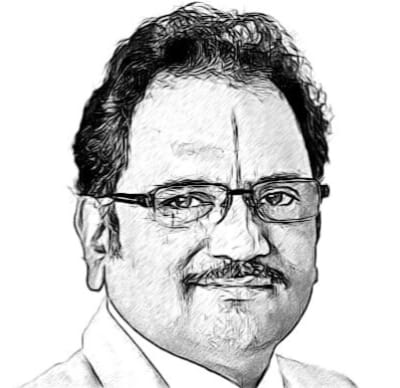
Law professor and eminent columnist
Madabhushi Sridhar Acharyulu, author of 63 books (in Telugu and English), Formerly Central Information Commissioner, Professor of NALSAR University, Bennett University (near Delhi), presently Professor and Advisor, Mahindra University, Hyderabad. Studied in Masoom Ali High School, AVV Junior College, CKM College, and Kakatiya University in Warangal. Madabhushi did LL.M., MCJ., and the highest law degree, LL.D. He won 4 Gold Medals at Kakatiya University and Osmania University.