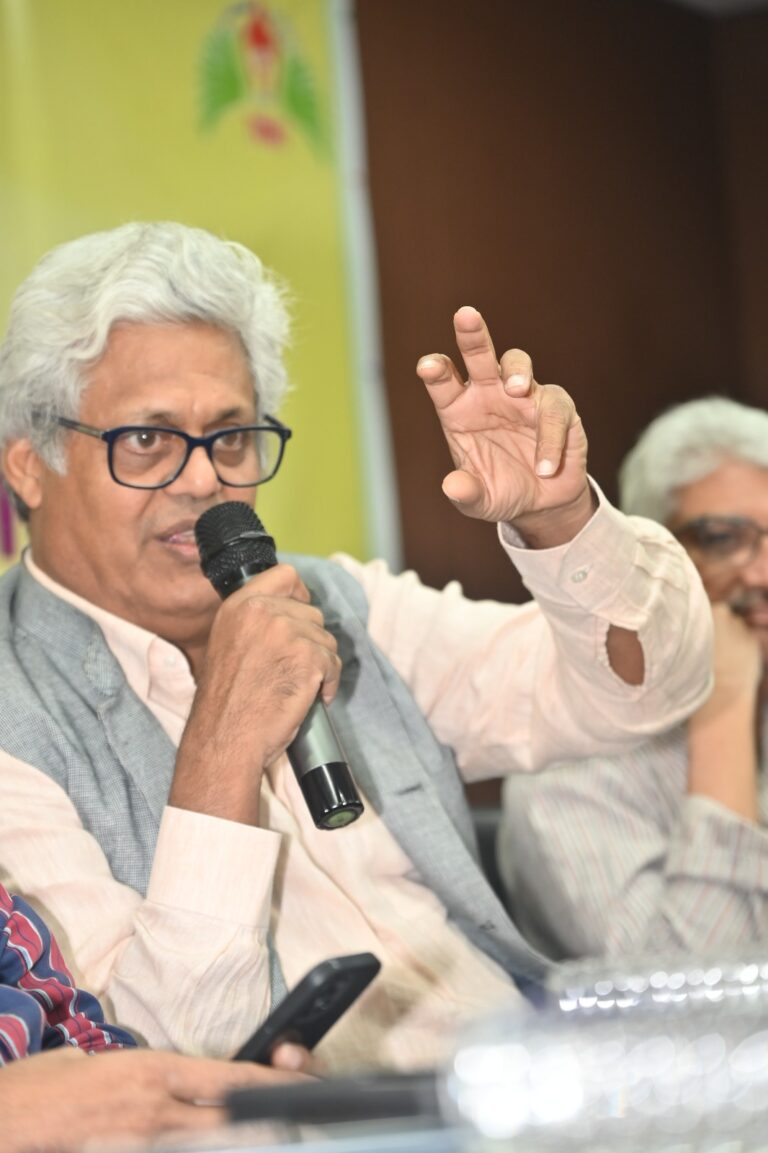
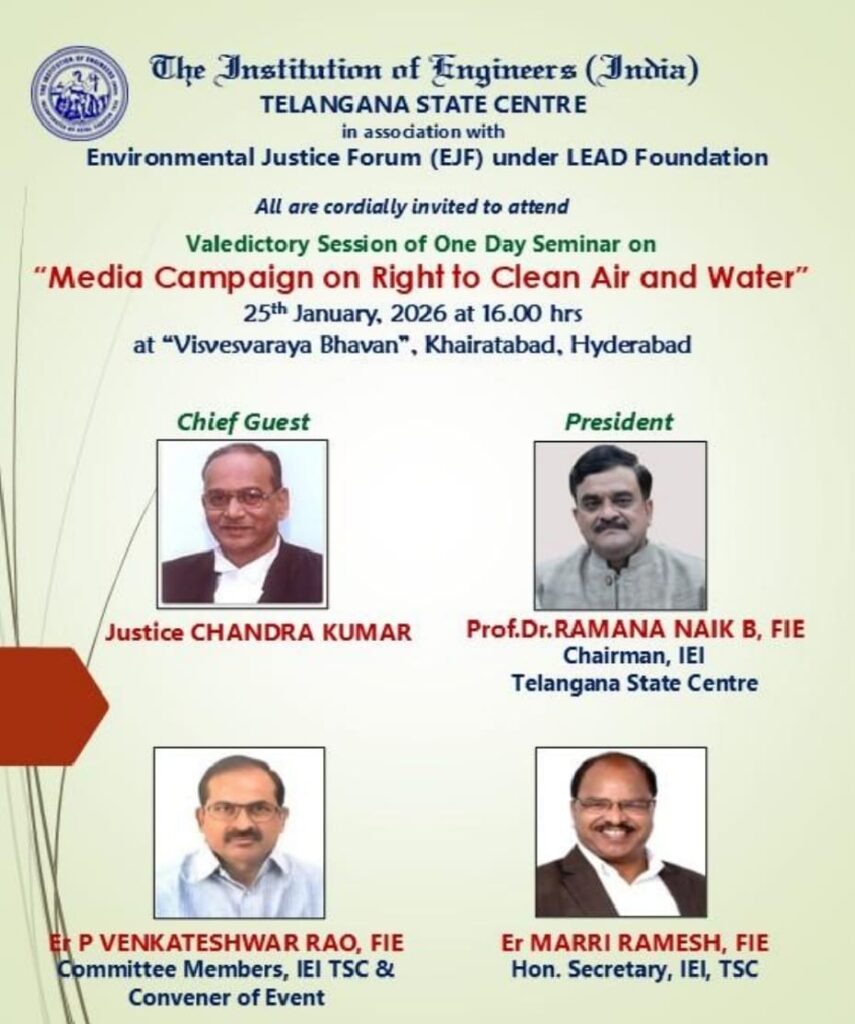
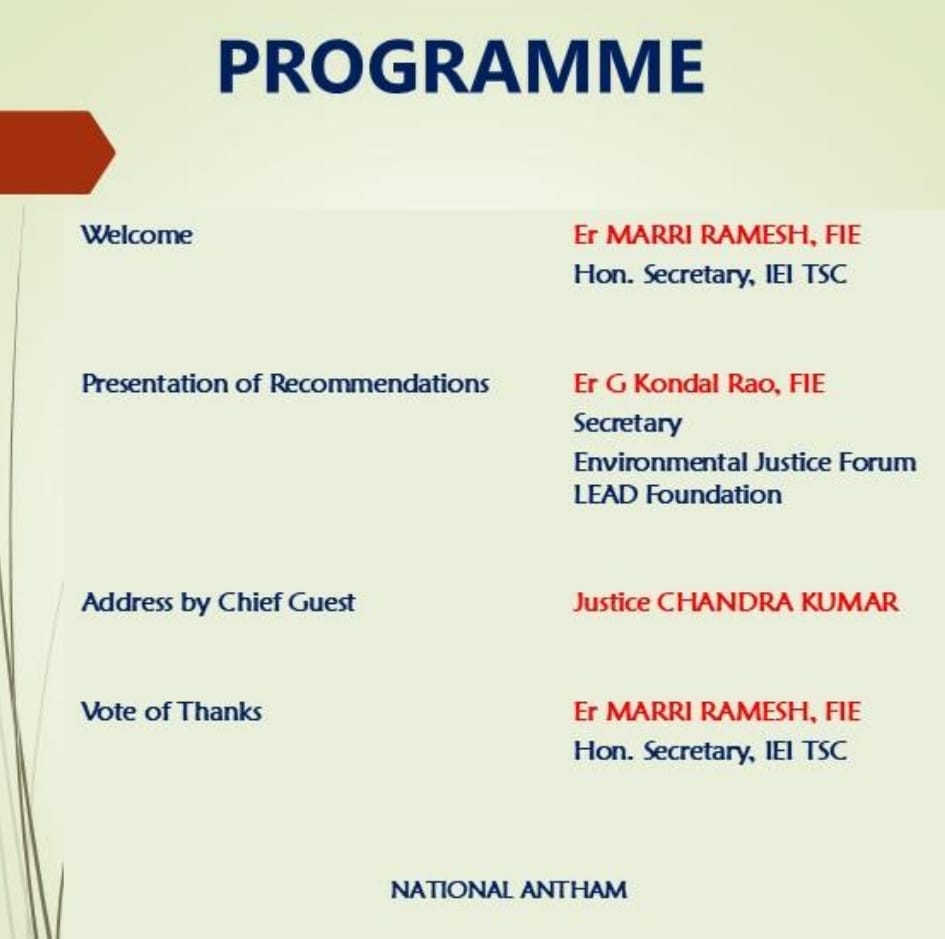
(This is my presentation in this significant meeting on 25.1.2026, “The Institution of Engineers (India) Telangana State Centre, in association with Environmental Justice Forum EJF under LEAD Founding, is presenting a one-day seminar on “One-day Seminar on Media Campaign on Right to Clear Air and Water.”)
Once, the first thing we did upon returning home was wash our hands and feet. Now, we walk straight in with our shoes on. We used to drink water from cool earthen pots. After wandering here and there, we would go to our house or someone else’s and drink water often with those same unwashed hands. We used to know the art of drinking water by pouring it into our mouths without touching the vessel (the madi tradition). Even hot coffee was sipped that way. Some called it superstition or “orthodoxy,” but today, we drink directly from the glass, leaving saliva on the rim. This is the shift in Hygiene and Habits
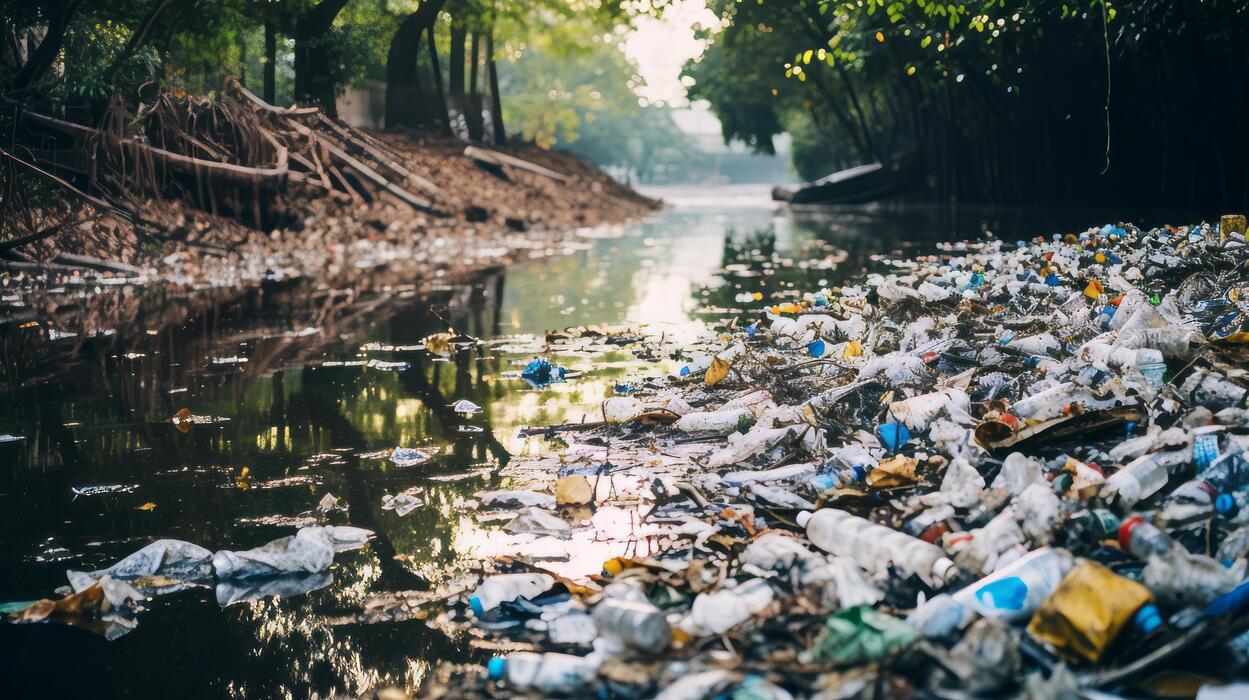
Modern Civilization and Plastic Waste. There is no longer a perceived need to wash one’s feet. We sit and converse while wearing shoes and boots inside the house. We drink water by putting the bottle to our lips. Now, people hand you a plastic bottle; you drink half and throw it away. We are filling our dustbins with plastic and wastewater. Some don’t even replace the cap; the water spills on the smooth, slippery floors, leading to falls and broken legs. This, apparently, is our “improved” civilization.
The Disappearance of Wells The traditional well in every backyard is gone. In modern colonies and apartments, they say a well isn’t necessary. When buying an apartment, no one asks where the water connection comes from. They simply tell you to “buy a water bubble.” We buy these plastic bottles and call them “Bisleri”—whether it is truly mineral water or just ordinary tap water, we don’t know. We have even forgotten how to ask for “pure” water.
Our Current Culture This has become our culture, our civilization, and our standard of conduct.
The Vanishing Lakes and Commercialized Faith. Once, there were lakes protected by embankments (katta). There were deities like Katta Maisamma, Gandi Katta Maisamma, or Pochamma who guarded those banks. Today, in many places, the lake is gone, and the embankment is gone, but the Katta Maisamma remains. In fact, they build massive temples for her now. People buy expensive new cars and take them there for rituals—tying lemons, breaking pumpkins, and draping flower garlands. The priest performs a puja for a fee; there is a separate ticket for the vehicle and another for the Ashtottara chant. They sprinkle water from a purchased “water bubble” to finish the ritual. It isn’t just cars; even rockets sent into space are adorned with lemons, ginger, and tamarind. Everyone has their beliefs, and that isn’t necessarily “wrong,” but the lake itself has vanished. If it still exists, it has turned into a drain—like the Musi River. Schools, universities, hospitals, and massive malls have been built on lake beds. Even government offices have been constructed there.
The Rejection of Local Water
We no longer drink water from our village lakes; we are told we shouldn’t. They say the water from the wells is no longer good for us.
The Reality
The truth is, the lake itself is simply gone.
Let us note some points on the Constitutional Rights and Duties
A. The right to clean air and water is recognized as a fundamental human right, predominantly derived from the Right to Life (Article 21) in the Indian Constitution, as interpreted by the Supreme Court to include a pollution-free environment.
B. Environmental Duties: Article 48A requires the State to protect the environment, while Article 51A(g) mandates citizens to protect natural resources.
C. Article 21 (Right to Life): Interpreted to mean a life of dignity, which is impossible without clean air, water, and a healthy environment.
D. Key Judicial Precedents: Subhash Kumar v. State of Bihar (1991) confirmed that the right to life includes the right to enjoy pollution-free water and air. The Vellore Citizens’ Welfare Forum case introduced the “polluter pays” and “precautionary principles”.
E. Public Trust Doctrine: The state acts as a trustee of natural resources (rivers, forests) for public use. F. International Recognition: The 1972 Stockholm Conference recognized the fundamental right to an environment of quality that permits a life of dignity.
G. Green Amendments: Some jurisdictions are adopting specific, enforceable constitutional amendments to ensure clean air, clean water, and a stable climate for current and future generations. Green Amendments for the Generations.
H. Remedies: Violation of these rights allows citizens to seek enforcement in the courts, often treating environmental damage as a violation of the right to life.
The State of Society and Democracy
We have neither pure water nor, it seems, pure-hearted people. The Constitution may be good, and the Chief Ministers and Prime Ministers who implement it may be “good” people too. But where is the “Kingdom” (the State)? Where is the Democracy? Where are the people who cast their votes? And who is there to question the “thief” (fraudulent) votes?
Law professor and eminent columnist
Madabhushi Sridhar Acharyulu, author of 63 books (in Telugu and English), Formerly Central Information Commissioner, Professor of NALSAR University, Bennett University (near Delhi), presently Professor and Advisor, Mahindra University, Hyderabad. Studied in Masoom Ali High School, AVV Junior College, CKM College, and Kakatiya University in Warangal. Madabhushi did LL.M., MCJ., and the highest law degree, LL.D. He won 4 Gold Medals at Kakatiya University and Osmania University.