In a high-voltage session of the Lok Sabha on Wednesday, February 11, 2026, Leader of the Opposition Rahul Gandhi launched a fierce attack on the Central Government over the recently announced India-US interim trade deal. During the Union Budget discussion, Gandhi used strong language, accusing the government of a “wholesale surrender” of national interests. He claimed that the agreement effectively “sells out” the country and “Bharat Mata” to American interests, alleging that Prime Minister Narendra Modi signed the deal under significant external pressure.
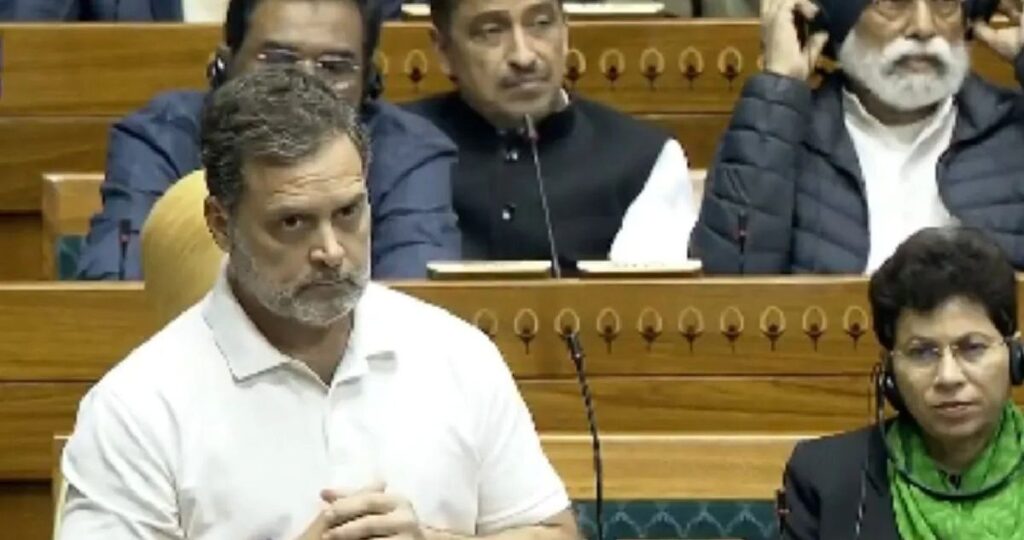
Gandhi highlighted what he called a massive imbalance in the trade terms. He pointed out that while U.S. tariffs on Indian goods reportedly jumped from 3% to 18%, India’s tariffs on several U.S. products have been slashed to zero. He argued that this would lead to a flood of American imports increasing from $46 billion to $146 billion without any secured benefits for India. He expressed deep concern for the textile industry, noting that competitors like Bangladesh enjoy duty-free access to the U.S. while Indian exporters face high barriers. Furthermore, he questioned the 20-year tax holiday for foreign cloud service providers, demanding to know why Indian data and sovereignty were being compromised.
The Congress leader Rahul Gandhi also alleged that the deal puts India’s energy independence at risk. He claimed that the U.S. would now have the power to monitor and influence India’s oil purchases from countries like Russia and Iran, using tariffs as a tool for “punishment.” Rahul Gandhi concluded his speech with high-voltage rhetoric, accusing the government of betraying “Bharat Mata” under pressure and ignoring the plight of poor farmers. His remarks sparked a massive uproar and a heated debate within the House.
Deputy Editor, Prime Post
Anand Gantela is a seasoned media professional with nearly three decades of experience across the spectrum of Indian journalism. Having worked extensively in both print and broadcast media, he has held key positions at renowned outlets such as Prajashakthi, Andhra Bhoomi, Mudra, Media India, Siti Cable, Mana Telugu, and Maa TV. From ground-level reporting to managing news bureaus and overseeing bulletin production, Anand has witnessed the evolution of news firsthand. His wealth of experience reflects a deep understanding of the dynamic and ever- evolving landscape of news reporting.