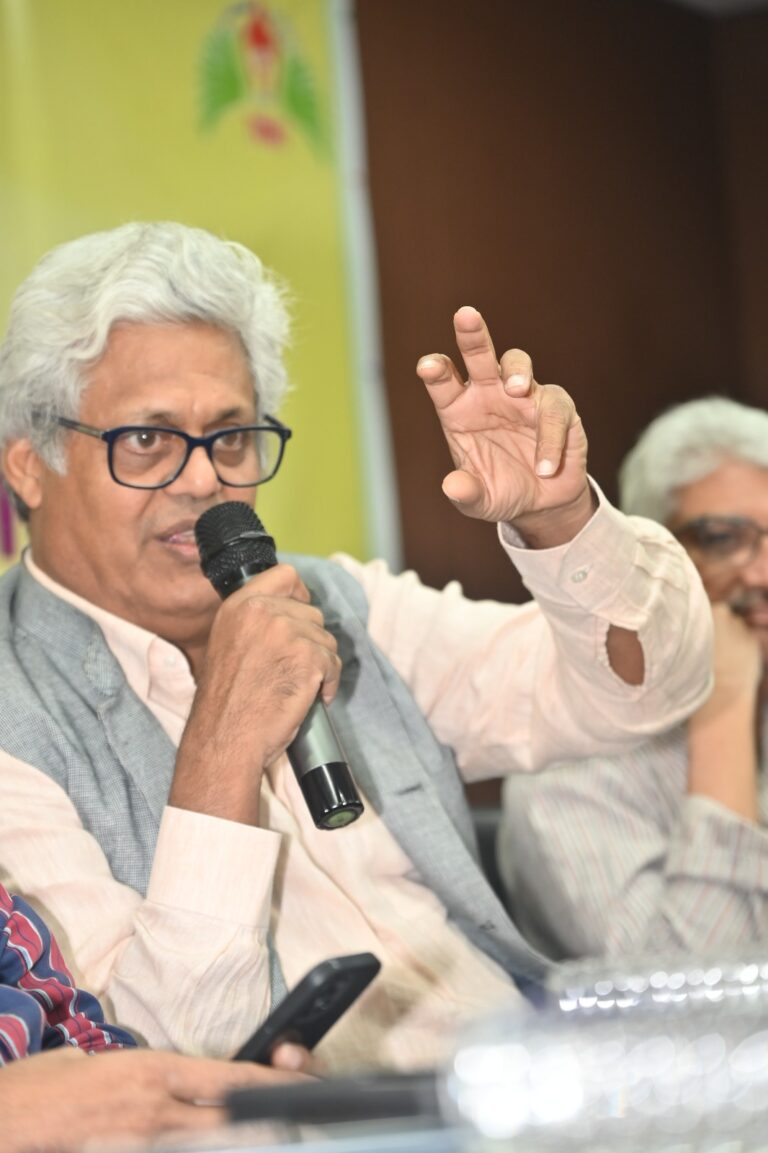
Speaker: Ronki Ram, Professor Emeritus, IDC, Chandigarh–Event: “Constitution Conclave” –Location: Hyderabad –Date: January 25–26, 2026 –Organizer: Centre for Dalit Studies (CDS), Hyderabad –Occasion: Commemorating 75 Years of the Indian Constitution–Biographical Note: Ronki Ram formerly served as the Shaheed Bhagat Singh Chair Professor and Dean of the Faculty of Arts at Panjab University (PU), Chandigarh, India.– (Part-1)
A Scholar and Global Intellectual
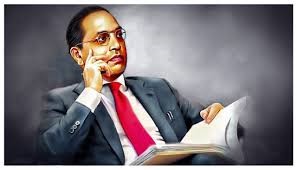
Babasaheb Dr. Bhimrao ramji Ambedkar (April 14, 1891-December 6, 1956), who dedicated his whole life for the emancipation and empowerment of down-trodden was an acclaimed, reputed economist, great humanist, statesman, and scholar par excellence. He earned his doctorate in economics and many more academic degrees from the reputed universities of the US and UK. He has been adjudged as one of the few most intelligent peoples in the world so far.
Bharat Ratan, India’s highest civilian award, was posthumously conferred upon him in 1990. Ambedkar considered caste a major barrier on the way of India becoming a nation in the true sense of the term; and remained committed for its total annihilation throughout his struggleful life. His sterling contribution in preparing the constitution of independent India is widely recognized both within the country and abroad. For establishing egalitarian social order in India, he initiated many social reform measures and founded three political parties to annihilate caste from the soil of India and inculcate the essence of liberty, equality and fraternity among the inhabitants of its multicultural society.
The Crusade Against the Caste System
Ambedkar was of firm view that caste is the biggest hurdle on the way of India become a nation. For its legal resolution, he introduced special provisions in the constitution for the upliftment of the lowest of the low. Shortly before his Mahaparinirvana, he laid the foundation of the Buddhist movement in India to show a new way to the millions of socially excluded and discriminated people of India to get rid of the centuries’ old curse of caste and untouchability. His scholarship and pragmatic approach to take mankind to new heights brought him into various offices of responsibility both during the British rule and Independent India.
He was the chairman of the drafting committee of the constitution and the first law minister of Independent India. He also founded three political parties – Independent Labour Party (1936), All India Scheduled Castes Federation (1942), Republican Party of India (1957) by his followers on the lines of footprints – and several journals including Mooknayak (1920), Bahishkrit Bharat (1927), Samta (1928), Janata (1930), and Prabuddha Bharat (1956) for the emancipation and empowerment of the lowest low.
As a chairman of the drafting committee of the Constitution of Independent India, Babasaheb prepared the draft of the Constitution, which was adopted by the Constituent Assembly on November 26, 1949. Since then, November 26 is known as Constitution Day (Savidhan Divas). It is also known as “National Law Day” and is celebrated in India on 26 November 26 every year to commemorate the adoption of the Constitution of India. A day before, on stswas delivered two years, eleven months, and seventeen days after the Constituent Assembly first met, he spoke in detail on the significance of the working of the constitution and warned that if those who entrusted with the responsibility for its proper implementation did not rise above caste and creed, it will fail to serve the purpose for which it has been prepared.
A Historic Warning: “Creed Above Country”
Ambedkar was of the opinion that “the political inequality could persist if the people working for not ‘good’ noting the need for unity and potential for the parties to place “creed above country”. He also spoke of the need to transform political democracy for building a strong egalitarian society.
To quote in length from his historic speech, “On 26th January 1950, India will be an independent country. What would happen to her Independence? Will she maintain her independence or will she lose it again? This is the first thought that comes to my mind. It is not that India was never an independent country. The point is that she once lost the independence she had. Will she lose it a second time? It is this thought which makes me most anxious for the future. What perturbs me greatly is the fact that not only India has once before lost her independence, but she lost it by the infidelity and treachery of some of her own people.”
The Roots of Indian Democracy and the Threat of Dictatorship
In the invasion of Sindh by Mahommed -Bin-Kasim, the military leaders of King Dahar accepted bribes from the agents of Kasim and refused to fight on the side of their King. It was Jaichand, who invited Mahommad Gohri to invade India and fight against the Prithvi Raj and promised him to help of himself and the Solanki Kings. When Shivaji was fighting for the liberation of Hindus, the other Marathas noblemen and Rajput Kings were fighting the battle on the side of Moghul Emperors.
When British were trying to destroy the Sikh Rulers, Gulab Singh, their principal commander sat silent and did not help to save the Sikh Kingdom…. Will history repeat itself? It is this thought which fills me with anxiety. This anxiety is deepened by the realization of the fact that in addition to our old enemies in the form of castes and creeds we are going to have many political parties with diverse and opposing political creeds. Will Indians place the country above their creed or will they place creed above country? I do not know. But this much is certain that if the parties place creed above country, our independence will be put in jeopardy a second time and probably be lost forever. This eventuality we must all resolutely guard against. We must be determined to defend our independence with the last drop of our blood.
On the 26th of January 1950, India would be a democratic country in the sense that India from that day would have a government of the people, by the people and for the people. The same thought comes to my mind. What would happen to her democratic Constitution? Will she be able to maintain it or will she lose it again? This is the second thought that comes to my mind. What would happen to her democratic Constitution? Will she be able to maintain it or will she lose it again? This is the second thought that comes to my mind and makes me as anxious as the first.
A Life Dedicated to Empowerment
During Ambedkar’s 25th November 1949 marathon address in the Constituent Assembly, he also deliberated in details on the prevalence of democracy in ancient India. While emphasizing to revive the same in Independent India, He said; “India did not know what is Democracy. There was a time when India was studded with republics, and even where there were monarchies, they were either elected or limited. They were never absolute. It is not that India did not know Parliaments or parliamentary procedure. A study of the Buddhist Bhikshu Sanghas discloses that not only there were Parliaments-for the Sanghas were nothing but Parliaments-but the Sanghas knew and observed all the rules of parliamentary procedure known to modern times.
They had rules regarding seating arrangements, rules regarding Motions, Resolutions, Quorum, Whip, Counting of votes, Voting by Ballot, Censure Motion, Regularisation, Res Judicata, etc. Although these rules of parliamentary procedure were applied by the Buddha to the meetings of the Sanghas, he must have borrowed them from the rules of the political assemblies functioning in the country in his time. This democratic system India lost. Will she lose it a second time? I do not know. But it is quite possible in a country like India-where democracy from its long disuse must be regarded as something quite new – there is danger of democracy giving place to dictatorship. It is quite possible for this new born democracy to retain its form but give place to dictatorship. It is quite possible for this new born democracy to retain its form but give place to dictatorship in fact. If there is a landslide, the danger of the second possibility becoming actuality is much greater.”

With a journalistic long journey, we bring you https://primepost.news, a dynamic platform committed to unraveling the intricate tapestry of Indian politics, particularly delving deep into the heart of Telangana and Andhra Pradesh. Our blog is not just a source of news; it’s a reservoir of insights, analysis, and thought-provoking reviews.