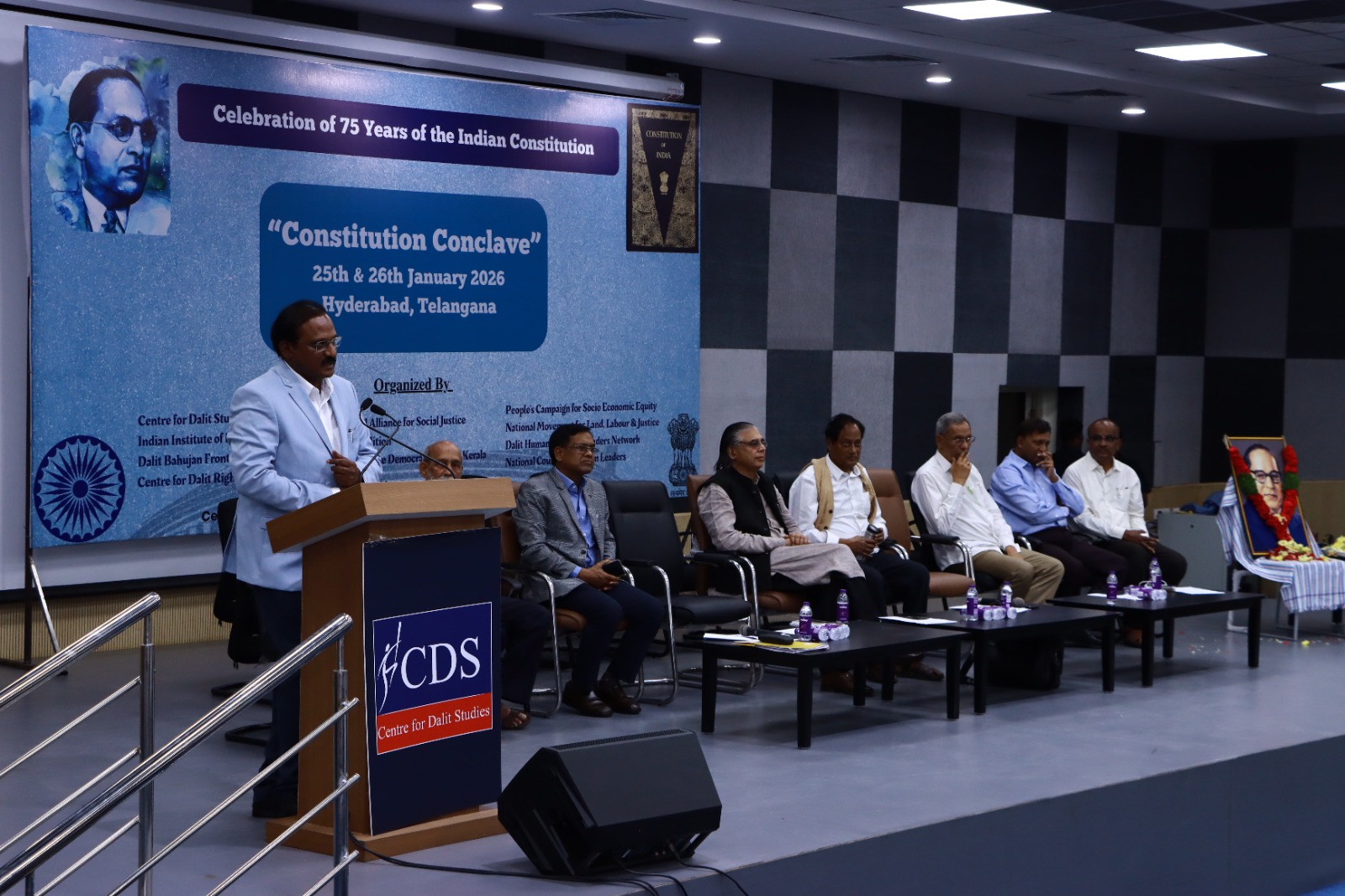
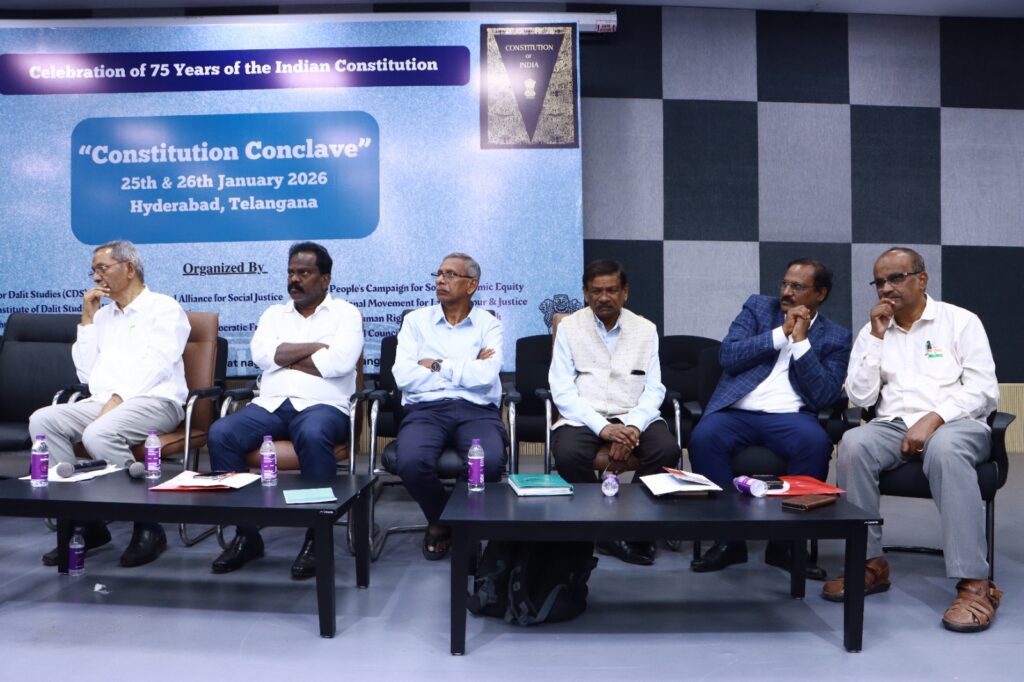
Dr. Raja Sekhar Vundru, Additional Chief Secretary, Haryana State-Event: “Constitution Conclave” Location: Hyderabad -Date: January 25–26, 2026 Organizer: Centre for Dalit Studies (CDS), Hyderabad Occasion: Commemorating 75 Years of the Indian Constitution.
Distinguished guests, respected scholars, fellow constitutionalists, activists, and fellow citizens it is both a privilege and a solemn responsibility to stand before you today to speak about one of the most fundamental ideals of our Republic equality as a constitutional mandate, a principle that Dr. B.R. Ambedkar described, in spirit and substance, as utterly non-negotiable.
Seventy-five years after the Constitution of India came into force on January 26, 1950, we gather at a moment of profound reflection. Our nation has traversed a remarkable journey from the ashes of colonial subjugation and Partition’s wounds to becoming the world’s largest democracy. Yet, as we celebrate these milestones, we must confront an uncomfortable truth: while formal legal equality has taken root, substantive equality the lived reality of fairness, dignity, and opportunity for every citizen remains an unfinished revolution. Today, I invite you to revisit what equality truly means in the Indian context, why it endures as Ambedkar’s moral north star, the persistent gaps that mock our progress, and the transformative paths forward to honour his vision in our time.
The Foundational Vision of Equality: Ambedkar’s Moral Compass
Let us begin at the beginning, in the shadowed chambers of the Constituent Assembly, where the air was thick with the weight of history. The makers of our Constitution were not mere lawyers or politicians drafting a legal charter. They were visionaries architecting a moral and social order for a nation scarred by millennia of hierarchical oppression caste rigidities, gender subjugation, economic feudalism, and colonial exploitation. At the heart of this endeavour stood Dr. Bhimrao Ramji Ambedkar, the chief architect, a man who had himself endured the sting of untouchability and risen through sheer intellect and unyielding resolve.
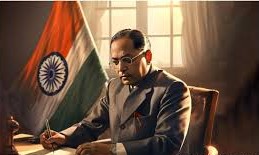
Ambedkar was acutely aware that India could not claim democracy in form if it remained undemocratic in its very social structure. “How long shall we continue to live this life of contradictions?” he thundered in his final speech to the Assembly on November 25, 1949. “In politics we will have equality and in social and economic life we will have inequality.” For him, self-government was hollow without good government a system ensuring every citizen’s inalienable rights to life, liberty, the pursuit of happiness, free speech, and the free exercise of religion.
But Ambedkar went further: true citizenship demanded freedom not just from fear of state tyranny or communal violence but from want, the grinding poverty that chained the submerged classes: the Dalits, the Adivasis, the landless labourers, and women across all divides. Equality, in Ambedkar’s philosophy, was the operational essence of democracy. The Indian Union, he insisted, bore a constitutional duty to dismantle social, political, and economic inequalities systematically. No law or custom could abridge citizens’ privileges, deprive any person of life, liberty, or property without due process, or impose forced labour. The state was duty-bound to shield every individual from persecution, internal disorder, or violence. Liberty of conscience and religion must flourish, free from penalties based on caste, creed, or birth. This was no abstract ideal; it was a battle cry against the millennia-old chains of hierarchy.
The Constitutional Architecture of Equality: Article 14 as the Bedrock
This towering vision crystallized most powerfully in Article 14 of the Constitution: “The State shall not deny to any person equality before the law or the equal protection of the laws within the territory of India.” These words, deceptively simple, encode a dual promise that has defined our jurisprudence for decades.
First, equality before the law a British common law legacy refined by Ambedkar means no one is above the law. The mightiest industrialist stands equal to the humblest farmer before the courts; the Prime Minister to the pavement dweller. It is the rule of law’s iron fist against privilege.
Second, “equal protection of the laws” demands substantive fairness. Likes must be treated alike, and unequals differently, based on intelligible differentia with a rational nexus to a legitimate purpose.
Yet Article 14 does not stand alone. It dances in harmony with Articles 15 (prohibiting discrimination on grounds of religion, race, caste, sex, or place of birth), 16 (equality in public employment), 17 (abolishing untouchability), and 21 (life and personal liberty). Together, they form equality’s fortress. Ambedkar’s lesser-known blueprint, “States and Minorities” (1947), reveals his radical economic edge: state ownership of industry, insurance as a monopoly, agriculture collectivized not socialism by dogma, but equality by distributive justice, shielding labour from exploitation.
The Legal Instruments of Equality: From Promise to Penal Code
No constitutional guarantee thrives without teeth. Article 17’s abolition of untouchability birthed a lineage of enforcement: the Protection of Civil Rights Act 1976, the Untouchability (Offences) Act, 1955, and the robust Scheduled Castes and Scheduled Tribes (Prevention of Atrocities) Act, 1989. These laws criminalize not just overt violence but subtle social exclusion, imposing duties on the state to protect the marginalized. Gender justice followed suit: the Dowry Prohibition Act, 1961; Protection of Women from Domestic Violence Act, 2005; and provisions against sexual harassment (Vishaka Guidelines, 1997, codified later). Labour laws guard against economic servitude.
Beyond Formal Equality: Persistent Gaps After 75 Years
Seventy-five years on, formal equality is our triumph: the Indian Penal Code (now Bharatiya Nyaya Sanhita) treats all as equals, irrespective of caste, creed, or gender. But substantive equality?
New Frontiers and Economic Justice: 21st-Century Challenges
Ambedkar warned that political democracy without economic democracy is a “house built upon sand.” Today’s gig economy, digital divides, and ecological crises test this prophecy. Equality must now embrace disability rights, LGBTQIA+ inclusion, regional disparities, and AI-driven exclusions. Unpaid care work by women, migrant labour exploitation—these are Article 14’s new battlegrounds. Ambedkar’s state-as-equalizer vision urges us to reclaim shared prosperity.
The Path Ahead: Renewing the Mandate
The next 75 years call for boldness:
A comprehensive Equality Act defining indirect discrimination and prohibited grounds.
- National Equality Courts with restorative remedies
- Mandatory Equality Impact Assessments for every policy
- Digital and ecological equality enshrined
Fraternity’s Call
Ambedkar’s trinity-equality, liberty, fraternity-IS organic. Equality is our proudest achievement and gravest debt. Let us make it numanity’s right, non-negotiable.
Thank you.

With a journalistic long journey, we bring you https://primepost.news, a dynamic platform committed to unraveling the intricate tapestry of Indian politics, particularly delving deep into the heart of Telangana and Andhra Pradesh. Our blog is not just a source of news; it’s a reservoir of insights, analysis, and thought-provoking reviews.