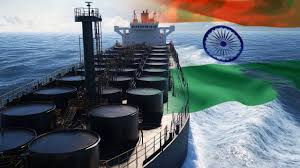
The US announced sanctions on Russia‘s major oil companies, Rosneft and Lukoil, which are key suppliers to India. This has led Indian refiners, including Reliance Industries (RIL) and state-run Public Sector Undertakings (PSUs), to review their Russian oil trade documents and potentially halt direct imports from these sanctioned entities. The US Treasury set a deadline of November 21 for winding down transactions. Recent reports (October 2025) confirm that Indian refiners are poised to sharply curtail or even halt imports of Russian oil sourced directly from the sanctioned entities (Rosneft and Lukoil) to comply with the new US sanctions. RIL is reportedly planning to reduce or cease imports, including under its long-term deal with Rosneft.
US President Donald Trump has repeatedly claimed that Indian Prime Minister Narendra Modi assured him that India would stop or sharply reduce Russian oil imports.
India’s Official Stance: India’s Ministry of External Affairs (MEA) has officially denied any such agreement, maintaining that India’s energy import policy is guided by national interest and consumer needs.
Practical Reality: Despite the denial, the recent US sanctions on Rosneft and Lukoil, coupled with existing US pressure (including tariffs), are forcing Indian refiners to cut back on Russian crude imports, especially those sourced directly from the sanctioned companies. This de facto reduction in imports lends credence to the direction of Trump’s claim, even if India has not officially confirmed a political agreement.
Specifics on Reliance Industries (RIL)
Multiple sources confirm that RIL, a top Indian buyer of Russian crude, is planning to reduce or halt imports, including under its long-term contract with Rosneft, to align with Government of India guidelines and comply with US sanctions.
Russian Crude Price and Volume
Russian crude is being sold to RIL through Rosneft at $60 per barrel when it was near $70 in other countries. India’s imports of Russian crude had risen to about 34-36% of its total imports, often secured at a discount compared to global benchmarks, though the discount has narrowed. The sanctions will now affect the volume that can be reliably imported directly from Rosneft and Lukoil.
On the other hand, Russian President Vladimir Putin has remained defiant, stating that no country acts under pressure and that the sanctions would not significantly affect the Russian economy, although he did warn of the potential for global price hikes.

Editor, Prime Post
Ravindra Seshu Amaravadi, is a senior journalist with 38 years of experience in Telugu, English news papers and electronic media. He worked in Udayam as a sub-editor and reporter. Later, he was associated with Andhra Pradesh Times, Gemini news, Deccan Chronicle, HMTV and The Hans India. Earlier, he was involved in the research work of All India Kisan Sabha on suicides of cotton farmers. In Deccan Chronicle, he exposed the problems of subabul and chilli farmers and malpractices that took place in various government departments.
Email: ravindraseshu7@gmail.com
Mobile: 9063718675