రంగనాథం వైకుంఠనాథం (Ranga Nadhama Vaikuntha Nadham)
Tiruppavai by Godadevi from Tamil
Vangak Kadal kadaintha Madhavanai kkesavanai
Thingal Thirumugatthu Seyizhaiyar Senru Irainji
Anga-p-paraikonda Vaatrai ani Puduvai
Paingamala Ththan Theriyal Battar Piran Kodai Sonna
Sangath Thamizh Maalai Muppadum Thappame
Ingi-p-parisuraippar Eeriirandu Maalvarai-th-thool
Sengam Thirumugaththu Selvaththirumaalaal
Engumthiruvarul Pettru Inburuvar Empaavaai
English Translation by Madabhushi Sridhar
Madhava Keshava helped churning of ocean of milk
For Dharma worshipped by moon-like women,
Narrating the story of achieving Purushartha in
Divine Srivilliputhur, Daughter of Vishnuchitta
With gold-bright lotus garlands, sang the 30 nectar-
flowing songs; If recited skipping none; Shall get
Blessings of Shriyahpathi with four-hill-like hands
Forever, For All, all through, Raining His bliss.
Goda is not selfish in achieving her goal and leaves all of us to our fate. The ritual or Vrataవ్రత is not an ordinary process, but a thirty-step plan to scale to the highest goal of the abode of Paramaatma పరమాత్మ. As she attained Union with God through her own self-samarpanam,స్వయం సమర్పణ of her life as a Tualasi Dalam basilica leaves or flower, she also laid the path for the achievement of రంగనాథం Rangadhamam/Vaikuntadhamam వైకుంఠధామం through this Vrata of Tiruppavai. Not only friends of Goda, who were likened to Gopikas, but anybody who performs this Vrata will reach Parandhaamam.
When Sri Krishna, the Supreme Lord, Paramaatma, who is easily accessible to His devotees, asks the
Gopis: “I have accepted the intimate service you sought. Do you also desire that others attain this supreme fortune? What shall be the means?” The Gopis respond with profound spiritual generosity.
They declare that those who sing this Goda-Govinda Gitam—the Tiruppavai—through which they attained Him, and who observe the Margazhi vow in the same spirit, will unfailingly receive the grace of Sriman Narayana. Such devotees will rejoice in an ocean of bliss, just as the Gopis did in Gokula and as Andal did in Srivilliputtur.
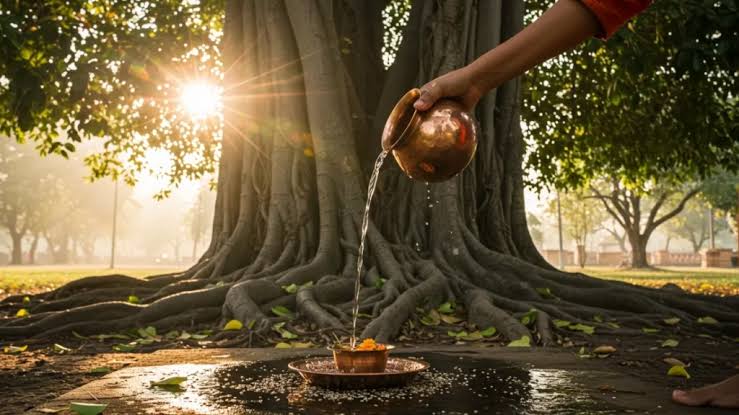
Just as a cow that has lost its calf melts with vatsalya even on seeing a straw effigy of a calf, overflowing with milk, the Supreme Lord melts at the sight of sincere surrender and pours forth streams of compassion. That very outpouring of grace is the Tiruppavai. Andal’s song exists solely for invoking this divine grace.
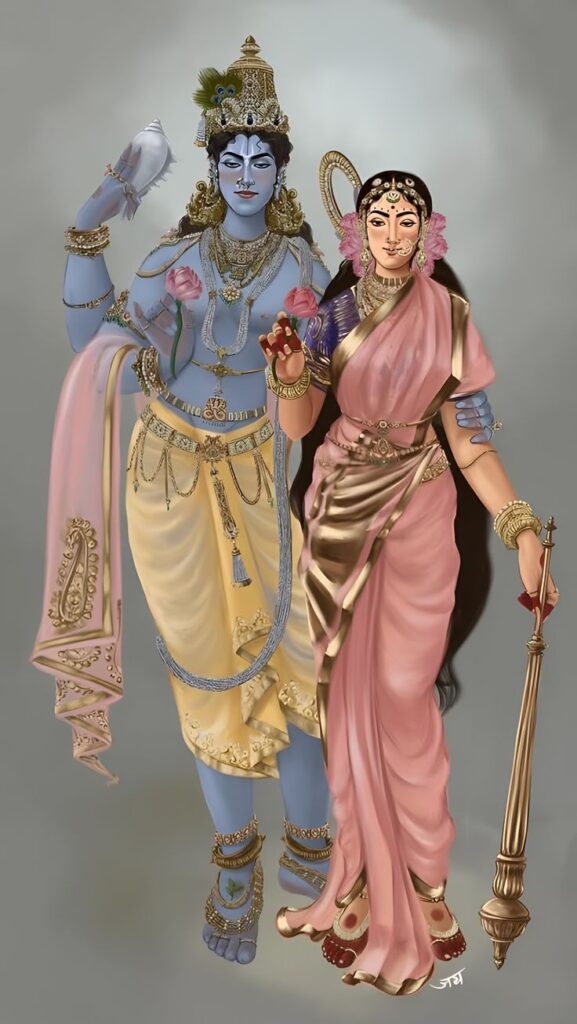
The Vedas describe Him as Hiranyakesha—He who can cross and control even the most turbulent oceans. During the churning of the Milk Ocean, Sri Mahalakshmi emerged and, in the presence of all worlds, chose the chest of Mahavishnu as Her eternal abode. Scripture affirms that Keshava కేశవ is the ultimate cause even of Brahmaబ్రహ్మ (denoted by the syllable ‘ka’క) and of Shiva శివ, the Paramaatma పరమాత్మ (Supreme Lord of Para Brahma పరబ్రహ్మ). The term Narayana signifies the One endowed with saulabhya సౌలభ్య (accessibility), saushilya సౌశీల్య (gracious humility), vatsalya వాత్సల్య (parental affection), and స్వామిత్వ svamitva (absolute lordship).
Meaning of the Pasuram
The ornamented Gopis approached, bowed, and surrendered to Madhava—He who reclaimed Lakshmi through the churning of the wavy Milk Ocean, who is also Keshava, the beautiful Lord with enchanting locks, whose face shines like the moon. In sacred Gokula, they attained the supreme purushartha symbolised by the parai.
This sacred account was sung by Goda Devi, daughter of Periyalvar of resplendent Srivilliputtur, adorned with cool garlands of fresh lotus flowers. Whoever recites these thirty sweet Tamil verses without omitting even one, and reflects upon them in this spirit, will everywhere receive the compassionate glance of Sriman Narayana—He of four mighty, mountain-like shoulders, lotus-red eyes, and infinite wealth—and will live immersed in bliss.
In this, Pashuram Goda refers to and sings the glory of క్షీర సాగర మథన Ksheera Sagara Mathana – Churning of Milk Ocean. The ocean churned violently; waves surged, and ships swayed. Mount Mathana మథన tilted, and all eyes were fixed upon Madhava and Keshava so that He would not fall. Madhava reclaimed Sri Keshava stood firm in His beauty. The Gopis aspire to receive His grace by adorning themselves with the jewel of devotion, radiant like the moon. Becoming Koorma కూర్మ, Vishnu bears on His back the brunt of this churning, but He benefits with Lakshmi, who was born out of that churning. So is the case with those who churn the Vedantha Sashtra వేదాంత శాస్త్ర and bear the brunt of all kinds of hardship to reach the goal. Just as Vishnu gained Lakshmi through Ksheera Sagara Mathana క్షీర సాగర మథన, Goda earned Ranganatha through Vratha. She emerged in beautiful Sri Velliputhhoor with fresh, fragrant golden-lotus flowers, as the daughter of the Vishnu Chitta.
She sang these nectar-flowing 30 songs. Like Goda and Gopikas, all those who recite this thirty-poem garland daily without missing any song will gain the grace and derive pleasures from Narayana. In the divine land of Srivilliputtur, Andal weaves garlands with lotus-like hands, asking for nothing but His grace. Throughout the Margazhi month, each pasuram blooms like a flower in a garland. With four arms and mountain-like strength, He protects all beings.
Sri Ranganatha heard the call of Goda, took all her messages through క్షీర మథన Ksheera Mathana Tulasi, Flowers, and Pashurams, and decided to bless her with the bliss of marrying her, as per her profound and strong wish. Ranganatha ordained in the dream the Pandya King Vallabh Raya (Some explain Vallabharaya as a disciple) to send a Palanquin in a royal way and bring her to Sri Rangam, and arrange for the marriage. Goda arrived along with father Periyalwar, and after marrying Him, she is absorbed into Ranganatha, to the dismay of all, especially of her father, who could not stand the sudden disappearance of his lovely, divine devotee daughter at the age of 16 years. After climbing 29 steps gradually, Goda is assuring the divine and serene goal of the Vrata – the phala-shruthi ఫలశృతి, the fruits of efforts of all these 29 days in worship of Narayana. She, an Ayonija, i.e., self-emerged, and just disappeared without Jara and Marana జరా, మరణ. As she enjoyed the supreme pleasure with Sri Ranga, today is భోగి Bhogi– a soul-deep experience.
Inner Meaning (ఉపనిషత్ Upanishadic and ద్వయ కోణం Dvaya Perspective)
When the ocean is churned, only one moon rises; yet here, the Gopis shine like countless moons. This pasuram begins with “Madhavan” and concludes with “Tirumal,” symbolically representing the two halves of the Dvaya Mantra—Sri and Narayana—inseparably united.
With compassionate, reddish eyes, He stands in blissful beauty. In this final pasuram, Andal proclaims that Krishna’s smile and glance alone constitute true wealth. Because of His eternal union with Mahalakshmi, and due to the joy generated by His divine wealth, the Lord’s eyes are described as reddish with compassion, as echoed in the classical saying:
“Sakhya pashyata Krishnasya mukham aty-arunekshanam”
సంఖ్య పక్ష్యత కృష్ణస్య ముఖ అతి అనుక్షణం
The supreme bliss that flows from the conjoint grace of Lakshmi and Narayana is the essence of this pasuram.
Andal observed the Margazhi vow for thirty days, envisioned her village as Gokula, herself as a Gopi, and meditated exclusively on Sri Ranganatha. With unwavering resolve, she sought Him alone as her Lord. Tradition records that Sri Ranganatha Himself, in deity form, came and married Goda Devi. Thus, Tiruppavai culminates as both a bhakti text and a lived Upanishadic realisation.

Law professor and eminent columnist
Madabhushi Sridhar Acharyulu, author of 63 books (in Telugu and English), Formerly Central Information Commissioner, Professor of NALSAR University, Bennett University (near Delhi), presently Professor and Advisor, Mahindra University, Hyderabad. Studied in Masoom Ali High School, AVV Junior College, CKM College, and Kakatiya University in Warangal. Madabhushi did LL.M., MCJ., and the highest law degree, LL.D. He won 4 Gold Medals at Kakatiya University and Osmania University.
Email: cicsridhar@gmail.com
Mobile: 8447651505