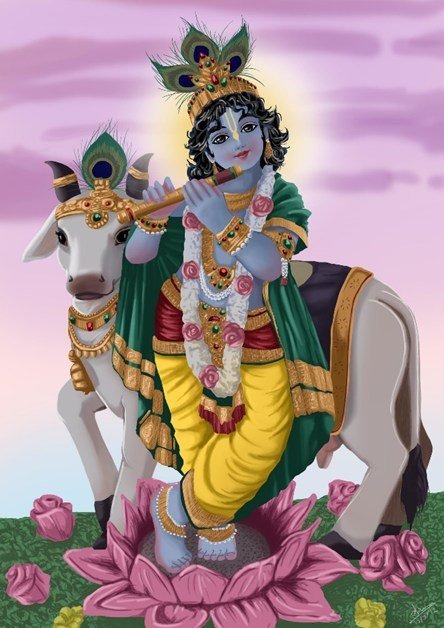
Your golden lotus feet, for the sole purpose
Tiruppavai by Godadevi from Tamil
Shittrum Sirukaale Vandu Unnai Sevitthu Un
Pottramarai Adiye Pottrum Porull Kelaay
Pettram Meyythundum Kulatthil Pirandu Nee
Kuttreval Engalai Kolllamall Pogathu
Ittrai Parai Kollvaan Andru Kaann Govinda
Ettraikkum Ezh Eazh Piravikkum Un Tannodu
Vuttrome Yavom Unakke Naam Aatcheyvom
Mattrai Nam Kaamangal Mattru-el or empaavaai.
English Translation by Madabhushi Sridhar
Listen, we all came over here very early, dawn
At Your golden lotus feet, for the sole purpose,
Not interested in just taking one Parai only
We, cowherds, served you with personal bond,
Govinda, as long as these times continue,
For each of Seven Births, bind us with You
We seek this boon to serve You and You alone
Pray to you to remove all other desires from us
Krishna Bhagavan is both the giver and the gift
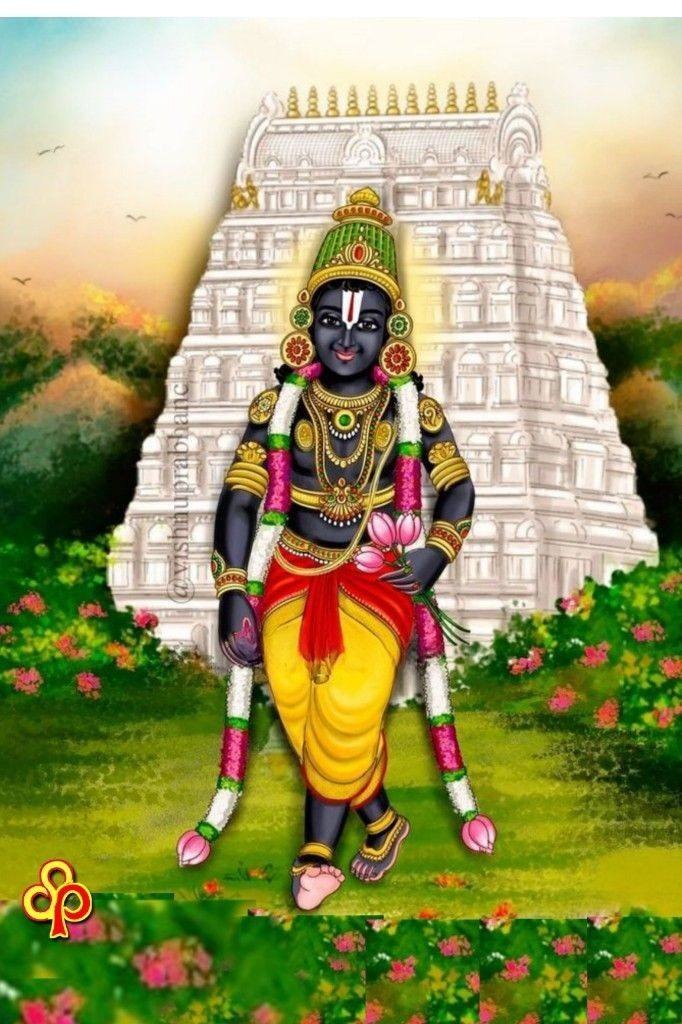
“Neeve Upaayam, Neeve Phalam”: The 29th Paasuram of Sri Andal’s Tiruppavai represents the philosophical climax of the entire work. While the earlier paasurams gradually prepare the seeker through discipline (vrata), surrender (sharanagati), and divine grace, this paasuram clearly establishes the purity of the goal (phala shuddhi). Here, the Gopikas abandon all symbolic pretexts and openly declare their deepest desire: exclusive, eternal, selfless service (nitya kainkaryam) to Sri Krishna alone.
The End of Pretexts: From Vrata to Truth
The Gopikas approach Sri Krishna under the guise of observing a vrata and asking for the parai. They wake Him, bring Him to the throne, sing mangala asasanam, and ask for ritual accessories. When Krishna appears ready to grant these, they immediately clarify their real intent:
“You alone are our merit.
You alone are our parai.”
Krishna understands that this is not an ordinary request. He remains silent, because the Gopikas are no longer asking for anything belonging to Him, but Him alone.
What Is Parai?
In the very first paasuram, Andal declares:
“Narayane namakke parai taruvan”
Narayana Himself will give us the parai.
By the 29th paasuram, this statement reaches its fullest meaning:
- Parai is not a ritual instrument
- Parai is not wealth, pleasure, or even liberation
- Parai is Bhagavan Himself
Thus, Bhagavan is both the giver and the gift.
Upaaya Shuddhi and Phala Shuddhi
The acharyas identify a clear structure in the concluding paasurams:
| Paasuram | Core Theme |
| 28th | Upaaya Shuddhi (Purity of the Means) |
| 29th | Phala Shuddhi (Purity of the Goal) |
| 30th | Phala Praapti (Attainment of the Fruit) |
In the 29th paasuram, the Gopikas declare with clarity:
- There is no means other than Krishna
- There is no fruit other than Krishna
- To imagine another means is impurity
- To seek another benefit after attaining Him is greater impurity
Therefore:
“Neeve upaayam” – You alone are the means
“Neeve phalam” – You alone are the fruit
Significant Statements of the Paasuram
The Gopikas state:
“Un pon taamarai adiye potrum porul kelay”
Listen to the purpose for which we praise Your golden lotus feet.
“Unakke naam aatcheyvom”
We exist only to serve You.
“Mattrai nam kaamangal maatru”
Remove all other desires from us.
Here, they renounce:
- Desire for personal pleasure
- Desire for shared enjoyment
- Desire even for liberation as a separate goal
What remains is pure kainkaryam, performed only for the joy of Bhagavan.
Eternal Relationship, Not Mere Liberation
Andal’s vision goes beyond the usual aspiration for freedom from birth:
“Etraikkum ezhezhu piravikkum
Un tannodu utrome aavom”
For all time, for seven times seven births,
may we remain inseparably related to You.
Many saints pray for “no more births.”
Andal prays for birth with Krishna, if at all.
Even Paramapadam is secondary to the relationship with the Lord.
This is Andal’s unique greatness.
Kainkaryam as the Soul’s Identity
The Gopikas declare:
“We do not serve for our happiness.
We do not even serve for mutual happiness.
We serve only to see Your face bloom with joy.”
Thus, kainkaryam is not merely an action, but the very nature (svarupa) of the soul.
As the acharyas say:
Service is not what the soul does;
service is what the soul is.
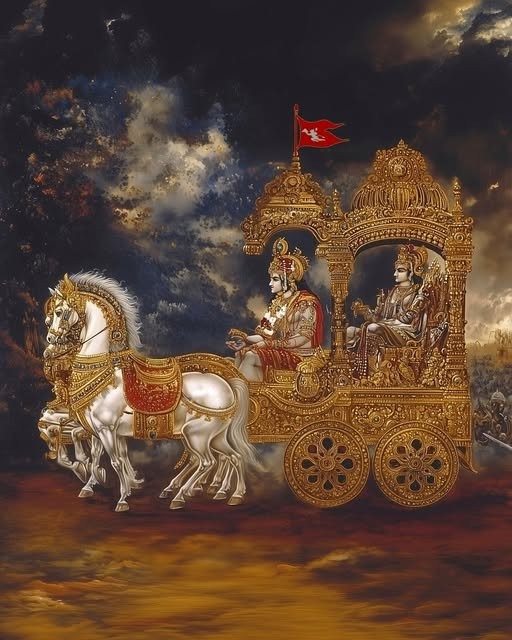
We seek forever, in the next seven births They further ask Krishna: “You are born along with us in the cowherd community, who follow behind the tails of cows to live on. Now, You cannot refuse to take our worship or bestow your grace on us. We are asking not just Your grace and boons today alone. We seek forever, in the next seven births, to be privileged to have a close relationship with you in all your avatars. We should be beholden to you and offer worship only to You and none other. You should give this boon and ensure the removal of any other desires from our minds. Unwavering, unquestioning, totally dedicated faith in Krishna at all times and occasions is what should rule our minds”. The conversation that went on is: Goda: We seek your golden-lotus-like fragrant feet, like Lakshman, who felt happy not to be crowned, but to serve at your feet. If you do not want our services, why did you take birth in our clan? Govinda: You want to offer your services to me, fine; I will take them whenever I want. You performed Vrata for Parai. I am giving it, please take. Goda: We asked for Parai, True. But it was only an excuse. We want You and You only. Do not need this drum- Parai. Govinda: Then what are you really intending to have, instead of your demand for Parai? Goda: Whenever You descend on this earth, each of us should be your relatives and servants, like mother, wife, father, brother, or any other, etc. Seetha and Bharatha left you, but we would like to be with you like Lakshmana. Please remove all other desires from our contemplation
The Ashtakshari Mantra Hidden in the Paasuram
Acharyas explain that this paasuram subtly contains the meaning of the Ashtakshari mantra:
- “Unakke” indicates exclusive dependence (sheshatva)
- “Naam” refers to the jiva (makara meaning)
- “Un tannodu utrome” contains the Narayana principle
- “Mattrai nam kaamangal maatru” reflects “Namah” (renunciation)
Thus, this paasuram is said to contain the essence of all mantras.
Why Krishna Incarnated
In a deeply intimate theological assertion, the Gopikas imply:
“You were not born merely to protect cows.
Many can do that.
You were born to accept our kainkaryam.”
The meeting of Bhagavan and the Gopikas fulfills both purposes:
- The Lord descends to accept service
- The soul exists to serve
Bhogi: The Day of Fulfillment
When Andal declares:
“You alone are our means.
You alone are our fruit.”
The vrata reaches its culmination.
Sri Krishna accepts the Gopikas.
Sri Ranganatha accepts Andal.
Sri Ramanuja Jeeyar explains:
This day is called Bhogi
because Andal attained the fullness of enjoyment she sought —
eternal kainkaryam at the feet of the Lord.
A timeless lesson:
The 29th Paasuram teaches a timeless lesson:
- Do not seek God through something else
- Do not seek something else through God
- Seek God alone, for God alone is everything
“Neeve upaayam. Neeve phalam.” This is the heart of Tiruppavai.

Law professor and eminent columnist
Madabhushi Sridhar Acharyulu, author of 63 books (in Telugu and English), Formerly Central Information Commissioner, Professor of NALSAR University, Bennett University (near Delhi), presently Professor and Advisor, Mahindra University, Hyderabad. Studied in Masoom Ali High School, AVV Junior College, CKM College, and Kakatiya University in Warangal. Madabhushi did LL.M., MCJ., and the highest law degree, LL.D. He won 4 Gold Medals at Kakatiya University and Osmania University.
Email: cicsridhar@gmail.com
Mobile: 8447651505