He himself was an ‘original’, his own and Magic. It is remarkable how he infused such humor and satire into casual conversations. When Nerella Venu Madhav performed his own writings—bringing out various voices, mimicking the rhythmic chugging of a train, its acceleration and deceleration, the cacophony of “coffee-chai” vendors, and the trembling voices of the elderly—the audience would be spellbound. Laughter was unstoppable. It was a sight of pure wonder and joy to see a whole gathering burst into fits of laughter. One wonders where such talent can be found again. It feels as though Venu Madhav is currently performing mimicry in heaven, delighting the gods themselves.
The Father of Indian Mimicry
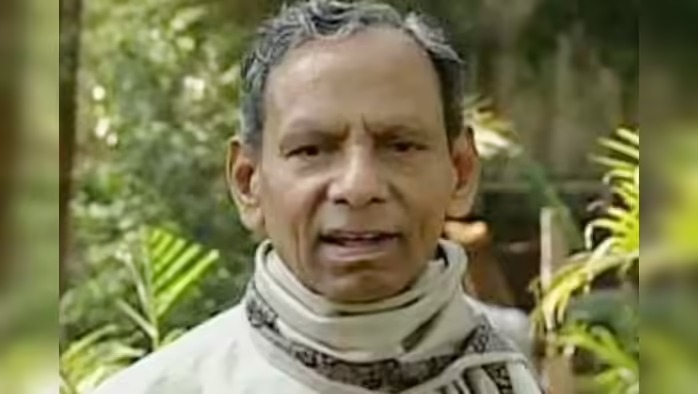
Nerella Venu Madhav was India’s greatest mimicry artist and ventriloquist. Known as the “Father of Indian Mimicry,” he was a master at imitating the voices of celebrities and local dialects. He was the first artist to perform at the United Nations and was instrumental in starting the world’s first Diploma course in Mimicry at Potti Sreeramulu (now changed into Suravaram Pratapareddy) Telugu University.
Born on December 28, 1932, he lived for 86 years, passing the milestone of Sahasra Chandra Darshanam (seeing a thousand moons). He departed for the heavenly abode on June 19, 2018, as if he had an urgent appointment to reach the UN of the heavens to make them laugh.
The Warangal Connection
Just as Warangal is defined by the Ramappa Temple, the Thousand Pillars Temple, and the Orugallu Fort, Venu Madhav was a pillar of the city’s identity. Warangal is a cultural hub, and he was its brightest star—an unforgettable legend. He once wrote a “galpika” (a short, satirical sketch) for the magazine Janadharma. Here is its essence:
The Train Skit: Two elderly men are talking to each other on a train. In the background, the sounds of the train, the chatter of passengers, and the shouts of vendors selling coffee, tea, peanuts, and samosas are heard. Passengers standing are swaying with the jolts of the train; even those sitting or lying on the upper berths are in constant motion.
Against this backdrop, the two old men sitting opposite each other begin a conversation:
First Old Man: “Hey, how old are you?” Second Old Man: “Uh… why do you care how old I am?” First Old Man: “Instead of saying ‘how ever much,’ why don’t you just tell me? If you want, I’ll tell you mine, but you tell me yours first.” Second Old Man: “You said you’d tell yours. You go first, then I’ll tell mine.”
This goes on for fifteen minutes without either of them revealing their age. The listeners are curious, then eventually annoyed.
Second Old Man: “Fine, listen. I must be between twenty and twenty-five.” First Old Man: “Really? Then why do you look so old? Is it true?” Second Old Man: “Well, look at the hardships we’ve faced! That’s why I look older. Anyway, what’s your age?” First Old Man: “Oh, I’m not as old as you…” Second Old Man: “What? Not as old as me? You’ve lost your teeth and can barely speak! Are you saying you’re younger? How old then?” First Old Man: “You could say… between eighteen and twenty.”
As the surrounding passengers stare in shock and stifled laughter, a man suddenly drops down from the upper berth and lands with a thud. The two old men stare at him in shock and ask, “What happened, son?”
The man replies: “I was just born!”
Memories of Janadharma
Venu Madhav wrote a few such sketches for the Janadharma weekly, which was run by my father, M.S. Acharya, in Warangal. I remember composing those pages, arranging the type, and designing the headers for publication. His writings were reminiscent of the famous farces by Chilakamarthi. He possessed a unique talent for imagining humorous scenarios and constructing them with the precision of a screenplay for performance.
Wit and Satire
There are many jokes about the desperation of performers to have an audience. There is a famous joke about an anniversary event where only one audience member remains during the final performance. When the artist thanks him for staying, the man replies, “I have no choice, sir; I have to take back the carpet once you’re done.” Venu Madhav took this joke and added his own brilliant twist: When the artist thanks the lone listener for staying, the man says, “Don’t mention it, sir. My mimicry program is right after yours!”
Such was his wit and satire.
Nerella Venu Madhav (28 December 1932 – 19 June 2018) was an Indian impressionist and ventriloquist. He rose to popularity by imitating celebrities, politicians, local dialects, Nizams and was the first to perform at the United Nations headquarters. He started a diploma course at Telugu University, a first in the world. He is often regarded as father of Indian mimicry. He is also hailed as the pioneer and maestro of mimicry in India. KiranPrabha starts this episode with introduction to the mimicry art form, story behind making this episode and brief life sketch of Sri Nerella Venu Madhav. Most popular author, narrative specialst KiranPrabha wrote a small brief on Venumadhav. (To see click on Kiran Prabha)
– Madabhushi Sridhar
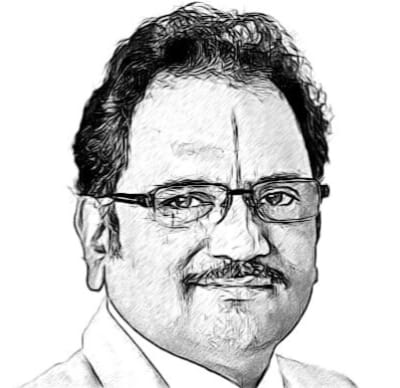
Law professor and eminent columnist
Madabhushi Sridhar Acharyulu, author of 63 books (in Telugu and English), Formerly Central Information Commissioner, Professor of NALSAR University, Bennett University (near Delhi), presently Professor and Advisor, Mahindra University, Hyderabad. Studied in Masoom Ali High School, AVV Junior College, CKM College, and Kakatiya University in Warangal. Madabhushi did LL.M., MCJ., and the highest law degree, LL.D. He won 4 Gold Medals at Kakatiya University and Osmania University.
Email: cicsridhar@gmail.com
Mobile: 8447651505