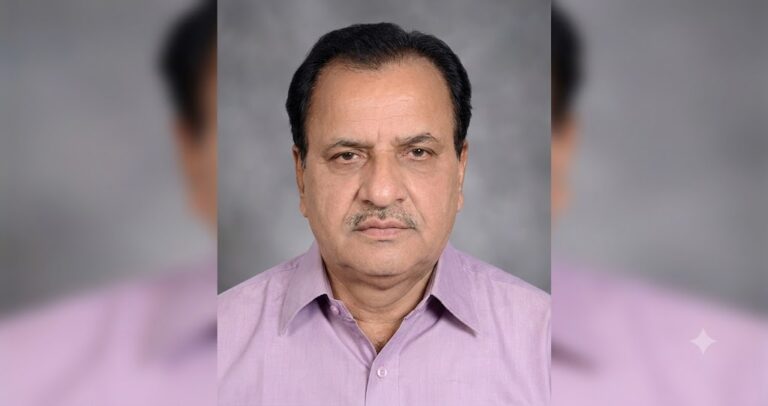
K. Sreenivas Reddy on the Telangana Media Accreditation Rules 2025
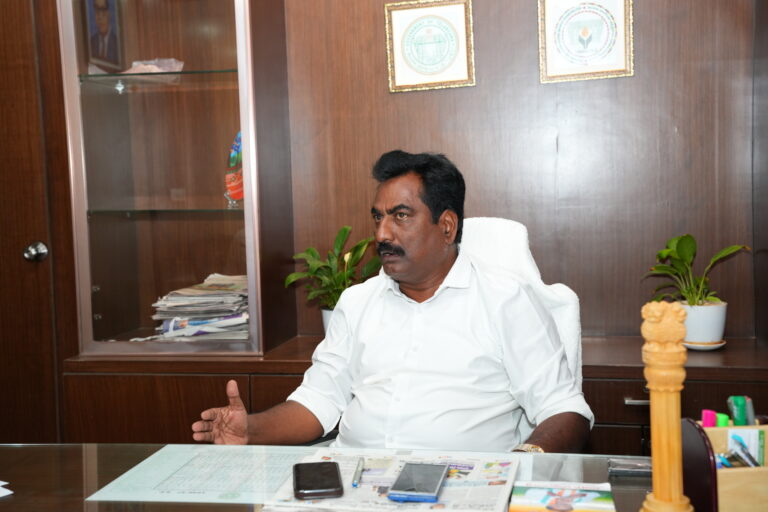
The special accreditation committee appointed by the A Revanth Reddy government under the chairmanship of the Telangana Media Academy Chairman, K. Sreenivas Reddy and members, I and PR special Commissioner S Harish, IAS, K Srinivas, The then Editor of Andhra Jyotthi, E Ravikanth Reddy, Political Editor, The Hindu, Amer Ali khan, Managing Editor, The Siyasat Daily, Ankam Ravi, CEO, V6 and Hari, Photo Journalist, to evolve fresh rules and guidelines for issuing accreditation cards to all desk and field journalists, submitted its report. Based on the committee’s recommendations, the Telangana government recently introduced the “Telangana Media Accreditation Rules, 2025” (under G.O. Ms. No. 252), which supersede the previous 2016 rules.Prime Post attempted to obtain specific details from him. The following are excerpts from his interview.
Prime Post: The Telangana government recently introduced the Media Accreditation Rules 2025 through GO No. 252 replacing older guidelines to modernize the system for print, digital, and electronic media journalists. However, a section of the press expressed apprehensions about it. As a chairman of Media Accreditation Committee, what is your say on this situation?
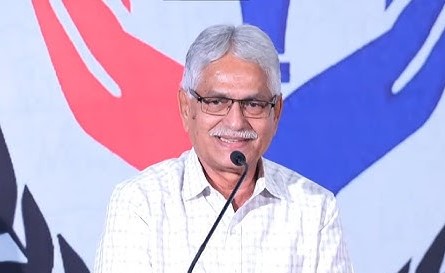
Sreenivas Reddy: Yes, they were all apprehensions. The rules were framed as per the Indian Government Acts of Journalists. The journalists should read and research these laws before questioning the new accreditation policy. Ignorance of the law is no excuse. Courts generally operate on the assumption that those who seek justice already understand the Constitution.
Therefore, the scribes questioning the new accreditation policy should first read the acts pertaining to their profession. According to the working journalist Act, a journalist should be associated with the one or other news organization as part-time or full time. As per the act, the reporters, desk journalists, photographers and video journalists should be treated as equal.
PP: What is the difference between the accreditation cards and media cards? There were allegations that desk journalists are not being considered on equal to field journalists one and welfare schemes will not be covered to them. What is the reality in it?
Sreenivas Reddy: I would give all details on it. There was no difference between field journalists or desk journalist pertaining to the welfare measured being provided by the government. Health facility will be extended to all the journalists. It is not only sub-editors, but also proof-readers, photographer and video journalist, news-editors and editors should get these benefits. Accreditation came into existence due to the recommendation of First Press Commission in India. As part of it, Working Journalists Act came in to existence. The present Central government suspended the Act. The journalists, who are making hue and cry on accreditaion cards, are not even mentioning the suspension of journalists’ acts by central government. Accreditation cards are intended for field journalists and reporters.
Meanwhile, the Central Act defines the specific roles of both desk and field journalists. The government provides these credentials to grant reporters access to officials, police, and ministers for news coverage. While the Press Council of India (PCI) has framed model accreditation rules that most state governments follow, some journalists are now questioning the PCI’s role in the issuance of these accreditations. It is nothing but ignorance of the law. So, accreditation meant for reporters to cover the news and they were nowhere concerned to the welfare measures.
PP: Can you detail about the Housing societies of Journalists earlier? Are all the journalists including desk obtained housesits?
Sreenivas Reddy: Free transport facilities are provided to both field and desk journalists and the allotment of house sites through cooperative societies is extended to both groups as well. Various housing societies have been established in Hyderabad for this purpose. For instance, the Banjara Hills Housing Society was established before I entered the profession; approximately 23 journalists, including both desk and reporting staff, obtained land there. Similarly, in the Jubilee Hills and Gopannapalli housing societies, both desk and field staff received house sites. Even in the Jawahar Housing Society, all categories of journalists were enrolled. However, in some districts, only reporters received house sites because local politicians and reporters lacked a proper understanding of the relevant Acts.
The YSR Government in united Andhra Pradesh issued a GO (Government Order) extending every benefit to working journalists, including those on the desk. Consequently, welfare measures should be extended to all journalists without barriers. If any welfare measure is withheld from desk journalists, I will be the first person to fight against the government. Furthermore, all journalists must maintain professional decency, decorum, and ethics.
While accreditation is intended to facilitate access to sources of information, approximately 23,000 cards were issued previously, leading to widespread misuse. Many of these cards were seized by the police from individuals using them for blackmail or other illicit activities. How are these fake journalists entering the system? What is the source of these fake journalists? Any desk journalist complained of not extending welfare benefits, I am the first person to fight. These fake journalists are stopping sand lorries and demanding money. All of this is occurring in Telangana. Should we not stop them?
PP: What about the circulation of big newspapers? Is there any transparency in the Audit Bureau of Circulation (ABC) reports submitted by these newspapers? Also, what is the ‘three-man committee’?”
Sreenivas Reddy: Newspapers like Eenadu, Sakshi, and Andhra Jyothi are considered the‘big three’ in Telangana. However, there are other newspapers whose reported circulation figures exceed those of Andhra Jyothi. How is their status determined? For years, these papers have submitted circulation details attested only by a Chartered Accountant (CA). Often, these CA-certified documents show inflated or ‘abnormal’ circulation figures.
Under the rules, once a newspaper has been in circulation for three years, it must obtain a certificate from the Registrar of Newspapers for India (RNI), which has been renamed as Press Registrar General of India (PRGI) and submit an Audit Bureau of Circulations (ABC) report to the government. The state government introduced the new rules to prevent such malpractices. Furthermore, it is recommended to appoint a three-man committee comprising both officials and journalists to verify actual circulation. Why are some groups objecting to this? These rules are being implemented in all states. All these measures designed to enhance the credibility and respectability of the journalists.
PP: Did you discuss these changes with the journalists before? Also, what is the status of digital media, Is the government officially recognizing it now?
Sreenivas Reddy: Yes. We held discussions with the members of the committee, which included journalists from newspapers and electronic media. We addressed issues regarding accreditation cards, media identity, and the overall dignity of the profession. These rules and guidelines were framed only after detailed consultations. Furthermore, the State government has now recognized digital media (websites registered in Telangana) as a valid platform and has decided to issue accreditation cards to those whose have surpassed a minimum of 5 lakhs ‘unique visitors’ per month for the last 6 months.
Editor, Prime Post
Ravindra Seshu Amaravadi, is a senior journalist with 38 years of experience in Telugu, English news papers and electronic media. He worked in Udayam as a sub-editor and reporter. Later, he was associated with Andhra Pradesh Times, Gemini news, Deccan Chronicle, HMTV and The Hans India. Earlier, he was involved in the research work of All India Kisan Sabha on suicides of cotton farmers. In Deccan Chronicle, he exposed the problems of subabul and chilli farmers and malpractices that took place in various government departments.
Email: ravindraseshu7@gmail.com
Mobile: 9063718675