- Critical Impact on Regional Hydrology and Desertification
- The 2025 Supreme Court Order
- The Aravallis as an Ecological “Great Wall”
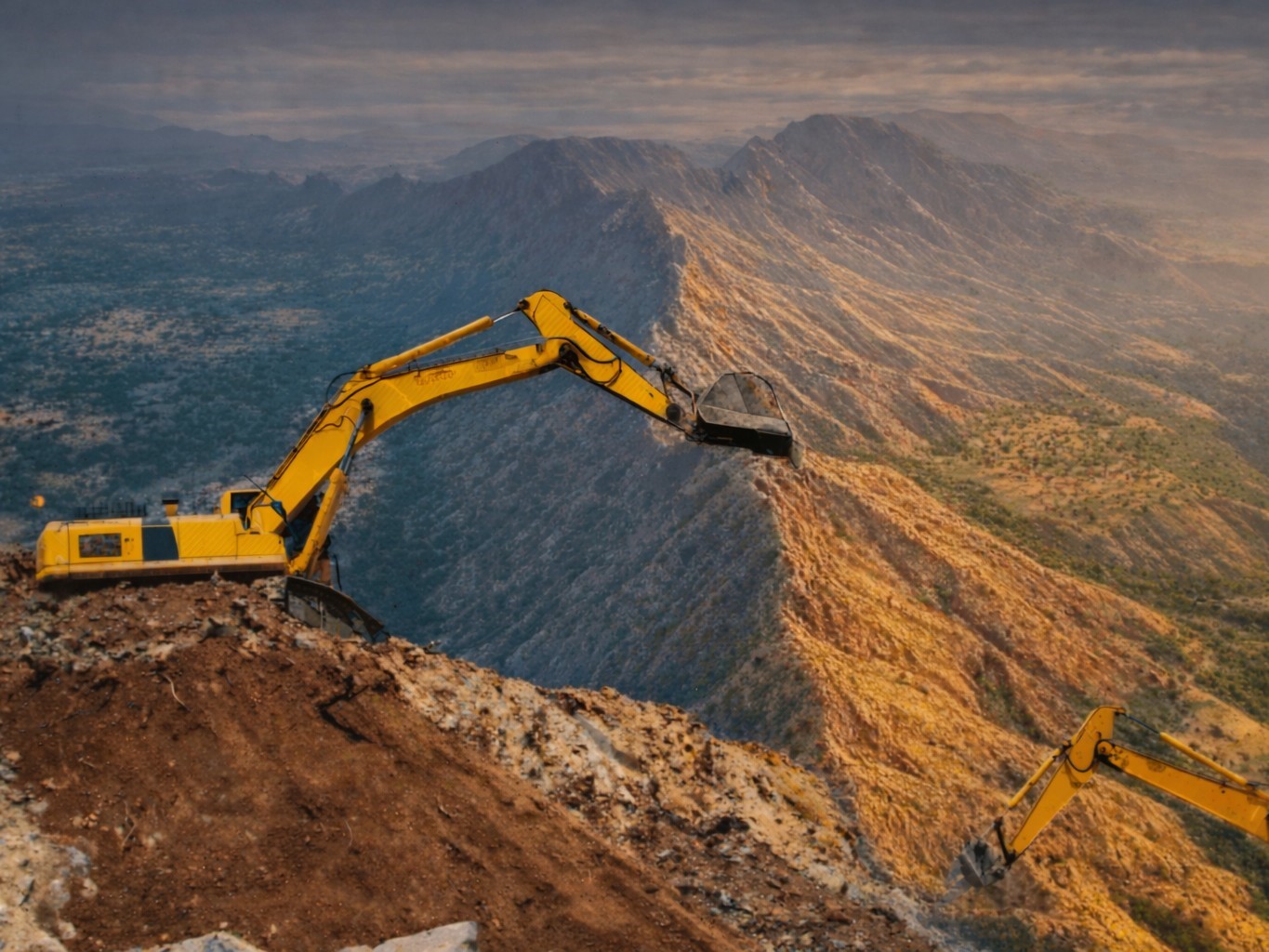
Mining in the Aravalli Hills has become a highly controversial issue following a landmark after Supreme Court ruling that established a new legal definition for the range. The new criteria define an “Aravalli Hill” as any landform with an elevation of 100 meters or more above the local relief. An “Aravalli Range“ is now classified as a collection of two or more such hills situated within 500 meters of each other. The Mining is strictly prohibited in ecologically sensitive zones. Mining is now strictly prohibited in ecologically sensitive zones, such as tiger reserves, wildlife sanctuaries, wetlands, and CAMPA (Compensatory Afforestation Fund Management and Planning Authority) plantations.
Aravali Hills Range do not cause heavy orographic rainfall like the Himalayas, they help guide the monsoon winds toward North India Activists suggest. Unlike the Himalayas, the Aravalli Range does not cause heavy orographic rainfall. However, it plays a crucial role in guiding monsoon winds toward North India. Activists argue that ecological health should not be determined by height thresholds alone, as a 50-meter hillock can be just as vital for a local aquifer as a 200-meter peak.
Geological Significance and Geographic Span
The Aravalli Range is among the world’s oldest geological features, dating back nearly two billion years to the Proterozoic era. Spanning approximately 700 km across Gujarat, Rajasthan, Haryana, and Delhi, these hills serve as the ecological backbone of Northwest India.
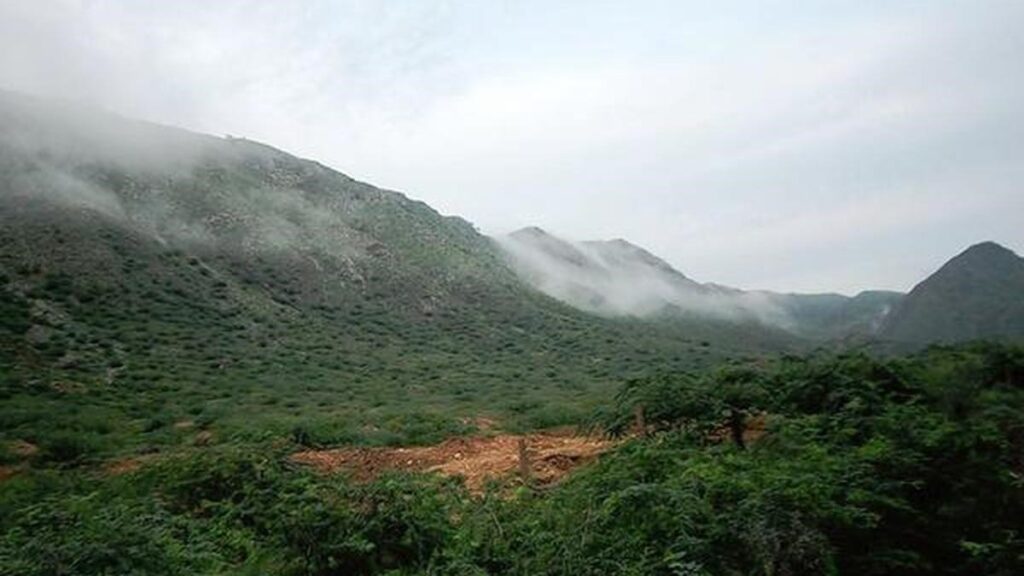
In late 2025, the Supreme Court addressed decades of legal ambiguity by accepting a uniform definition of the range. Based on MoEFCC( Ministry of Environment, Forest and Climate Change) recommendations, a landform is legally protected as an “Aravalli Hill” only if it rises 100 meters or more above the surrounding ground level. To ensure transparency, the Court mandated the use of Survey of India topo-sheets for objective contour-based mapping.
Immediate Restrictions and Sustainable Management
The Court has imposed a complete ban on fresh mining leases until the Management Plan for Sustainable Mining (MPSM) is finalized by the Indian Council of Forestry Research and Education (ICFRE). While existing legal operations may continue under strict safeguards, all mining is strictly prohibited in protected areas and wildlife corridors. The range acts as a natural barrier preventing the Thar Desert from encroaching into the fertile Indo-Gangetic plains. Currently, mining has created 12 major gaps in this barrier, allowing sandstorms to reach the National Capital Region (NCR). Furthermore, the hills serve as a primary aquifer recharge zone for water-stressed cities like Delhi and Gurugram.
Industrial Giants and Mineral Wealth
The Aravallis remain a global hub for minerals and construction materials. Key players include, Metallic Minerals, Industrial Minerals, Hindustan Zinc Limited (Vedanta) and Hindustan Copper Limited (Khetri Complex), FCI Aravali Gypsum (FAGMIL) and Wolkem India Ltd, UltraTech, Ambuja, and JK Lakshmi Cement rely on the region’s limestone, while groups like Aravali, Inani, and Pacific Industries lead the world in marble and granite extraction.
Environmental Controversies
Environmentalists warn that the 100-meter rule may leave 90% of certain stretches vulnerable. By defining lower ridges “out” of the Aravallis, vital groundwater recharge zones and “green lungs” could be opened to real estate and construction, further exacerbating the Urban Heat Island effect and air quality issues in North India.
Editor, Prime Post
Ravindra Seshu Amaravadi, is a senior journalist with 38 years of experience in Telugu, English news papers and electronic media. He worked in Udayam as a sub-editor and reporter. Later, he was associated with Andhra Pradesh Times, Gemini news, Deccan Chronicle, HMTV and The Hans India. Earlier, he was involved in the research work of All India Kisan Sabha on suicides of cotton farmers. In Deccan Chronicle, he exposed the problems of subabul and chilli farmers and malpractices that took place in various government departments.
Email: ravindraseshu7@gmail.com
Mobile: 9063718675

its very good article.
madabhushi sridhar