- From “I Have a Dream” to “I Have a Plan”: Tarique’s Vision for Reform
- The Shadow of 2024: Honoring the Martyrs of the “July Uprising”
- A Nation on Edge: The Lynching of Minorities and the Rise of Mob Rule
- The Fall of Sharif Osman Hadi: A New Catalyst for Unrest
- Accusations Against Yunus: Is the Interim Government Derailing Democracy?
- Diplomatic Deep Freeze: The “Frankenstein” Crisis in India-Bangladesh Relations
- The “Why Ban?” Debate: Muhammad Yunus and the Awami League Bar
- The Battle for the Ballot: BNP vs. Jamaat-e-Islami in 2026
- Bangladesh at a Crossroads: Between Democratic Rebirth and Radicalization
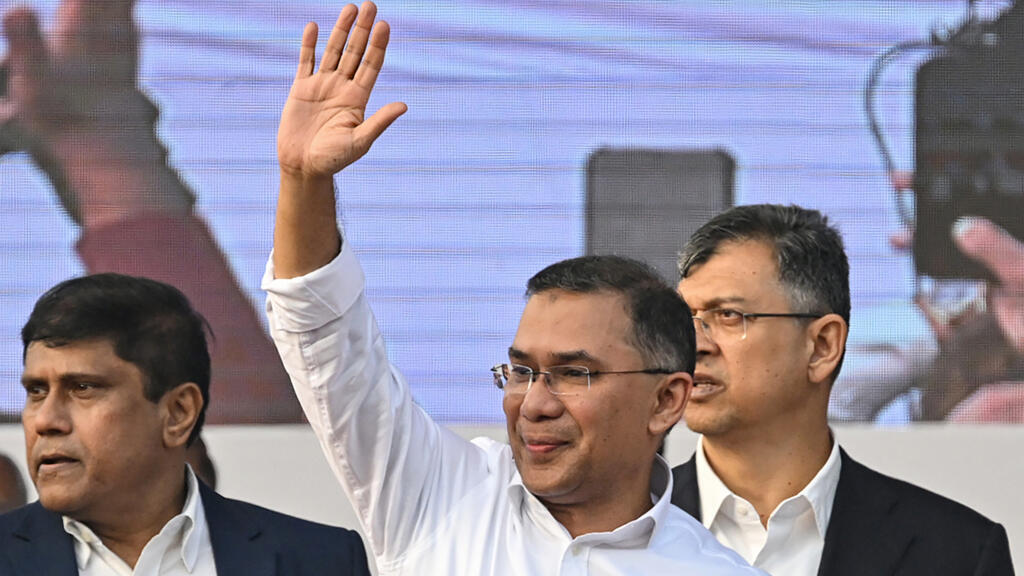
Bangladesh Nationalist Party acting chairman Tarique Rahman, son of former prime minister Khalida Zia, invoked Martin Luther King (Jr) in his address in Dhaka on Thursday hours after his return ending his 17 years of exile in London. In his speech at a rally attended by thousands of enthusiastic supporters, Tarique recalled Martin Luther King saying that ‘he had a plan’ in place of American Civil Rights leader’s famous words ‘I have a dream.’ He said the people of Bangladesh want to reclaim their democratic rights and freedom of expression. He added that his success depends on the collective support of the people.
Tarique said honouring those who martyred in 1971 and 2025 requires building the nation on the lines they envisioned. Emphasizing unity he said the time has come for everyone to work together. Tarique is expected to become the new prime minister of the country. He returned from London on Wednesday morning with his wife and daughter. With Awami League barred from contesting, the main contest in 2026 February elections will be between BNP and Jamait-e-Islami. The BNP is expected to win the elections with the support of people of all faiths. Tarique said,”This is a land of hills and plains, home to Muslims, Hindus, Buddhists and Christians. We want to build a safe Bangladesh – a country where any woman, man and child can leave their home safely and return safely.”
Tarique is expected to negotiate with different parties to have a tie up in the upcoming elections. In the meanwhile, another Hindu man Amrit Mandal alias Samrat has been beaten to death in Bangladesh days after Dipu Chandra Das was lynched and his body was set ablaze. According to local media reports, Samrat was killed in Rajbari’s Pangsha sub-district, around three and half hours from the capital city of Dhaka at about 11 pm on Wednesday. Locals told ‘The Daily Star’ that Samrat was the leader of a criminal gang called ‘Samrat Bahini’ which was involved in extortion. Samrat had fled the country after Sheik Hasina left for India and has returned to his village only recently.
It is the turn of Mohammad Yunus to face music

The volatile politics in Bangladesh have taken a new vicious turn with Nobel laureate Mohammad Yunus-led government being accused that Sharif Osman Hadi, the spokesperson of Inquilab Moncho, has been killed in order to derail the elections scheduled in February. The person who made the accusation is Sharif Omar Hadi, brother of Osman Hadi. Inquilab Moncho is a cultural organization born out of the 2024 movement. At a protest meeting at Shahbagh in Dhaka on Tuesday, Sharif Omar alleged, “you had Osman Hadi killed, and now you are trying to foil the election by using this as an issue.” Saying that Osman wanted the elections to be held in February, Omar appealed to the authorities to ensure speedy trial and avoid any disruption of the election schedule. “If justice for Osman Hadi is not delivered, you too will be compelled to flee Bangladesh one day,” threatened Omar apparently referring to Sheik Hasina who resigned and fled to India on 5 August 2024. Omar has alleged that his brother was killed because he did not bow to any agency or ‘foreign masters.’
Fresh wave of protests
Killing of student leader Sharif Osman Khadi, one of the top leaders of last year’s anti-Hasina quota stir, has sparked a fresh wave of protests and attack on minorities. He was shot at close range in Dhaka by masked persons on December 12. He was shifted to Singapore by the interim government for better medical care. He breathed his last in Singapore on December 18. This incident has pushed India-Bangladesh relations, already under strain, into a deeper crisis. There have been anti-India protests ever since Hadi’s dead body was brought to Dhaka and buried beside the mausoleum of national poet Kazi Nazrul Islam on the campus of Dhaka University. Triggering violent protests the mobs targeted the offices of two prominent newspapers and cultural organizations. Another student leader Motaleb Sikdar, belonging to National Citizens Party, was fired upon on Monday by some unknown persons. He is stated to be out of danger. A Hindu, Dipu Chandra Das, was lynched by agitators in Bangladesh on the pretext that the deceased had indulged in vilification of Prophet Mohammad which allegation has been proved to be false. In response to the lynching there was a huge demonstration before the office of Bangladesh High Commissioner in New Delhi on Tuesday where the angry protestors called Mohammad Yunus “a Frankenstein Monster”. Banners calling upon India to ‘Boycott Bangladesh’ were prominently displayed in the demonstration. It was the first major show of anger in the capital city against India’s trusted ally till recently. Diplomats of both the countries were summoned by the respective foreign offices and reprimanded.
Vilification of Hasina
Most of the Western capitals have been indulging in vilification of Sheik Hasina and glorification of Mohammad Yunus ever since the students’ uprising. No doubt that Hasina used strong-arm methods in her attempt to put down the students’ rebellion. Some hundreds of young protestors were killed in the process. Hasina’s cannot be described as a democratic ruler. For that matter Bangladesh never saw true democracy on display. Khalida Zia’s rule fifteen years prior to Hasina’s also cannot be called democratic. It was violent and corrupt. So was the rule by her husband President Ziaur Rehman. Only Mohammad Ershad, to dethrone whom both the rivals, Hasina and Khalida, joined hands in 1991, was allowed to live peacefully until his natural death. Khalida was jailed and her party was banned by Hasina. Now Hasina herself is in asylum in India for the second time in four decades. First time she lived in India when her father Muzibur Rehman was assassinated in 1975. With the ouster of Hasina, Khalida was released from prison. Even when the transfer of power took place through ballot, the ruling establishment was hardly democratic. The opposition had a tough time all through. Even Muzibur Rehman, who was hailed as Father of Bangladesh for his stellar role in the freedom struggle, could not rule the newly independent country keeping all sections of the people happy. He was considered to be a divisive ruler. He had to reckon with a famine in 1974 and he faced a lot of law and order issues. Civil rights were denied to a large number of people.
What was expected of Yunus?
What was expected of the Nobel Prize winner who took over the administration after a tumultuous student uprising and ouster of Prime Minister Sheik Hasina? He had lived in Paris when the student movement was going on because he was persecuted by Hasina government. He naturally had antipathy towards Hasina and so was considered anti-India. Yunus was supposed to improve the law and order situation and help organize free and peaceful elections as soon as possible so that the economic gains made during the Hasina regime could be enjoyed by the people under a democratic administration. He has taken one and half year to announce election dates. With the death of the student leader chaos had returned to the streets and it is any body’s guess if the elections to be held in February would be free of emotions and violence. Yunus has barred National Awami League from contesting February 2026 elections. If the party is unpopular, it will be defeated by the people. Why ban? Yunus has proved to be no different from Hasina as far democratic temperament is concerned.
Mohammad Yunus was not trained to rule such a volatile country. He was made the chief advisor of the government only out of respect he wielded as a winner of Noble Prize. Instead of concentrating on administration, he focused on aligning Bangladesh with Pakistan and China while distancing from India. He was taking anti-India stance without any provocation. During his interim regime, right wing forces led by Jamaat-e-Islami and Pakistan have gained ascendance.

The last 16 months of interim government headed b Mohammad Yunus has taken the situation in Bangladesh from bad to worse. Almost all the institutions have been captured by Islamic forces. Pakistan ministers have been provoking India talking about supply of missiles to Bangladesh. There is no reaction from Bangladesh government. Mob rule and instant justice have returned to the streets. Tarique Rehman, the leader of Bangladesh Nationalist Party (BNP), has returned to Bangladesh on Thursday. There was a huge show of strength to welcome Taruque. His mother, Begum Khalida Zia, has been unwell. If anything happens to her, there will be wide-spread reaction in the country. BNP and Jamaat were together when they battled against Awami League. Now that the League is out of the way, the fight will be between Jamaat-e-Islami and BNP. The former has an advantage since it has been on the ground taking political mileage from first week of August last years when Hasina was ousted. Yunus administration has been favouring the Jamaat. Pakistan is also expected to support the Islamic party. The Indian observers are waiting to see how the elections will be conducted and what kind results they will throw up.
Prominent Journalist
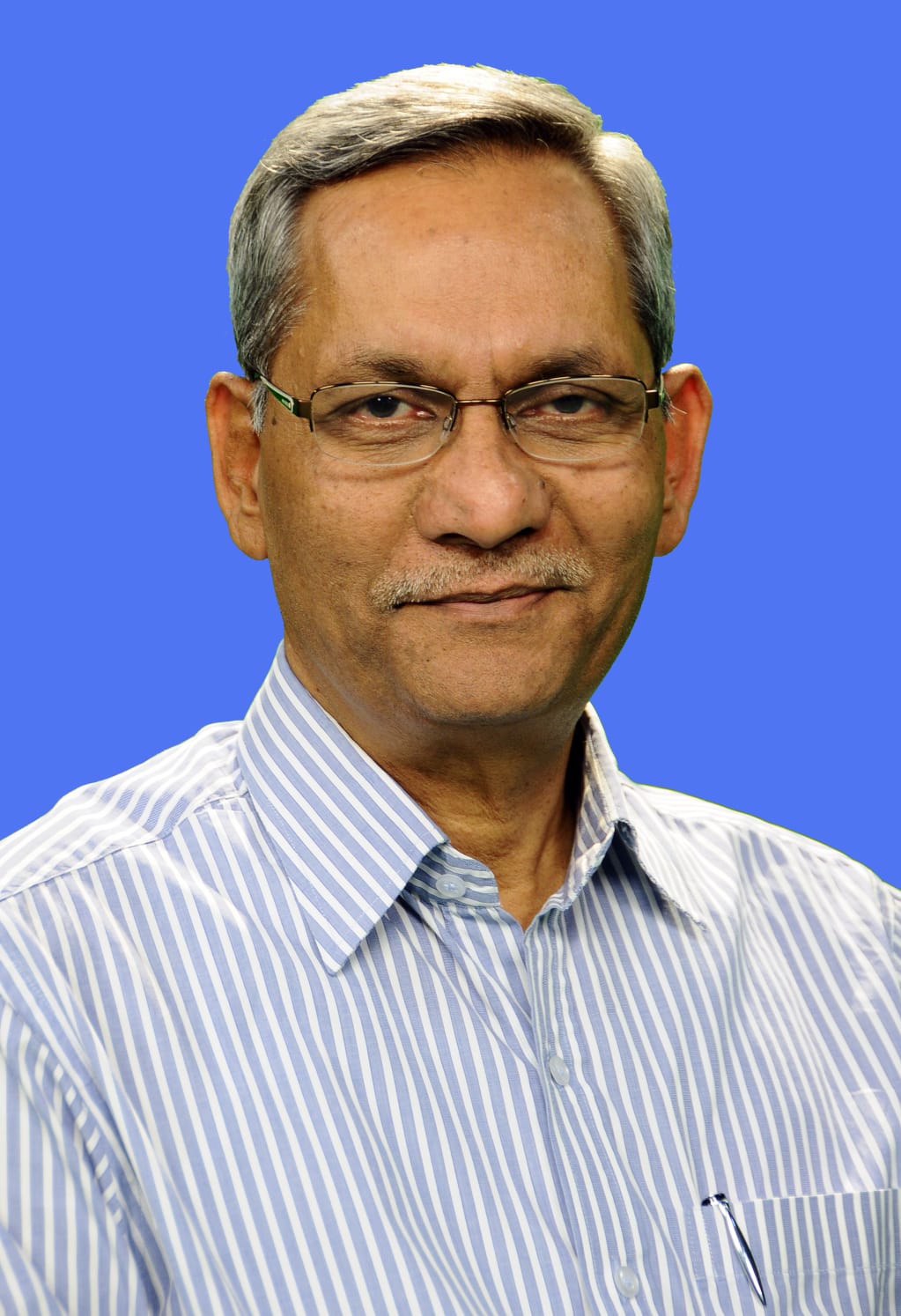
Dr. K. Ramachandra Murthy is a versatile journalist with a distinguished career. Dr. Murthy began his extensive career with Andhra Prabha of The Indian Express group in Bengaluru. He was editor of Udayam, Vaartha and Andhra Jyothy. Dr. Murthy founded and edited HMTV news channel and The Hans India, an English newspaper. He was also editorial director of the Telugu newspaper, Saakshi. He was awarded Ph. D for his research work in rural reporting. Dr. Murthy’s five decades in journalism showcases his influential roles across both print and electronic media. He wrote the political biography of NTR published by Harper Collins.
Email: murthykondubhatla@gmail.com
Mobile: 9908002211